Revspire blog
RevSpire’s Guide to Maximizing Sales Success using Enablement
A guide to marketing enablement, its relationship with sales enablement, the functions it supports, and steps for creating and maintaining a plan.
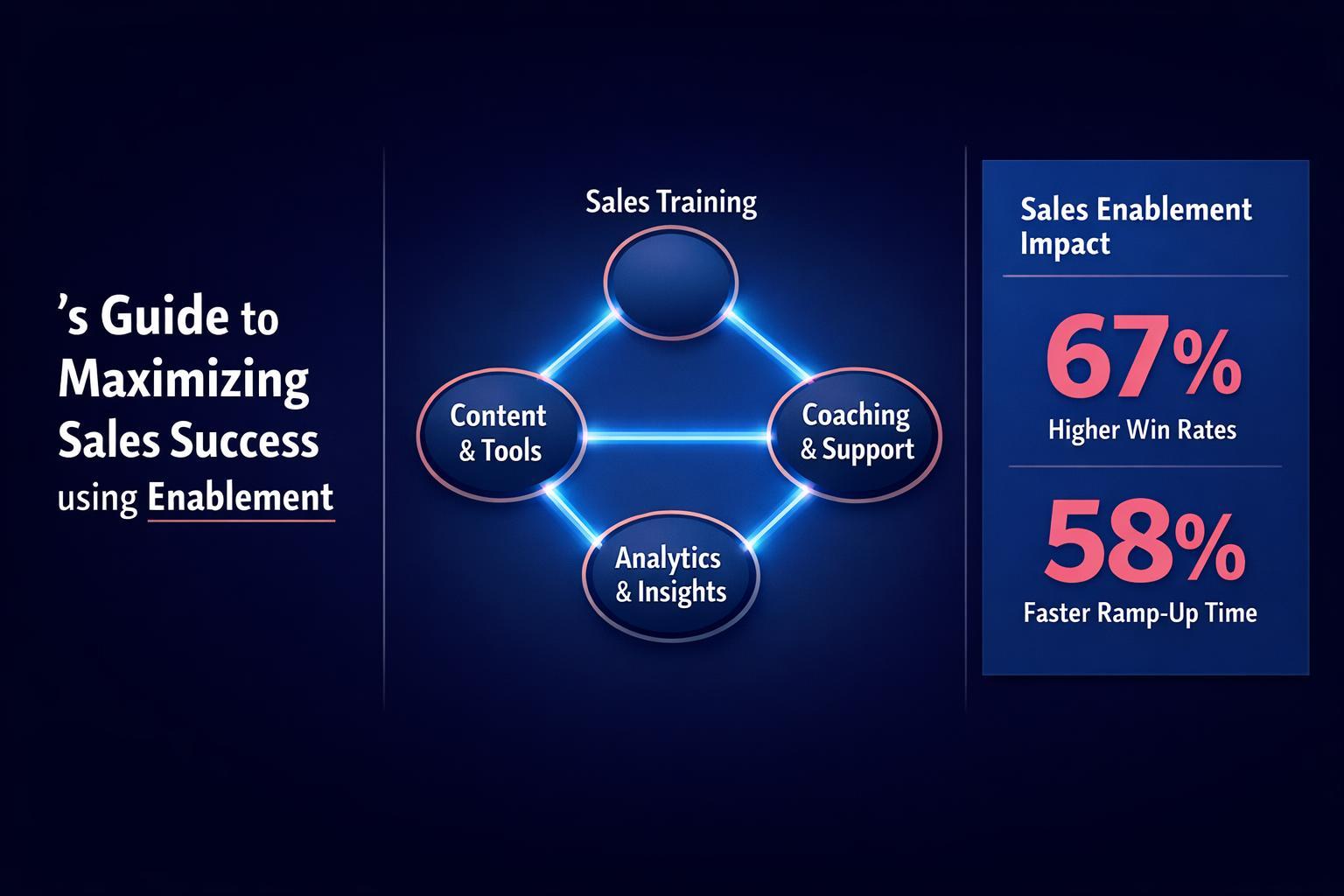
RevSpire: Empowering Success Through Marketing and Sales Enablement Synergy
By RevSpire Team
The Evolution of Marketing Expertise
Marketing roles can include demand generation, social media marketing, email marketing, product marketing, and field marketing.
Marketing enablement is about equipping your marketing team with the resources, tools, knowledge, and skills they need to excel in their specialized roles while also aligning closely with the sales organization.
Marketing enablement and sales enablement
While marketing enablement and sales enablement share similarities, they serve distinct purposes within an organization.
Sales enablement equips, trains, and coaches sales representatives. Marketing enablement supports marketers as they create campaigns and content for sales.
Marketing enablement can foster functional understanding and empathy among team members. It can also align marketing departments around a unified strategy, foster collaboration, enable sales teams, and measure performance.
Areas supported by marketing enablement
- Sales and marketing alignment: Coordinate marketing initiatives with sales strategies and customer interactions.
- Customer engagement: Equip marketers with knowledge, resources, and training for developing campaigns and messaging.
- Lead-generation support: Coordinate content, lead nurturing, and data-informed decisions across marketing and sales.
- Content creation: Consider audience needs, market conditions, and content performance when developing materials.
- Content measurement: Review performance, engagement, user preferences, and financial impact when assessing content.
- Marketing operations: Organize workflows with suitable tools, automation, and resources.
- Decision-making: Use available data and analytics to assess results and revise strategies.
- Customer insights: Gather information about customer behavior and preferences to inform campaigns and messaging.
- Cross-functional collaboration: Establish ways for marketing to work within its team and with other departments.
- Brand messaging: Centralize guidance to support consistent messaging across channels and touchpoints.
How to build a marketing enablement plan
- Define measurable objectives. Relate program goals to broader business and sales objectives, such as campaign performance, lead generation, or content return on investment.
- Unify strategy and messaging. Centralize strategy development, planning, messaging, and content creation.
- Plan the content lifecycle. Assign responsibilities for content creation, approval, updates, and maintenance.
- Coordinate cross-channel campaigns. Align campaign components across selected channels and customer touchpoints.
- Develop sales plays. Create narratives and supporting resources for sales teams to use when engaging buyers.
- Consider digital sales rooms. Where appropriate, use private deal microsites as centralized spaces for buyer engagement.
- Train the sales team. Provide customer stories, core messaging, brand narratives, and relevant content.
- Analyze content. Measure content performance at different sales-cycle stages and consider connecting the findings with customer relationship management data.
- Adapt the program. Revisit the plan as the broader environment, market conditions, and organizational needs change.
- Use performance data. Apply available insights when making decisions and revising strategies.
Maintain enablement as an ongoing practice
Marketing campaigns can become opportunities for learning and improvement.
Review the plan as market conditions and organizational needs evolve.
RevSpire describes its platform as incorporating AI-driven search, analytics, training, guided selling, and integrations.