Revspire blog
When Product Knowledge Onboarding Becomes a High-Leverage B2B Sales Move
Learn when product knowledge onboarding becomes a high-leverage B2B sales priority and how to build a measurable, continuously improving program.
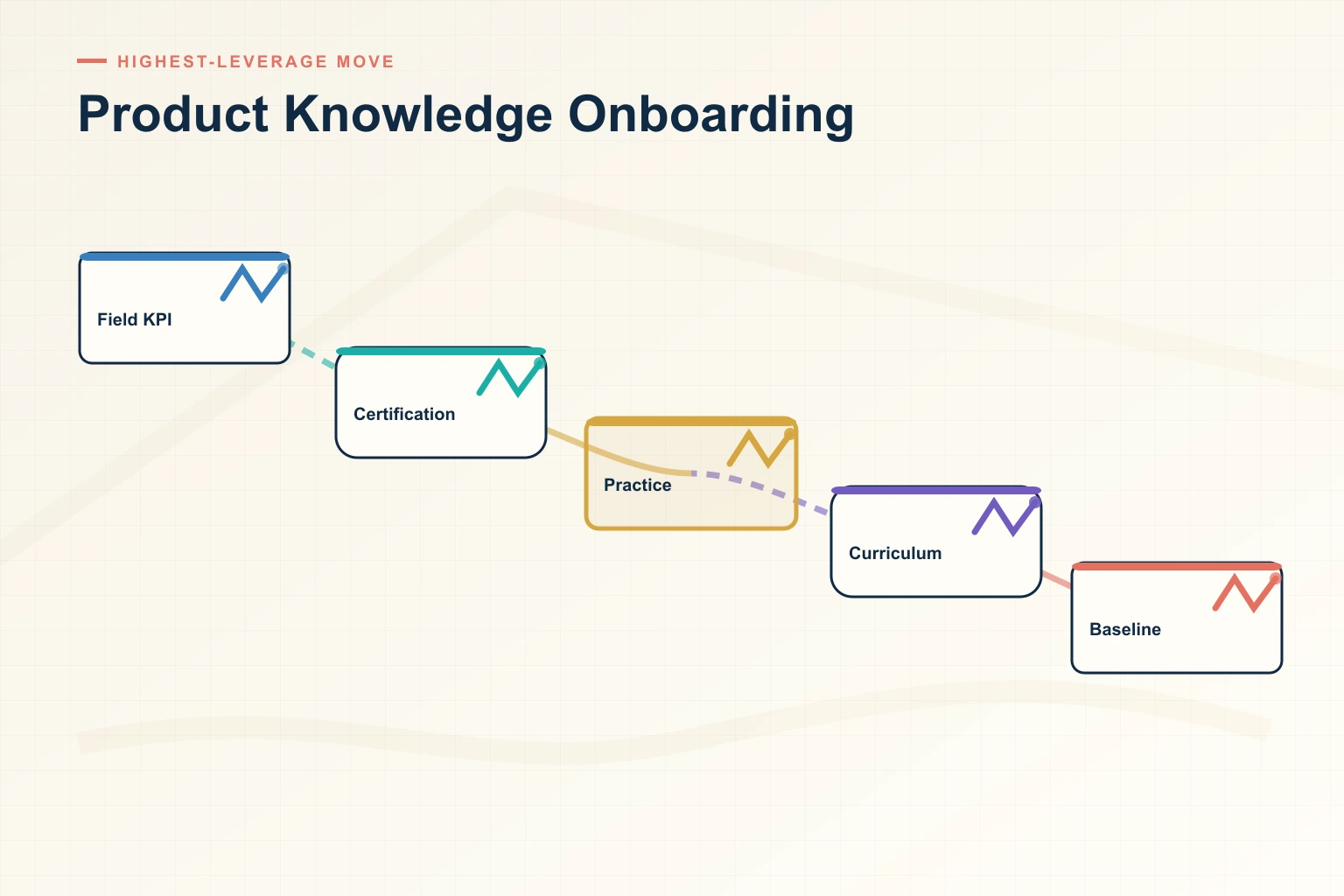
Product knowledge onboarding can become a high-leverage operating priority when inconsistent rep knowledge affects qualification, deal execution, coaching, and buyer interactions. The practical test is whether knowledge gaps are creating avoidable friction in your own sales process.
Instead of treating onboarding as a one-time event, establish a baseline, document expected execution, assign ownership, reinforce knowledge during regular sales work, and review evidence from completed opportunities.
The Hidden Cost of Ignoring Product Knowledge Onboarding
The core problem is that Product Knowledge Onboarding is treated as a one-time event rather than an ongoing system. Teams may piece together a process from tribal knowledge, manager intuition, and an old playbook. This can produce inconsistent execution and make it harder for leadership to understand why outcomes differ.
Knowledge and execution gaps can appear throughout a deal. Early opportunities may consume rep capacity without sufficient qualification. Active deals may stall when gaps go unnoticed. Objections, procurement issues, or stakeholder concerns may emerge late. A documented process gives reps and managers a shared way to identify these breakdowns and determine who should address them.
The process should continue to evolve as products, customer questions, competitive conditions, and lessons from completed opportunities change.
The Business Case for Investing in Product Knowledge Onboarding
Three-part explainer: Expose the hidden cost, Build the business case, and Start where it matters.
Start with an honest audit of where Product Knowledge Onboarding works well, where it breaks down, and what the available data says compared with the team’s assumptions. This creates a baseline for selecting improvements and evaluating change.
Use the assessment to prioritize two or three specific improvements. Give each improvement a clear owner, define a measurable goal, and review progress after 90 days.
Measure leading and lagging indicators
Use both leading and lagging indicators. Leading indicators examine whether expected behaviors are appearing during the sales process. Lagging indicators can include win rates, cycle times, and average deal sizes.
Measures should connect to the program’s defined goals. Activity counts alone do not show whether reps understand and apply the required knowledge. Measure outcomes, not activities, and investigate when evidence differs from the team’s assumptions.
The Competitive Dimension
In markets where a product is differentiated but not unique, Product Knowledge Onboarding can become a key competitive variable. Rep knowledge can affect whether buyer interactions are clear and consistent. The relevant test is whether knowledge gaps are creating avoidable friction in the organization’s own opportunities.
Structured win-loss reviews provide a way to examine that question. Capture relevant lessons from completed opportunities and feed them back into playbooks, training, and coaching.
Build the Operating Foundation
Define expected execution
Write down what reps are expected to understand and demonstrate. Use clear milestones, documented criteria, and shared vocabulary so reps and managers can evaluate execution against the same standard.
Assign explicit ownership
An effective Product Knowledge Onboarding program starts with explicit strategy ownership. The owner sets goals, defines measures, coordinates reinforcement, maintains the program, and updates the approach as the team learns.
Maintain a living playbook
The process should be documented, taught, and reinforced. Update the playbook with relevant win-loss findings and connect product information to the questions and situations reps encounter.
Use technology to support the process
The technology layer for Product Knowledge Onboarding should reduce friction, not add it. Technology should serve the sales product knowledge onboarding process, not define it. Evaluate tools according to whether they make the agreed process easier and more consistent for reps and managers.
Revenue teams evaluating supporting technology can learn about Revspire Sales Onboarding.
Reinforce Knowledge in Regular Sales Work
Include onboarding in the weekly cadence
Include Product Knowledge Onboarding in recurring manager and team discussions. Use the time to identify gaps, decide what should change next, and confirm ownership rather than treating the discussion as a status update.
Coach with live opportunities
Review live opportunities with reps to identify where their understanding or execution breaks down, then work through the issue in context. Deal-level coaching connects formal learning with situations reps are managing now.
Create feedback loops
Review program measures against targets, update playbooks when the team learns something new, and solicit buyer feedback about the experience. Repeating this cycle allows the onboarding system to improve as the team gathers relevant evidence.
Avoid Common Onboarding Mistakes
Treating onboarding as a temporary project
Assign a permanent owner, establish recurring reviews, and define improvement goals so the program continues after its initial launch.
Relying only on intuition
Define a small set of relevant indicators and review them consistently. When the data disagrees with intuition, trust the data first and investigate the discrepancy.
Confusing activity with progress
Measure outcomes, not activities. Evaluate whether reps can demonstrate and apply the required knowledge instead of relying only on attendance, task counts, or completed materials.
Failing to learn from losses
Implement a structured loss review process. For significant losses, identify relevant knowledge or execution breakdowns, document the findings, and update the corresponding playbooks, training, or coaching.
Making It Real: Where to Start
Start with an honest audit. Select two or three improvements, assign ownership, define measurable goals, and use a 90-day review cadence. A simple operating model that managers and reps follow is preferable to an over-engineered model that is ignored.
To see how Revspire supports sales onboarding, See a demo.