Revspire blog
Expansion Signals: 7 Practical Strategies for Revenue Teams in 2026
A seven-part expansion-signals framework covering execution standards, leading indicators, weekly reviews, coaching, technology, and feedback loops.
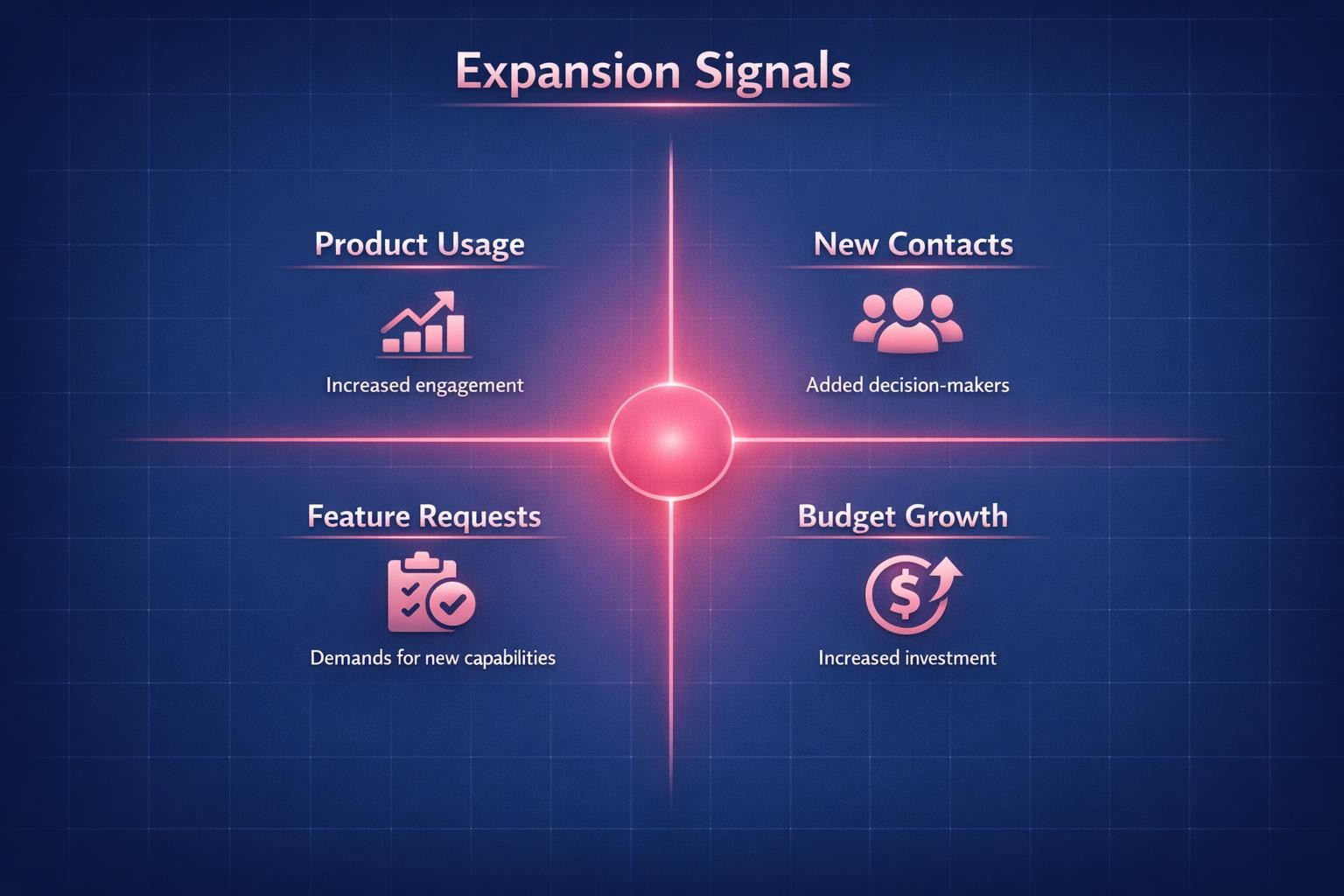
Expansion signals may include stakeholder engagement, content consumption, mutual action plan progression, deal velocity, buyer engagement quality, and stakeholder coverage. Revenue teams can use these deal-level indicators to structure opportunity reviews and identify areas that need attention.
This guide presents seven practical strategies: define execution standards, instrument stages with leading indicators, establish a weekly cadence, coach live deals, capture win-loss intelligence, align technology with the process, and create feedback loops.
Establish a baseline
Before you can improve Expansion Signals, you need an honest baseline.
Review recent deal data and map opportunities against the stages of the current process. Examine where opportunities stall, exit, or advance without enough supporting evidence. Break down the findings by representative, segment, deal size, and stage.
Use the assessment to select two or three priorities. For each priority, set a clear owner, a measurable goal, and a 90-day review cadence.
Three-part explainer: Audit the current state, Build the operating model, and Measure and improve.
1. Define what good execution looks like
Document the milestones, criteria, expected actions, and shared vocabulary for each stage. A written standard gives representatives and managers a consistent framework for reviewing opportunities.
Assign a permanent owner to Expansion Signals outcomes. The owner can maintain the operating model, define goals and metrics, review performance, and update the playbook as the team learns.
A seven-part framework for managing expansion signals.
2. Instrument each stage with leading indicators
Lagging metrics like win rate and quota attainment tell you what happened. Leading indicators can help a team recognize opportunities that may require review before their outcomes are known.
Depending on the process, leading indicators may include stakeholder engagement, content consumption, mutual action plan progression, deal velocity, buyer engagement quality, and stakeholder coverage breadth. Select a focused set that connects to revenue outcomes instead of relying only on activity counts.
Build a dashboard that shows both. Review it weekly.
Use the dashboard in coaching, pipeline reviews, and territory discussions. Measure outcomes, not activities. Email, call, and task volume alone do not establish that an opportunity is progressing.
3. Add expansion signals to the weekly cadence
Include an expansion-signals review in the weekly pipeline cadence. Structure the discussion around what should change during the next seven days rather than treating it as a general status update.
An operating model for Expansion Signals answers three questions: what actions should happen, at what stage, and who is accountable. Keep the model simple enough to follow consistently and revisit it during quarterly reviews.
4. Coach live opportunities
Use deal-specific coaching to review live opportunities, identify where execution is breaking down, and work through the next action in context.
Pay particular attention to opportunities centered on one stakeholder. Map every stakeholder in the buying committee, assign coverage, and track engagement with each one. Treat an opportunity with only one active contact as a reason for further review rather than assuming high activity reflects broad engagement.
Common areas to review include reliance on intuition, single-threaded relationships, activity without progress, and lessons from lost opportunities.
5. Capture win-loss intelligence systematically
Capture lessons from won and lost opportunities through post-deal interviews, CRM data analysis, and structured win-loss reviews. Feed relevant findings back into playbooks, training, metrics, and strategy.
After a significant loss, review the specific breakdowns that may have contributed to the outcome. Document proposed changes and revisit the findings during the next process review.
6. Align technology with the process
Technology should serve the customer expansion signals B2B SaaS process, not define it.
Evaluate each tool according to whether it supports consistent execution, reduces repeated manual work, and helps representatives focus on useful activity. Data should flow automatically between systems — CRM, engagement platform, deal room — so that leaders always have a current, accurate view of what is happening across the portfolio.
Revspire’s source material describes Revspire Customer Intelligence as surfacing deal-level data and making the right next action visible in deal rooms. This describes the product as presented in Revspire’s own material and is not an independently verified performance claim.
Strategy and ownership, process and playbooks, and technology and data are the three components presented in the source material.
7. Create continuous feedback loops
Review Expansion Signals metrics quarterly against targets, update playbooks when new information emerges, and ask buyers for feedback about their experience. Use those findings to refine the process rather than treating the framework as a one-time initiative.
Review the buying experience
Buyers choose vendors not just on product capability but on how easy and confident the buying experience makes them feel. Teams can use buyer feedback and opportunity reviews to examine whether their process creates confusion, leaves stakeholder concerns unresolved, or makes next steps unclear.
The source material connects expansion-signal practices with the buying experience and operating discipline.
Implementation checklist
- Audit: Establish a baseline with recent deal data and identify specific breakdowns.
- Define: Document stages, expected actions, ownership, and stakeholder coverage.
- Measure: Select leading and lagging indicators and review them weekly.
- Coach: Apply available deal evidence to live opportunities.
- Learn: Review wins and losses, update the playbook, and reassess priorities each quarter.
Revenue teams evaluating supporting technology can Book a Revspire demo.