Revspire blog
Future of AI in B2B Revenue: 7 Strategies the Top Revenue Teams Use in 2026
A seven-part framework for AI-enabled B2B revenue covering stage standards, indicators, weekly reviews, deal coaching, learning, and technology.
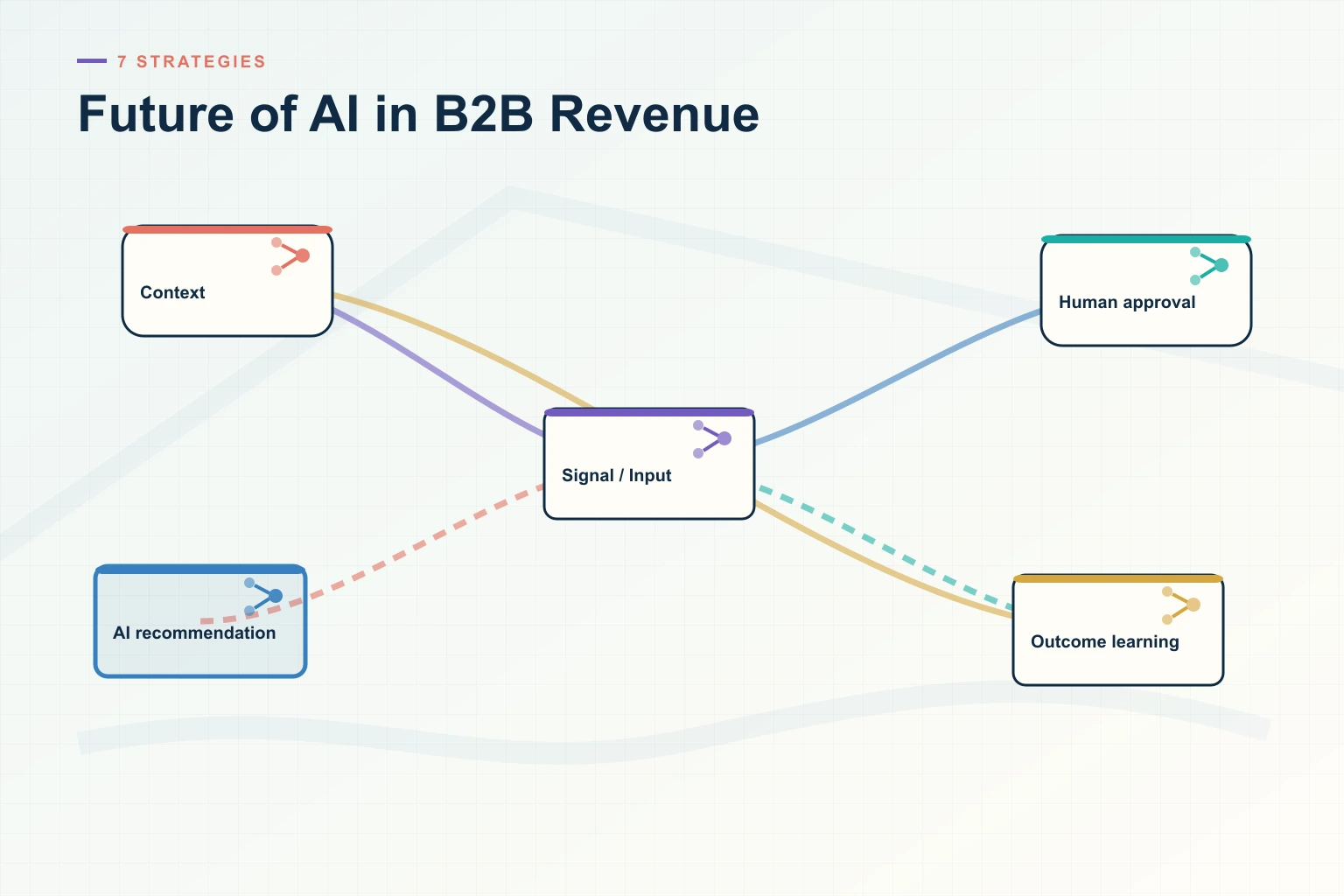
AI-enabled B2B revenue work benefits from documented standards, useful indicators, regular coaching, and feedback that improves the process. These seven strategies give revenue leaders a practical framework for 2026.
1. Define clear standards for every deal stage
Document what excellent execution looks like at each stage of the deal. Define the expected actions, identify who is accountable, and give managers and representatives a shared basis for coaching and measurement.
Before changing the process, establish an honest baseline. Review where the current approach is working, where it is breaking down, and what the data says compared with the team’s explanation.
Audit the current state, build the operating model, and measure improvement.
2. Track leading and lagging indicators
Lagging metrics such as win rate and quota attainment describe what happened. Leading indicators help teams examine what may happen next. Relevant indicators might include stakeholder engagement, content consumption, mutual action plan progression, and deal velocity at each stage.
Build a dashboard that shows both types of indicators, review it weekly, and connect it to coaching conversations and territory reviews.
3. Add the process to the weekly cadence
Include a standing review in the weekly pipeline agenda. Use it as a structured conversation about evidence, risks, ownership, and what needs to change next rather than as a general status update.
4. Coach against live opportunities
Use deal-specific coaching to review live opportunities, identify where execution is breaking down, and work through the next action with the representative in context.
Separate activity from progress. A high number of emails, calls, or tasks does not by itself show that a deal is moving forward. Examine stage progression, buyer engagement quality, and stakeholder coverage. Map stakeholders, assign coverage, and flag deals where only one contact is active.
Recognize the leak, correct the behavior, and prevent repeat failure.
5. Capture win-loss intelligence
Use post-deal interviews, CRM data analysis, and structured win-loss reviews to capture lessons from completed deals. Feed relevant findings back into playbooks, training, and strategy.
For significant losses, document the specific breakdowns that contributed to the result and update the applicable playbook.
6. Align technology with the process
Technology should support the revenue process rather than define it. Evaluate each tool by whether it makes the process easier and more consistent or adds friction. Consolidate where appropriate and reduce unnecessary manual intervention between systems.
Learn more about Revspire AI Intelligence.
7. Build feedback loops for continuous improvement
Review revenue metrics against targets, update playbooks when the team learns something new, and request feedback from buyers about their experience. Assign an owner to evaluate the findings and carry approved changes into the operating model.
Set the standard, embed the practice, and scale what works.
Implementation checklist
- Assign an accountable owner.
- Document excellent execution for each deal stage.
- Audit the current process and establish a baseline.
- Select leading and lagging indicators.
- Add evidence-based review and coaching to the weekly cadence.
- Record lessons from significant wins and losses.
- Update tools and playbooks when the evidence changes.