The Complete 2026 Guide to Onboarding Technology Stack for Revenue Leaders
A practical perspective for connecting this idea to your revenue team’s next move.
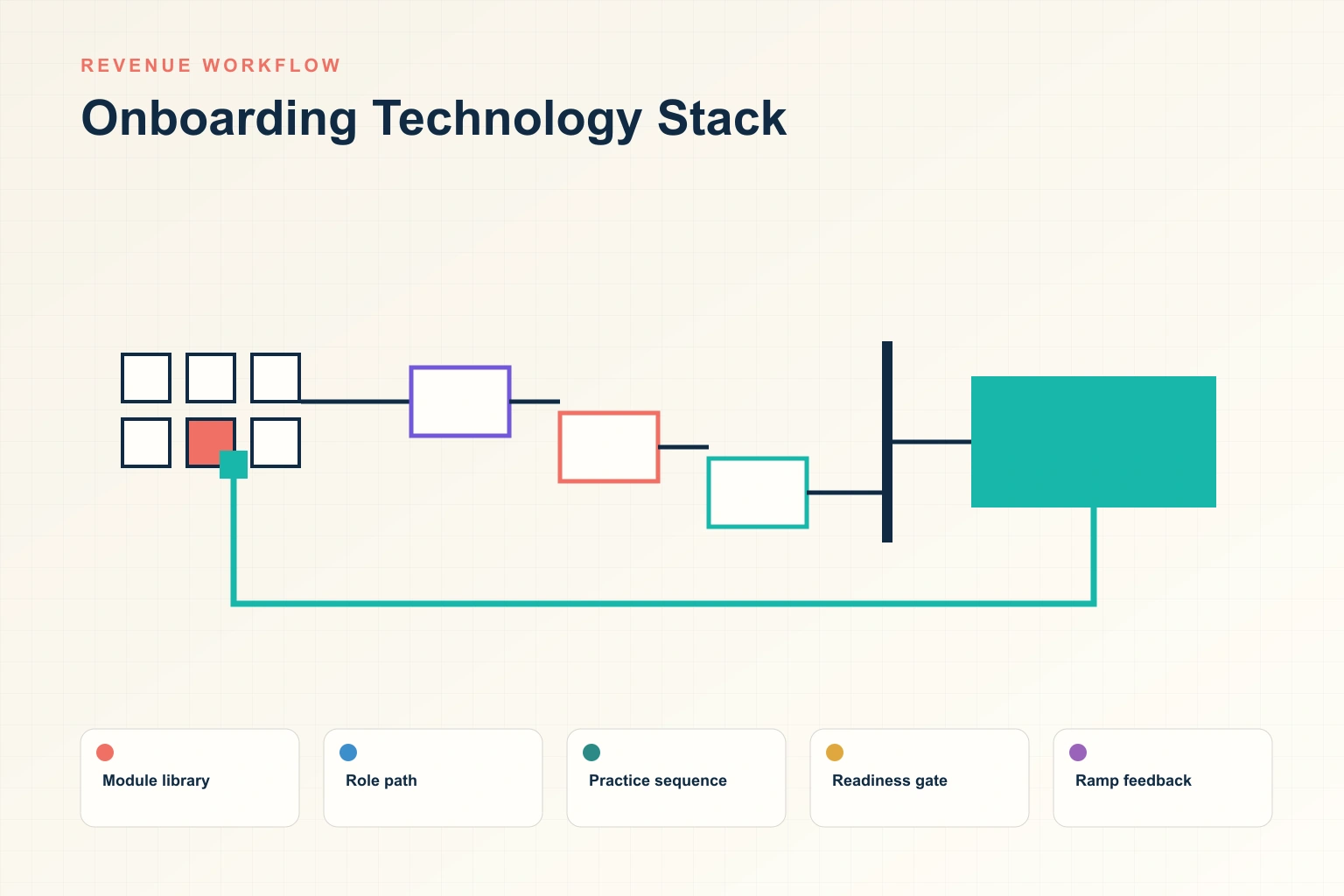
An effective onboarding technology stack combines clear ownership, a documented process, useful measurement, coaching, and feedback. Treat the stack as an ongoing operating system rather than a one-time implementation.
Start with the operating model
Document what should happen, when it should happen, and who is accountable. Define readiness milestones and stage criteria so representatives and managers have a shared basis for execution and review.
Technology should support the process rather than define it. Evaluate each tool by whether it makes onboarding easier and more consistent or adds friction. Learn more about Revspire Sales Onboarding.
Assign ownership and establish a baseline
A durable program needs an accountable owner, defined metrics, and a recurring review cadence. The owner should coordinate improvements and keep the approach connected to the operating process.
Audit where onboarding works, where it breaks down, and where the data differs from the team’s narrative. Use the findings to prioritize focused changes. Give each change an owner, a measurable goal, and a scheduled review.
Three-part explainer: Assign the role path, Verify readiness, and Measure ramp.
Combine leading and lagging indicators
Leading indicators help teams anticipate outcomes, while lagging indicators confirm what happened. Review both so managers can examine current execution without losing sight of completed results.
High activity does not necessarily mean forward progress. Pair activity measures with defined outcomes such as stage progression, engagement quality, and readiness milestones.
Build coaching into the weekly cadence
Make onboarding health a standing review topic. Use each review to identify a gap, agree on the next action, assign an owner, and define the evidence that will show whether the action helped.
Review live work with representatives to find execution gaps and work through corrections. This keeps coaching connected to specific examples instead of relying only on general instruction.
Three-part explainer: Expose the hidden cost, Build the business case, and Start where it matters.
Turn feedback into updates
Collect lessons through post-deal interviews, CRM data analysis, and structured win-loss reviews. When the evidence supports a change, incorporate the lesson into playbooks, training, and strategy.
Avoid treating onboarding as a finished project, allowing tools to dictate the process, substituting activity for outcomes, or leaving lessons undocumented.
Three-part explainer: Find the broken stack, Build the role path, and Prove ramp readiness.
Implementation checklist
- Audit the current process and available data.
- Assign an accountable owner.
- Document actions, stage criteria, and readiness milestones.
- Select leading and lagging indicators.
- Evaluate tools against the documented process.
- Add structured reviews and coaching to the weekly cadence.
- Use supported feedback to update playbooks and training.
To discuss an onboarding approach for your revenue team, Talk to Revspire.