Revspire blog
The Biggest Demo Playbook Mistakes Costing Your Team Deals in 2026
Review five demo playbook mistakes and learn how to improve ownership, stakeholder coverage, coaching, measurement, and win-loss feedback.
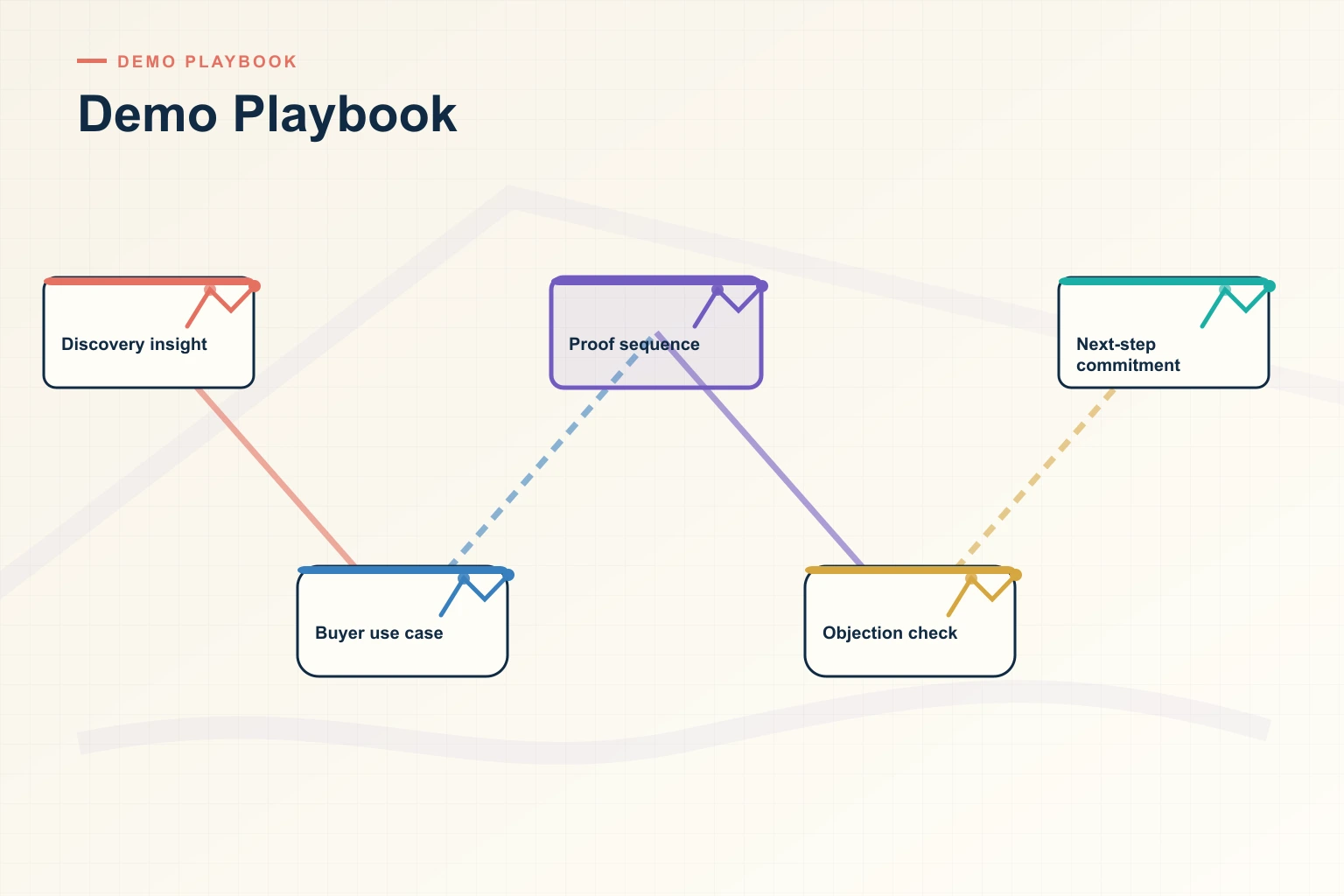
This guide examines five demo playbook mistakes that B2B revenue teams can look for in their own processes: treating the playbook as a temporary initiative, relying on intuition, single-threading buyer relationships, measuring activity instead of progress, and failing to learn from losses.
A stronger approach gives the demo playbook clear ownership, documented workflows, measurable indicators, regular coaching, and a feedback loop for continuous improvement.
Where to inspect the sales process
Use three checkpoints to review how demo playbook practices affect an opportunity.
- Early-stage qualification: Opportunities that should not enter the pipeline can consume rep capacity and distort the forecast.
- Mid-cycle execution: Qualified deals can stall when process and engagement gaps are not identified early.
- Late-stage coordination: Procurement surprises, unstated objections, and stakeholder concerns can emerge too late.
A framework for reviewing demo playbook practices across the sales process.
Five demo playbook mistakes and how to correct them
1. Treating the playbook as a one-time initiative
Treating a demo playbook as a project with a start and end date can prevent it from functioning as an ongoing operational discipline.
The correction: Assign a permanent owner to the playbook. Add standing reviews, defined metrics, and quarterly improvement goals so the process can evolve as the team learns.
2. Relying on intuition instead of portfolio data
Leaders can remember a few recent deals vividly and make policy from those examples instead of examining the full portfolio.
The correction: Define three to five leading indicators and track them weekly. When the data and the team narrative disagree, investigate the discrepancy before changing the process.
The source material references the Revspire Playbook Engine.
Three-part explainer: Recognize the leak, Correct the behavior, and Prevent repeat failure.
3. Single-threading the buyer relationship
Building the entire buyer relationship around a single stakeholder creates a fragile engagement path.
If that contact becomes unavailable, the opportunity may have no fallback path. Map the buying committee, assign stakeholder coverage, and track engagement across the group. Treat deals with only one active contact as higher risk.
4. Confusing activity with progress
High activity levels in sales demo playbook best practices can mask a complete absence of forward momentum.
Email, call, and task counts show effort, but they do not establish that a deal is advancing. Focus coaching and pipeline reviews on stage progression, deal velocity, buyer engagement quality, and stakeholder coverage.
5. Failing to learn from losses
Without a structured post-mortem process, lessons from lost deals may not be captured.
Use a structured review after significant losses. Identify the process or execution breakdowns, document the findings, and update playbooks, coaching, and training with what the team learns.
Build a practical operating model
Before you can improve Demo Playbook, you need an honest baseline.
Review recent deal data by rep, segment, deal size, and stage. Compare the team narrative with the points where opportunities stall or exit.
A framework for auditing, documenting, and measuring a demo playbook.
- Define what good looks like. Document the milestones, criteria, and expected execution at each stage.
- Establish ownership. Give one leader responsibility for goals, metrics, and ongoing improvements.
- Document the workflow. Specify what action should occur, when it should happen, and who is accountable.
- Instrument every stage. Track indicators such as stakeholder engagement, content consumption, mutual action plan progression, and deal velocity.
- Use the weekly cadence. Discuss what must change in active opportunities rather than limiting pipeline meetings to status updates.
- Coach live deals. Review current opportunities with each rep and work through specific execution gaps.
- Create a feedback loop. Feed win-loss findings, buyer feedback, and performance data back into the playbook.
Seven connected practices for establishing and improving a demo playbook.
Align technology, data, and coaching
Technology should serve the sales demo playbook best practices process, not define it.
Evaluate tools by whether they reduce friction, improve visibility, or help reps spend more time on high-value work. Where possible, connect CRM, engagement platform, and deal-room data so information can flow without repeated manual updates.
Deal-specific coaching connects the documented standard to a current opportunity. Managers can review live deals, identify where execution breaks down, and work through a correction with the rep.
Three-part explainer: Define the system, Operationalize the workflow, and Measure the impact.
Measure leading and lagging indicators together
Leading indicators can identify emerging risk, while lagging indicators show what happened.
- Leading indicators: Stakeholder engagement, content consumption, mutual action plan progression, and deal velocity.
- Lagging indicators: Win rate, cycle time, average deal size, and quota attainment.
Build a dashboard that shows both. Review it weekly. Tie it directly to coaching conversations and territory reviews.
Use the combined view to identify which actions correspond with deal progression and where managers should investigate weaker signals.
Start with a focused improvement cycle
Start with an honest audit. Where is Demo Playbook working well today? Where is it breaking down? What does the data say versus what the narrative says?
Select two or three specific improvements, give each one an owner and measurable goal, and review the work on a 90-day cadence. Use the findings to decide what to retain, revise, or expand.
Take the next step
Fixing these mistakes requires the right process, data, and platform working in alignment.
See how Revspire helps B2B revenue teams eliminate these patterns