CPQ Integration with CRM: 7 Strategies the Top Revenue Teams Use in 2026
A practical perspective for connecting this idea to your revenue team’s next move.
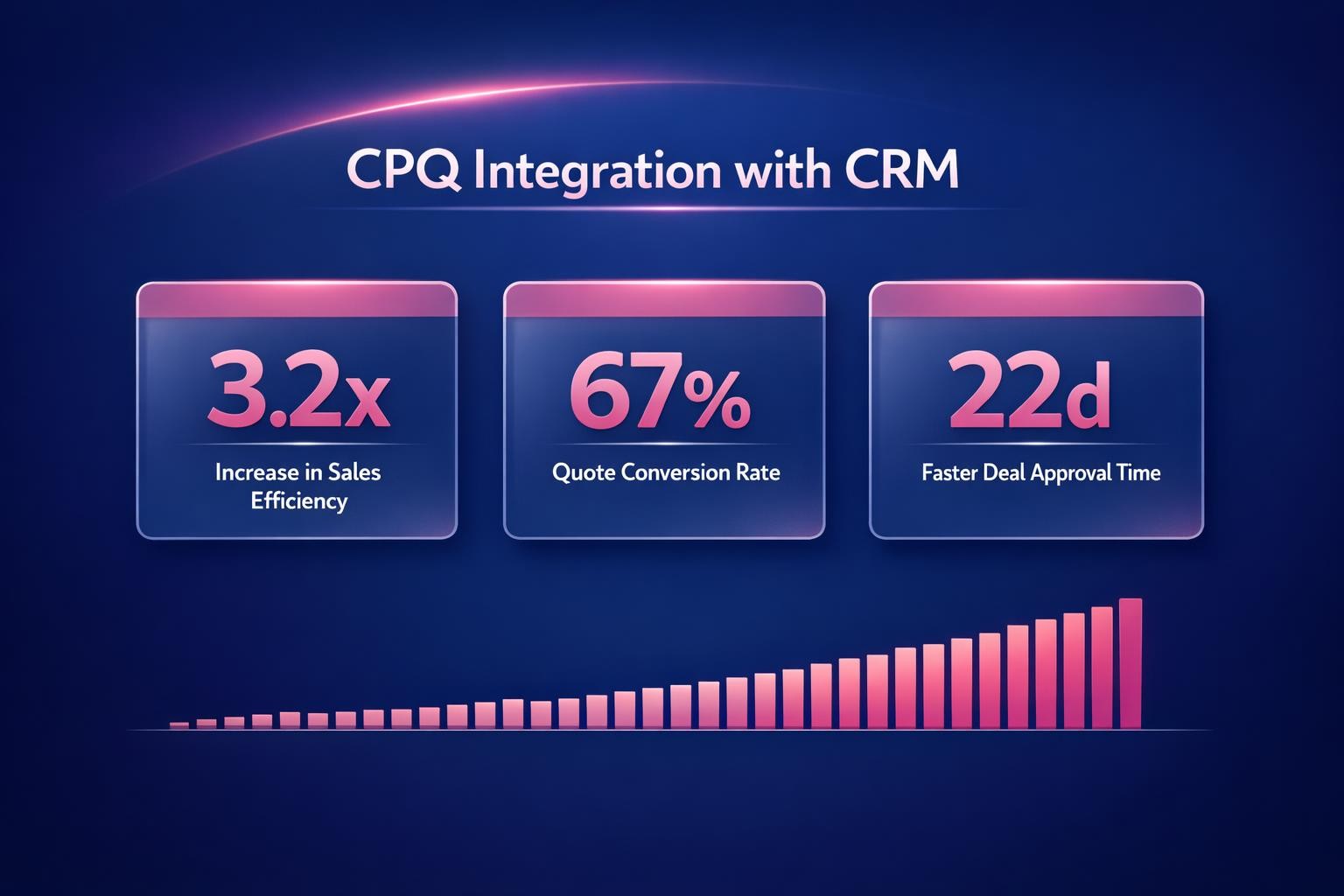
Effective CPQ integration with CRM is an ongoing operating discipline. Revenue teams need documented standards, clear ownership, relevant measurements, practical coaching, aligned technology, and a process for applying lessons from completed deals. The following seven strategies provide a structured approach.
Build a consistent operating model
1. Define the standard for every stage
Document the actions, milestones, decision criteria, and accountable roles for each stage of the quoting workflow. A shared standard gives representatives a consistent process and gives managers a clear basis for measurement and coaching.
2. Assign permanent ownership
Make one leader accountable for the integration’s outcomes, goals, metrics, and review cadence. Continuing ownership helps prevent the process from becoming a one-time technical project that loses attention after implementation.
3. Audit the current state and prioritize improvements
Identify where the workflow performs as intended, where it breaks down, and whether the data supports the explanations used in pipeline discussions. Select a small number of specific improvements from that assessment, then give each improvement an owner and a measurable goal.
Use evidence in weekly execution
4. Review leading and lagging indicators together
Track completed results with measures such as stage conversion, time in stage, and win-loss outcomes. Review those results alongside relevant leading indicators, which may include stakeholder engagement, content use, mutual action plan progress, or deal velocity. The combined view helps managers decide where closer review is warranted.
5. Coach with live opportunities
Include integration health in the weekly pipeline cadence. Review current opportunities with each representative, locate the point where execution has broken down, and agree on the next action. Deal-level coaching keeps the discussion tied to current conditions instead of relying only on general training.
Improve the system over time
6. Align technology with the documented process
Evaluate whether each tool makes the agreed workflow easier and more consistent or introduces additional friction. Where systems are connected, arrange the workflow so information can move between them without requiring representatives to maintain the same data repeatedly. Teams comparing supporting technology can evaluate Revspire CPQ against their documented requirements.
7. Feed deal findings back into operations
Use post-deal interviews, CRM data analysis, and structured win-loss reviews to record what happened. Apply supported findings to playbooks, coaching, and strategy, and review the selected metrics against targets. This feedback process allows evidence from completed deals to inform future workflow changes.
Action checklist
- Document the required actions and accountable roles for each stage.
- Assign permanent ownership for integration outcomes.
- Audit workflow performance and select focused improvements.
- Review leading and lagging indicators together.
- Use live opportunities during weekly coaching.
- Assess technology against the documented workflow.
- Apply win-loss findings to playbooks, coaching, and strategy.
Start with clearly defined workflow needs, measure the selected changes, and repeat the review process as new evidence becomes available.
Book a Revspire demo to discuss your CPQ integration with CRM workflow.