Revspire blog
Stakeholder Mapping in B2B Sales: A Practical Operating Guide
A practical stakeholder-mapping framework covering ownership, live-deal coaching, meaningful metrics, connected data, and continuous improvement.
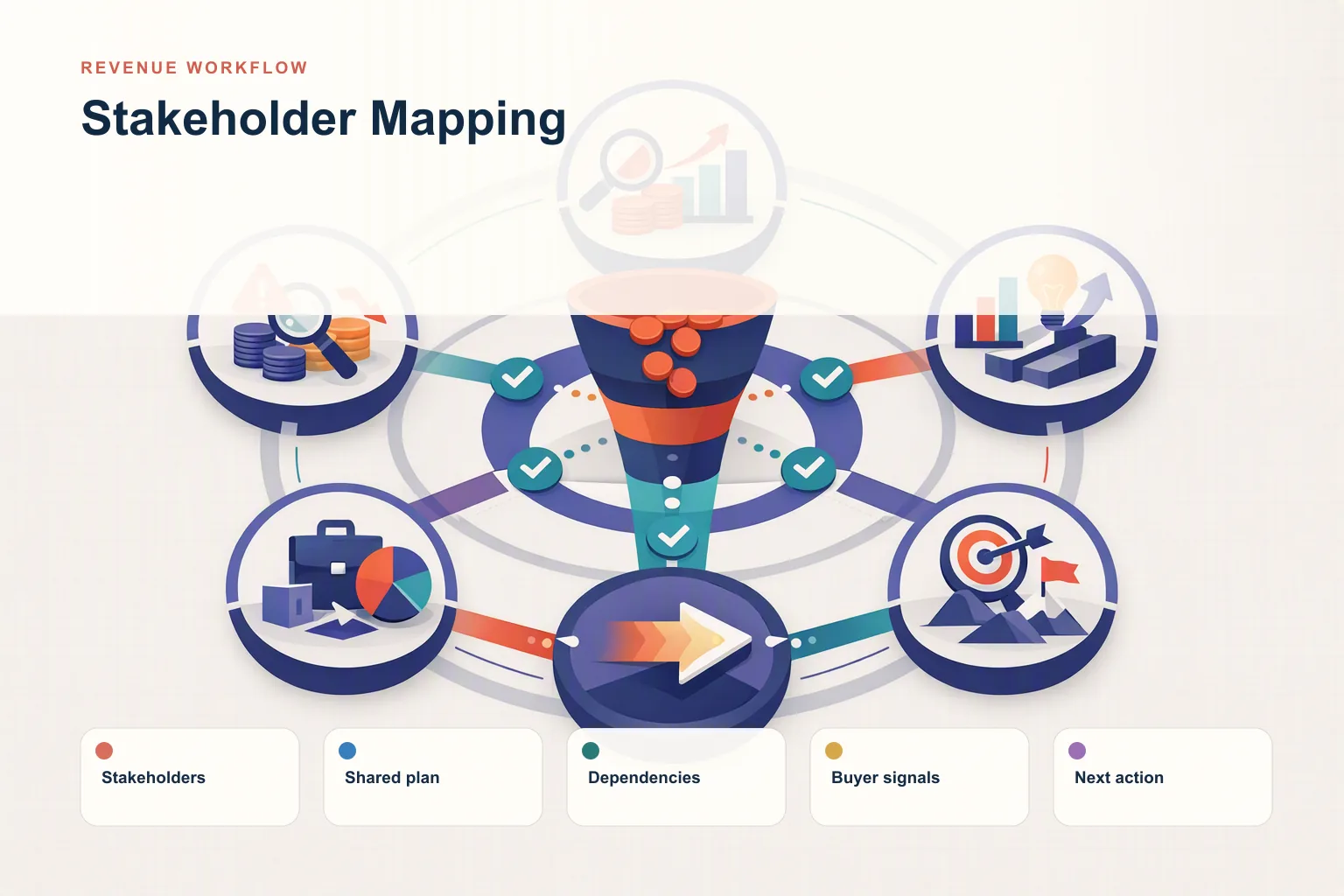
The core problem is that Stakeholder Mapping is treated as a one-time event rather than an ongoing system. A practical operating model instead makes stakeholder mapping part of deal reviews, coaching, measurement, and continuous improvement.
Three-part explainer: Expose the hidden cost, Build the business case, and Start where it matters.
Define the operating model
Begin with clear milestones, documented criteria, and a shared vocabulary across the team. Document what should happen at each deal stage, who is accountable, and which stakeholder gaps require attention before an opportunity advances.
Assign ownership
Someone on the leadership team is accountable for the outcomes, not just the activities. That owner can maintain the process, define the measures used in reviews, and incorporate lessons from won and lost deals.
Use a weekly cadence
Build a standing review of stakeholder mapping health into the weekly pipeline rhythm. Use it as a structured conversation about what needs to change in the next seven days rather than as a status update.
Coach with live opportunities
Review live opportunities with each rep, identify where stakeholder coverage or engagement breaks down, and work through the correction in the context of the active deal.
Support the process with connected data
The technology layer for Stakeholder Mapping should reduce friction, not add it. Data should flow between the CRM, engagement platform, and deal room so teams can maintain a current view without repeatedly updating separate systems.
For a related product page, see Revspire Deal Rooms.
Measure progress and outcomes
Measure outcomes, not activities. Measures described in the source material include stakeholder engagement, content consumption, mutual action plan progression, deal velocity, conversion rates, time in stage, win rate, cycle time, average deal size, and stakeholder coverage breadth.
Use both leading and lagging indicators. Leading indicators can support intervention while an opportunity is active, while lagging indicators can be reviewed after outcomes are known.
A practical starting plan
- Audit the current state. Start with an honest audit. Review opportunities by rep, segment, deal size, and stage to identify where the process breaks down.
- Define the standard. Record the milestones, criteria, stakeholder roles, and ownership expected at each stage.
- Add a weekly review. Discuss changes in stakeholder coverage, engagement, and next actions during the normal pipeline cadence.
- Coach against active deals. Use live opportunities to identify and address specific execution gaps.
- Capture win-loss intelligence. Every won and lost deal contains insights about what works and what does not in your approach to Stakeholder Mapping.
- Update the playbook. Feed documented findings back into coaching, process guidance, and future deal reviews.
Common execution risks
Single-threading: Map every stakeholder in the buying committee, assign coverage, and track engagement with each one.
Activity without progress: Review stage progression, engagement quality, and stakeholder coverage before requesting more activity.
Unexamined losses: Document stakeholder-mapping breakdowns from significant lost deals and update the playbook accordingly.
Disconnected tools: Evaluate whether each tool makes stakeholder mapping easier and more consistent or adds friction.
Build the feedback loop
Review stakeholder-mapping measures against targets, update playbooks when the team learns something new, and use findings from won and lost deals to guide future execution.