Revspire blog
Win-Loss and Sales Training: 7 Practical Strategies
Explore seven practical strategies for auditing, measuring, coaching, and improving a continuous win-loss and sales training process.
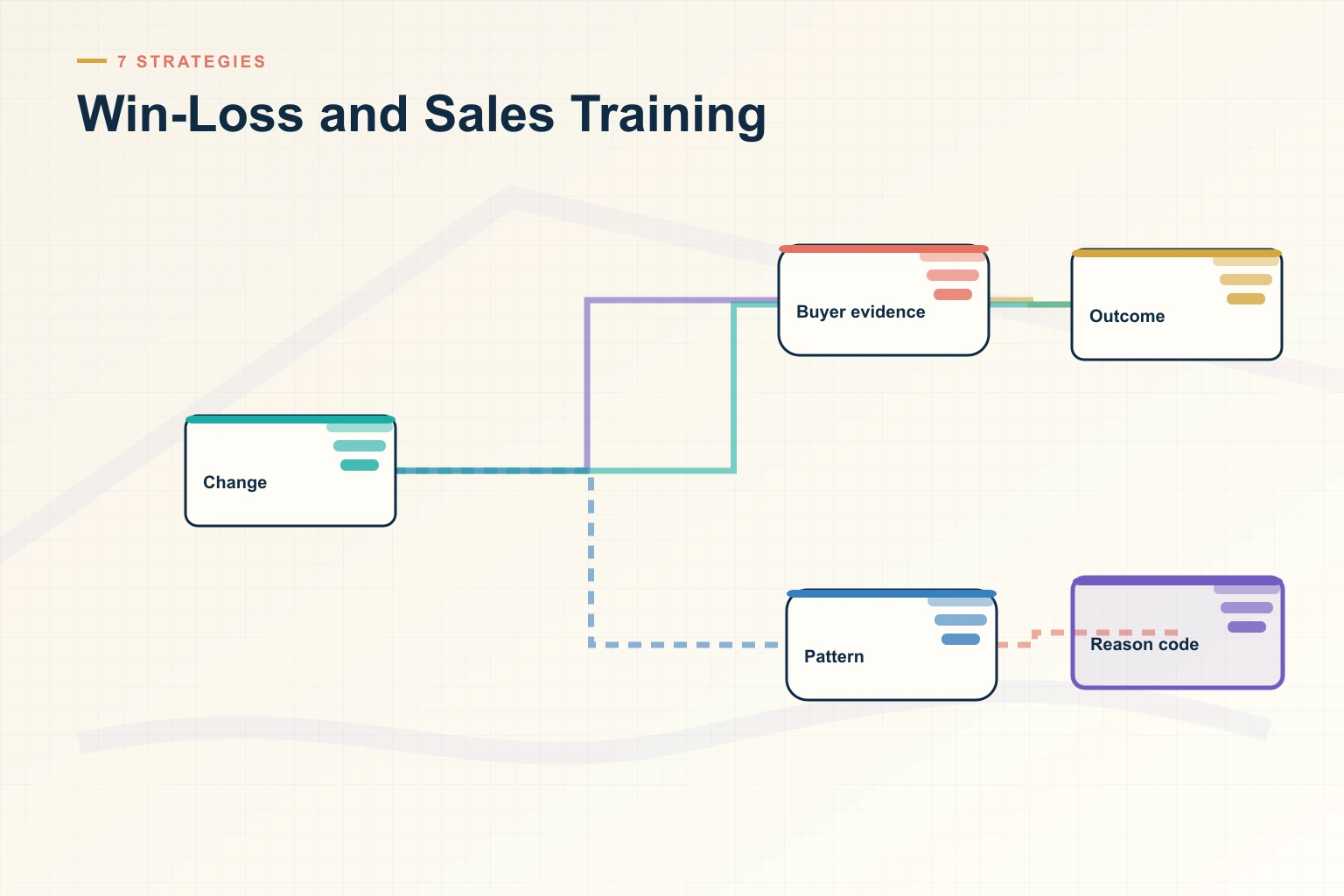
This guide presents a practical framework for connecting win-loss reviews, sales coaching, playbooks, technology, and measurement.
Establish a baseline
Start with an honest audit.
Review the last six months of deal data. Identify where opportunities leave the pipeline and break the results down by representative, segment, deal size, and stage. Compare what the data shows with the team’s account of what happened.
An operating model for Win-Loss and Sales Training answers three questions: what actions should happen, at what stage, and who is accountable.
Seven practical strategies
1. Define the standard
Document what excellent execution looks like at each deal stage. Include milestones, decision criteria, required actions, and a shared vocabulary that managers and representatives can use during reviews.
2. Assign permanent ownership
Assign a permanent owner to Win-Loss and Sales Training outcomes. Build it into your operating cadence with standing review meetings, defined metrics, and quarterly improvement goals.
3. Use leading and lagging indicators
Track leading indicators such as stakeholder engagement, content consumption, mutual action plan progression, and deal velocity. Review them alongside lagging indicators such as win rate, cycle time, and average deal size.
The metrics for Win-Loss and Sales Training should connect directly to revenue outcomes.
Build a dashboard that shows both. Review it weekly.
4. Use the weekly cadence for deal-level coaching
Add a structured review to weekly pipeline calls. Use live opportunities to identify execution gaps and decide what should change during the next seven days.
5. Capture and apply win-loss intelligence
Use post-deal interviews, CRM analysis, and structured win-loss reviews to document lessons from won and lost deals. Feed applicable findings into playbooks, coaching, and strategy.
6. Align technology with the process
Technology should serve the win loss data sales training coaching process, not define it.
Evaluate tools by whether they reduce friction and support the documented process. Additional information is available from Revspire Win-Loss Intelligence.
7. Maintain a feedback loop
Review metrics against targets, update playbooks when new evidence emerges, and ask buyers for feedback about their experience. Repeat the review on a defined cadence.
Three-part explainer: Set the standard, Embed the practice, and Scale what works.
Five mistakes to review
- Treating training as a one-time initiative: assign an owner and include the work in the regular operating cadence.
- Relying on intuition alone: define a small set of indicators, track them weekly, and investigate discrepancies.
- Single-threading a relationship: map stakeholders, assign coverage, and flag deals that depend on one active contact.
- Confusing activity with progress: measure stage progression, engagement quality, and stakeholder coverage.
- Failing to learn from losses: conduct structured reviews, document findings, and update relevant playbooks.
Measure outcomes, not activities.