Sales Onboarding Metrics: Seven Deal-Execution Measurement Strategies
A practical perspective for connecting this idea to your revenue team’s next move.
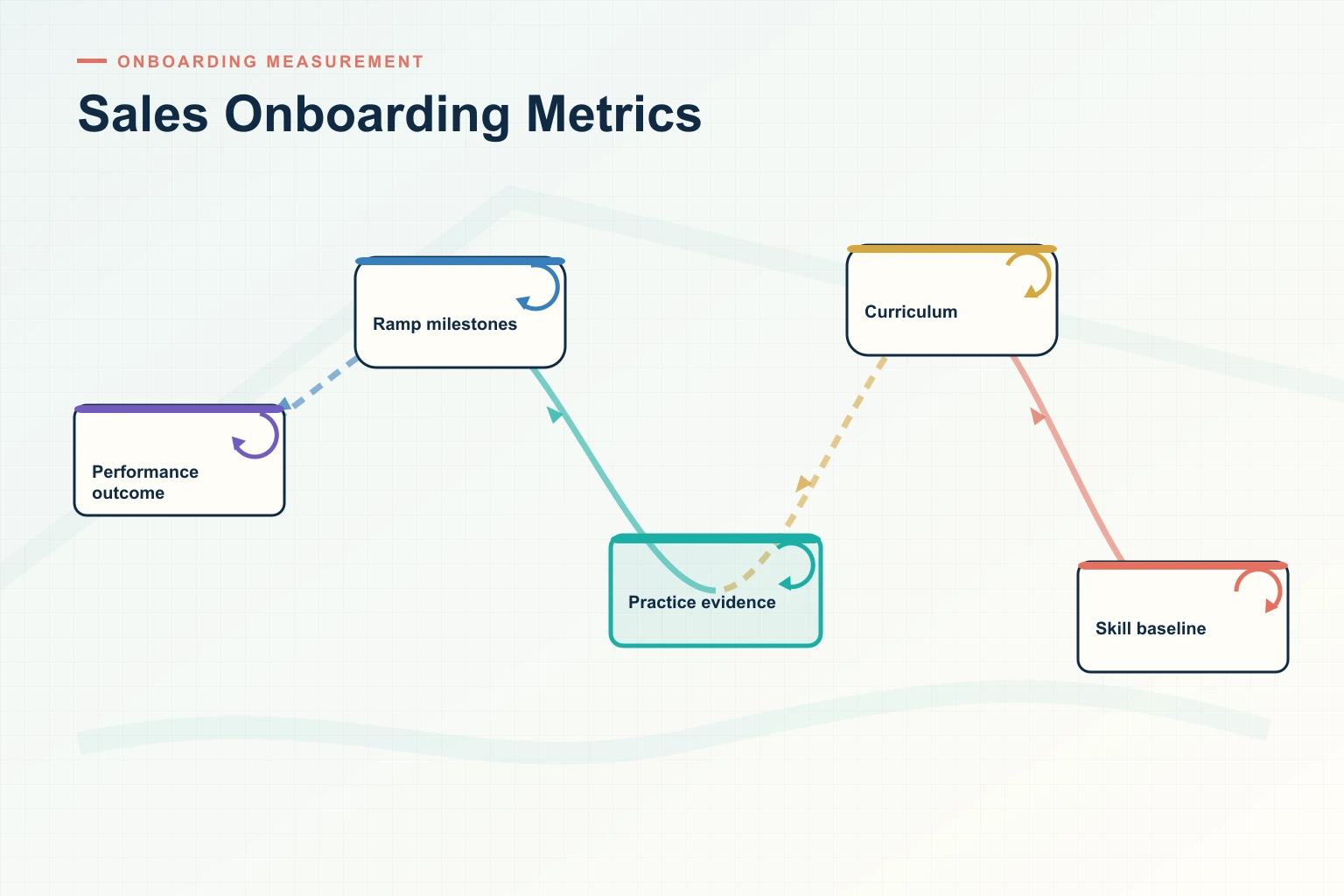
Here, sales onboarding metrics covers a broader deal-execution practice that includes opportunity stages, buyer engagement, pipeline reviews, deal-level coaching, and win-loss analysis.
Build the measurement foundation
1. Define the standard and assign ownership
Write down what excellent execution looks like at each stage of the deal. Use clear milestones, documented criteria, and a shared vocabulary across the team. Assign a permanent owner who is accountable for outcomes.
2. Audit the current state
Pull the last six months of deal data. Map opportunities by rep, segment, deal size, and stage to identify where deals exit or stall. Compare what the data says with what the narrative says, then prioritize two or three specific improvements.
3. Track leading and lagging indicators
Lagging indicators include win rates, cycle times, and average deal sizes. Possible leading indicators include stakeholder engagement rates, content consumption, mutual action plan progression, and deal velocity at each stage.
Build a dashboard that shows both. Review it weekly.
4. Embed review and coaching in the weekly cadence
Make sales onboarding metrics measurement part of the weekly pipeline call agenda. Use the review as a structured conversation about what needs to change in the next seven days.
Use deal-specific coaching by reviewing live opportunities, identifying where execution breaks down, and working through the fix in real time.
Scale and improve the practice
5. Measure deal progress and stakeholder coverage
Measure outcomes, not activities. Track stage progression velocity, buyer engagement quality, and stakeholder coverage breadth. For the pre-field decision, use an evidence-based sales onboarding assessment and track assessment health separately from downstream revenue results.
Map every stakeholder in the buying committee, assign coverage, and track engagement with each one. Flag deals where only one contact is active.
6. Capture win-loss intelligence
Use post-deal interviews, CRM data analysis, and structured win-loss reviews. Feed the findings back into playbooks, training, and strategy.
7. Align technology and feedback loops
Technology should serve the sales onboarding metrics measurement process, not define it. Evaluate whether each tool reduces friction and ensure that data flows between systems without manual intervention.
Review metrics against targets, update playbooks when new findings emerge, and solicit feedback from buyers on their experience.
Learn more about Revspire Sales Onboarding.
Three-part explainer: Set the standard, Embed the practice, and Scale what works.
Looking for a platform to deliver this? Our guide to the best sales training platforms compares the leading options.
Start with a focused improvement plan
Use the audit to prioritize two or three specific improvements. Deploy them with a clear owner, a measurable goal, and a 90-day review cadence.