Sense of Urgency in Sales: Meaning, Tactics and Year-End Closing
A practical perspective for connecting this idea to your revenue team’s next move.
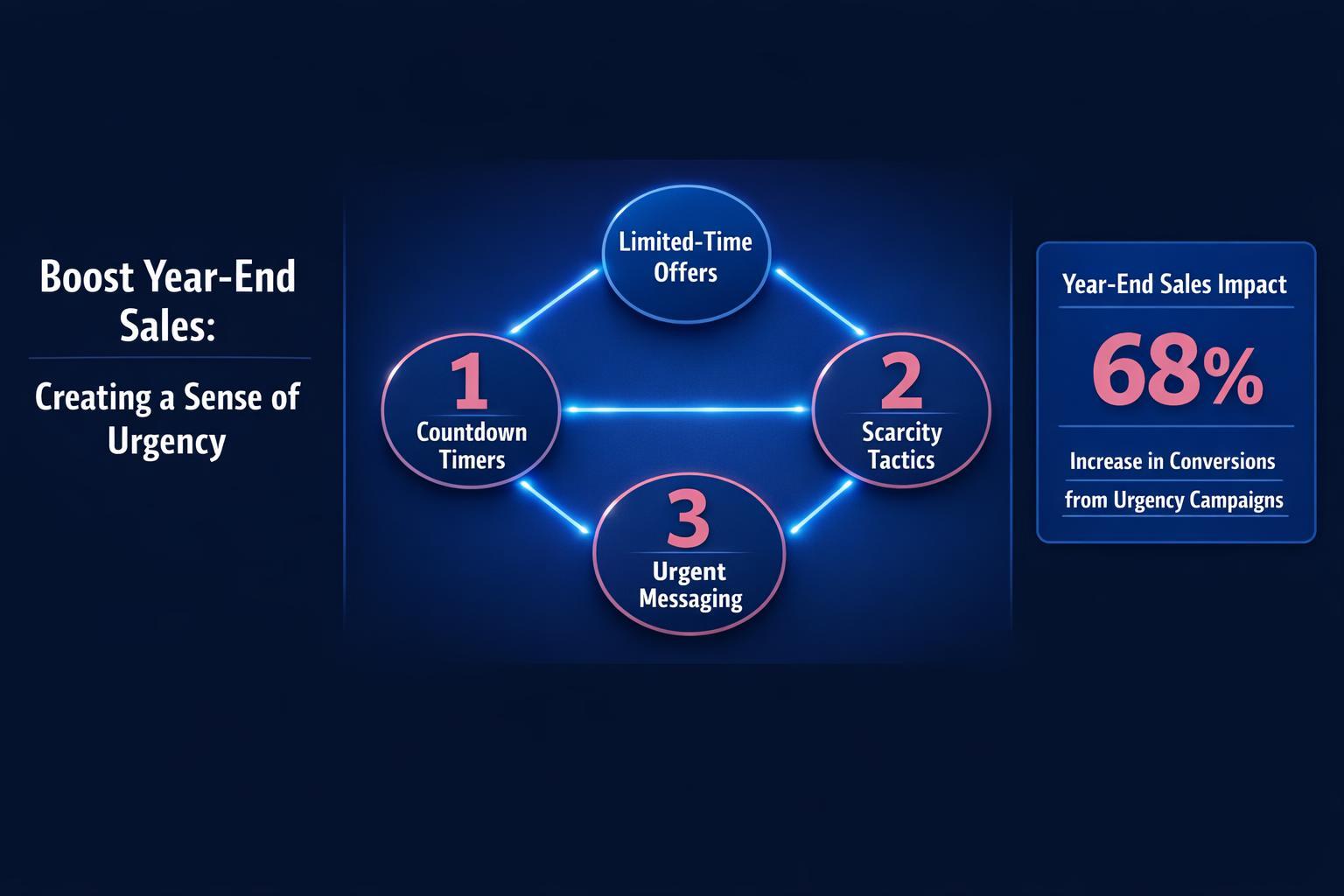
A sense of urgency in sales is the buyer’s own reason to decide now rather than later: a cost of waiting they recognise and a deadline they own, such as a go-live date, a contract expiry or a budget that lapses. Sellers build it by finding and quantifying that compelling event, not by inventing deadlines or discounts.
This guide explains what sense of urgency means, why manufactured urgency backfires, seven tactics that create real urgency in B2B deals, and how to apply them to year-end and Q4 closing, with a holiday-season closing checklist. It draws on research published between 2008 and 2026 and Revspire benchmark data from October 2025 to September 2026.
Last updated: 17 October 2026
What does “sense of urgency” mean?
The phrase comes from change management. John Kotter describes a true sense of urgency as a determination to make something happen and to do it now, and warns against false urgency, which he calls “all activity, not productivity” (strategy+business, 19 August 2008). Both ideas carry over to selling.
In a sales context, urgency belongs to the buyer. It exists when the buying group believes that waiting will cost more than acting, and when that belief is tied to a date. A rep cannot create it out of nothing; they can only help the buyer see and measure a cost that is already there. That is why urgency is mostly built in discovery, not at the close.
Real (buyer-owned) urgency
Manufactured urgency
Where the deadline comes from
The buyer’s business: go-live, contract expiry, audit, budget cycle
The seller’s quarter or quota
Typical lever
Cost of waiting, agreed in numbers
Discount that expires Friday
Who repeats it internally
The champion and the economic buyer
Only the seller
What happens if the date passes
The buyer loses something real
The offer quietly comes back next quarter
Effect on trust
Builds it: the seller is solving the buyer’s problem
Erodes it: the buyer learns to wait
Real versus manufactured urgency in B2B sales.
Why does fake urgency backfire?
Exploding discounts and invented deadlines can move a close date, but they carry three costs.
- They give away margin. In a study of an enterprise software vendor, Ian Larkin found that salespeople gave buyers much lower prices in the quarters when closing a deal paid them more, and that this mispricing cost the vendor 6% to 8% of revenue (Larkin, Journal of Labor Economics, 2014).
- They train buyers to wait. Once a buyer has seen a “this month only” price reappear, every future deadline is a negotiating position.
- They do not fix the real blocker. Most stalled deals are not waiting for a better price. Research by Matt Dixon and Ted McKenna across 2.5 million recorded sales conversations attributes 40-60% of lost deals to indecision (Challenger, 22 February 2024). A discount does not make a nervous buying group more confident.
Buyers notice the difference. Say so plainly when a date is yours, not theirs: “our quarter ends on the 31st, and I would like to get this done, but nothing changes for you if we sign in January” keeps trust in a way a fake deadline never does.
What creates real urgency in B2B sales?
Real urgency comes from a compelling event: something in the buyer’s world that makes a later decision worse. The table lists the common ones and a discovery question that surfaces each.
Compelling event
Why it creates a deadline
Question that uncovers it
Incumbent contract or renewal expiry
Missing it means another year on the old tool, or a gap
“When does your current contract renew, and what is the notice period?”
A launch, season or hiring wave
The solution has to be live before it starts
“What has to be working by when for this to pay off this year?”
Expiring budget
Unspent funds may not roll over
“Is this budget use-it-or-lose-it, and when does your fiscal year close?”
Audit, regulation or security finding
A fixed external date with consequences
“Is there a compliance or audit date this needs to meet?”
Board or leadership commitment
Someone senior has promised a result by a date
“Who has committed to this outcome, and by when?”
Measurable cost of the current problem
Every month of delay has a price
“What does this problem cost you each month today?”
Compelling events that create buyer-owned urgency, with discovery questions.
Budget expiry is a real effect, not a sales myth. Studying 14.6 million US federal contracts, Jeffrey Liebman and Neale Mahoney found that agencies’ spending in the final week of the fiscal year averaged 4.9 times that of a typical week (NBER Digest, March 2014). The same research found IT projects bought in that last week were more likely to receive lower quality ratings, which is a reminder to help the buyer spend well, not just quickly. Ask about the buyer’s fiscal year, not yours: many do not end in December.
How to create a sense of urgency in sales: 7 tactics
1. Find the compelling event in discovery
Ask the questions in the table above in the first or second meeting, and write the answer in the opportunity record. A deal with no compelling event is not necessarily a bad deal, but it should not be forecast for this quarter.
2. Quantify the cost of waiting
Turn the problem into a monthly figure the buyer agrees with, then show what a later start costs. An illustrative example: a buyer estimates their manual process costs $40,000 a month in overtime and rework. Deciding in December with a six-week rollout means value starts in early February. Deciding at the end of January pushes go-live to mid-March, about six weeks later, so waiting costs roughly $60,000. That is a far stronger reason to act than a 10% discount on a $50,000 deal, which is worth $5,000, and it is the buyer’s number, not yours.
3. Tie the plan to the buyer’s date
Once there is a date, work backwards from it in a mutual action plan: go-live, kickoff, signature, procurement, legal, security, final evaluation. Every step gets an owner and a due date. In Revspire customer data, deals with a recorded mutual action plan closed in a median of 42 days against 60 at $10k-$50k, and 85 against 120 above $50k (Revspire mutual action plan benchmark). That is an observed pattern, not proof the plan alone caused it. A mutual action plan template gives you the standard steps.
4. Make the status quo visible
The real competitor in most deals is doing nothing. In more than 2,000 scored AI role-plays on Revspire, the status quo objection (“our current process works fine”) was the hardest for reps, averaging 2.9 out of 5, below price at 3.2 (Revspire sales skills gap benchmark). Prepare a business-case answer that shows what the current process costs and what risk waiting adds. Our guide to handling the status quo objection has talk tracks.
5. Get the economic buyer to own the date
A champion’s enthusiasm rarely survives a budget meeting on its own. Ask your champion who has committed to the outcome and whether you can confirm the timeline with that person directly. Urgency that the person who signs has stated out loud is worth more than any closing technique.
6. Use time-bound offers only when they are true
Some deadlines on the seller’s side are real: an implementation slot that is genuinely limited, a published price change, a training cohort that starts on a fixed date. Use them, explain why the date exists, and honour them. If an offer will come back next quarter, do not present it as a deadline.
7. Remove the friction that makes “later” easier
Buyers often delay because the remaining steps look like hard work. In Revspire customer data, security and legal review is the mutual action plan milestone most often overdue, late in 34% of plans (Revspire mutual action plan benchmark). Send the security pack and contract early, pre-approve discount bands, and make the contract signable electronically. When the path to “yes” is short, the buyer’s own urgency is enough. If the objection is “not now”, see handling the timing objection.
Year-end sales: how to close deals before the end of the year
Year-end closing is where the difference between real and fake urgency matters most, because the calendar works against you. Gong’s analysis of more than 400,000 sales interactions found prospects sign 27% fewer contracts in the week of US Thanksgiving, sign rates drop 78% during Christmas week, and reps are about twice as likely to be stood up for a meeting in the week of a major holiday (Gong, 17 November 2021, updated 6 March 2026). In practice, a deal that is not signed by the week before Christmas will often wait until January.
Slipping has a cost of its own. Ebsta reports win rates decline by 34% when a deal slips between one and four weeks past its close date (Ebsta, 2024 B2B Sales Benchmarks: H1 Update, July 2024). So the year-end goal is to agree a realistic date early and protect it, not to push every deal into the last week.
Holiday-season closing checklist
When
What to do
Early November
For every deal forecast for Q4, confirm the buyer’s compelling event and fiscal year end. Move deals without one to Q1 now, not on 20 December.
Before Thanksgiving week (US)
Agree a dated closing plan with each buyer, including legal and procurement cut-off dates and who signs. Send the security pack and contract if they have not gone out.
First week of December
Check the planned signature date of every forecast deal. If it falls in a holiday week, agree an earlier date or a January date with the buyer and update the forecast.
Second week of December
Ask each signatory and approver about their time off. Line up deputies or delegated approval where needed, and confirm e-signature works for their legal team.
Week before Christmas
Hold the final call: confirm the order form, start date and onboarding kickoff. Keep the offer you made; do not add a last-minute discount.
Christmas to New Year
Do the work that does not need the buyer: clean the pipeline, close out dead deals, update stages and close dates so January’s forecast is honest.
Early January
Confirm the agreed January date and plan for every deal that moved out of Q4, and check Q1 pipeline coverage against what is still needed for the quarter.
A holiday-season closing checklist for B2B deals. Adjust the weeks to your buyers’ holidays and fiscal year.
Closing questions and moves that work in December without pressure
- A choice of start dates: “Would you rather kick off on 6 January or 13 January?” Both assume a decision, neither invents a deadline.
- The blocker question: “What would need to be true for you to sign by the 19th?” It surfaces the last real hurdle.
- The approver check: “Who else needs to approve, and will they be in the office that week?”
- The first 30 days: “Walk me through what your team does in the first month.” It moves the buyer from deciding to planning.
- A dated next step: “Shall I put the onboarding call in for the 8th now, so it is held?”
- Two commercial options: “Does a full annual rollout or a phased start suit your budget better?” Offer options you would sell anyway, not a new discount.
- The last hurdle: if one contract clause is blocking signature, offer a call between both legal teams this week.
- Peer proof: a reference call with a customer in the buyer’s industry.
- Hands-on time: a sandbox or trial so the evaluators can test their own use case.
Let buyer engagement decide where you spend December. A buyer who has just reopened the pricing or proposal gets a call that day about the commercial questions. Treat a deal room with no buyer view for 20 days as a Q1 deal: in Revspire customer data, after 20 days without a buyer view the win rate fell below half the overall rate (Revspire digital sales room benchmark).
When should you let a deal move to January?
When the buyer has no reason of their own to sign in December. Pulling that deal forward with a discount costs margin and teaches the buyer your calendar. Forecast it for Q1, agree a January date and a plan to hit it, and make sure next quarter has the pipeline to absorb it; our guide to pipeline coverage ratio shows how to check. For the wider set of tactics that shorten cycles in any quarter, see deal acceleration.
Frequently asked questions
What does sense of urgency mean in sales?
It means the buyer has their own reason to decide now: a cost of waiting they recognise and a date they own, such as a contract expiry, go-live or budget deadline. The seller’s job is to uncover and quantify that reason, not to invent one.
How do you create a sense of urgency without being pushy?
Ask about compelling events in discovery, agree the monthly cost of the current problem, and build a dated plan back from the buyer’s own deadline. Be honest when a date is yours rather than theirs, and remove friction such as late security and legal reviews.
Is a discount a good way to create urgency?
Usually not. It moves the close date without changing the buyer’s reason to buy, and research on an enterprise software vendor found quarter-driven discounting cost 6% to 8% of revenue. Offer time-bound terms only when the deadline is real.
How do you close deals at the end of the year?
Confirm each deal’s compelling event and fiscal year in early November, agree dated closing plans before Thanksgiving week, and check signatory availability in early December. Aim to sign by the week before Christmas, when signing activity falls sharply.
What is a compelling event in sales?
A compelling event is something in the buyer’s business that makes a later decision worse, such as an expiring contract, a launch date, an audit or an expiring budget. Without one, a deal has no reason to beat the calendar.
Sources
- John Kotter on a sense of urgency, Edward H. Baker, strategy+business, 19 August 2008; accessed 17 October 2026.
- The Cost of High-Powered Incentives: Employee Gaming in Enterprise Software Sales, Ian Larkin, Journal of Labor Economics, 2014, pp. 199-227, DOI 10.1086/673371 (abstract); accessed 17 October 2026.
- How to Overcome Customer Indecision Using the JOLT Effect Approach, Challenger (research by Matt Dixon and Ted McKenna), 22 February 2024; accessed 17 October 2026.
- Use-It-or-Lose-It Budget Rules, NBER Digest, on Liebman and Mahoney, NBER Working Paper 19481, March 2014; accessed 17 October 2026.
- Win big this holiday season by avoiding these selling dead zones, Devin Reed, Gong, 17 November 2021 (updated 6 March 2026); accessed 17 October 2026.
- 2024 B2B Sales Benchmarks: H1 Update, Ebsta, July 2024; accessed 17 October 2026.
- Revspire research (aggregated Revspire customer data, October 2025 to September 2026): mutual action plan benchmark, sales skills gap benchmark and digital sales room benchmark; accessed 17 October 2026.