Revspire blog
Continuous Onboarding Model: 7 Practical Strategies for Revenue Teams
Seven practical continuous onboarding strategies for standards, measurement, coaching, stakeholder coverage, technology, and feedback loops.
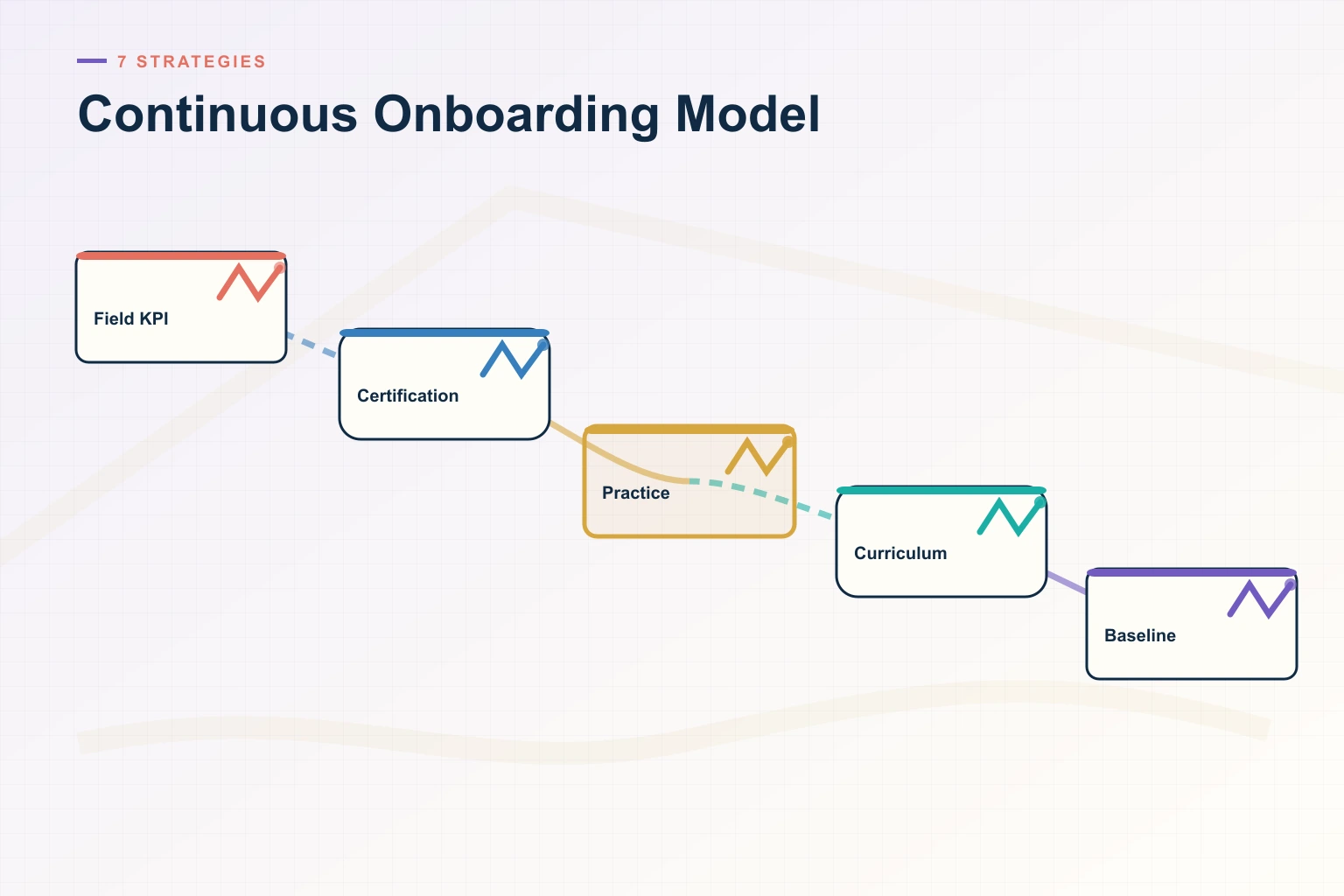
The core problem is that Continuous Onboarding Model is treated as a one-time event rather than an ongoing system. This guide presents seven practical ways to make continuous onboarding sales enablement part of an ongoing revenue-team workflow.
1. Define the standard and assign ownership
Document what effective execution looks like at each deal stage, including clear milestones, documented criteria, and shared terminology. A common standard gives managers and representatives a consistent basis for coaching, measurement, and review.
Assign someone on the leadership team to be accountable for outcomes, goals, metrics, and changes to the approach as market conditions change.
2. Audit the current state
Before you can improve Continuous Onboarding Model, you need an honest baseline. Pull the last six months of deal data. Map opportunities against the stages of continuous onboarding sales enablement and identify where deals leave the pipeline.
Break down the results by representative, segment, and deal size. Compare what the data shows with the team’s account of what is happening. Then prioritize two or three improvements, each with a clear owner, a measurable goal, and a 90-day review cadence.
3. Use leading and lagging indicators
Lagging metrics like win rate and quota attainment tell you what happened. Potential leading indicators include stakeholder engagement rates, content consumption, mutual action plan progression, and deal velocity at each stage.
Measure outcomes, not activities. Track stage progression velocity, buyer engagement quality, and stakeholder coverage breadth as review inputs alongside relevant activity data.
The source material describes Revspire Sales Onboarding as surfacing deal-level data for revenue leaders.
4. Embed review and coaching into weekly workflows
Build a standing review of Continuous Onboarding Model health into weekly pipeline calls. Make it a structured discussion of what should change during the next seven days rather than a status update.
Review live opportunities with each representative, identify where continuous onboarding sales enablement execution is breaking down, and work through the correction in context.
5. Map stakeholder engagement
Map every stakeholder in the buying committee, assign coverage, and track engagement with each one. Flag deals with only one active contact as high risk.
6. Align technology with the process
Technology should serve the continuous onboarding sales enablement process, not define it. Evaluate whether each tool supports the documented workflow or adds friction.
Data should flow between the CRM, engagement platform, and deal room without requiring representatives to update multiple disconnected systems.
7. Turn deal reviews into feedback
Capture insights through post-deal interviews, CRM data analysis, and structured win-loss reviews. Feed relevant findings back into playbooks, training, and strategy.
After a significant lost deal, review the specific continuous onboarding sales enablement breakdowns with the representative, document the findings, and update playbooks accordingly. Review Continuous Onboarding Model metrics quarterly against targets and select a specific change to test next.
Three-part explainer: Set the standard, Embed the practice, and Scale what works.
Where to inspect pipeline problems
Inspect three areas: early-stage deals that consume representative capacity and distort the forecast, qualified deals that stall during the cycle, and late-stage deals affected by procurement surprises, unstated objections, or stakeholder concerns.
Use the audit to determine where the process is breaking down before changing playbooks, coaching, or technology.
Put the framework into practice
Explore how Revspire can support this operating model.