Revspire blog
The Biggest Buyer Onboarding Experience Mistakes Costing Your Team Deals in 2026
Learn five buyer onboarding experience mistakes and practical fixes for ownership, data, stakeholder coverage, deal progress, coaching, and loss reviews.
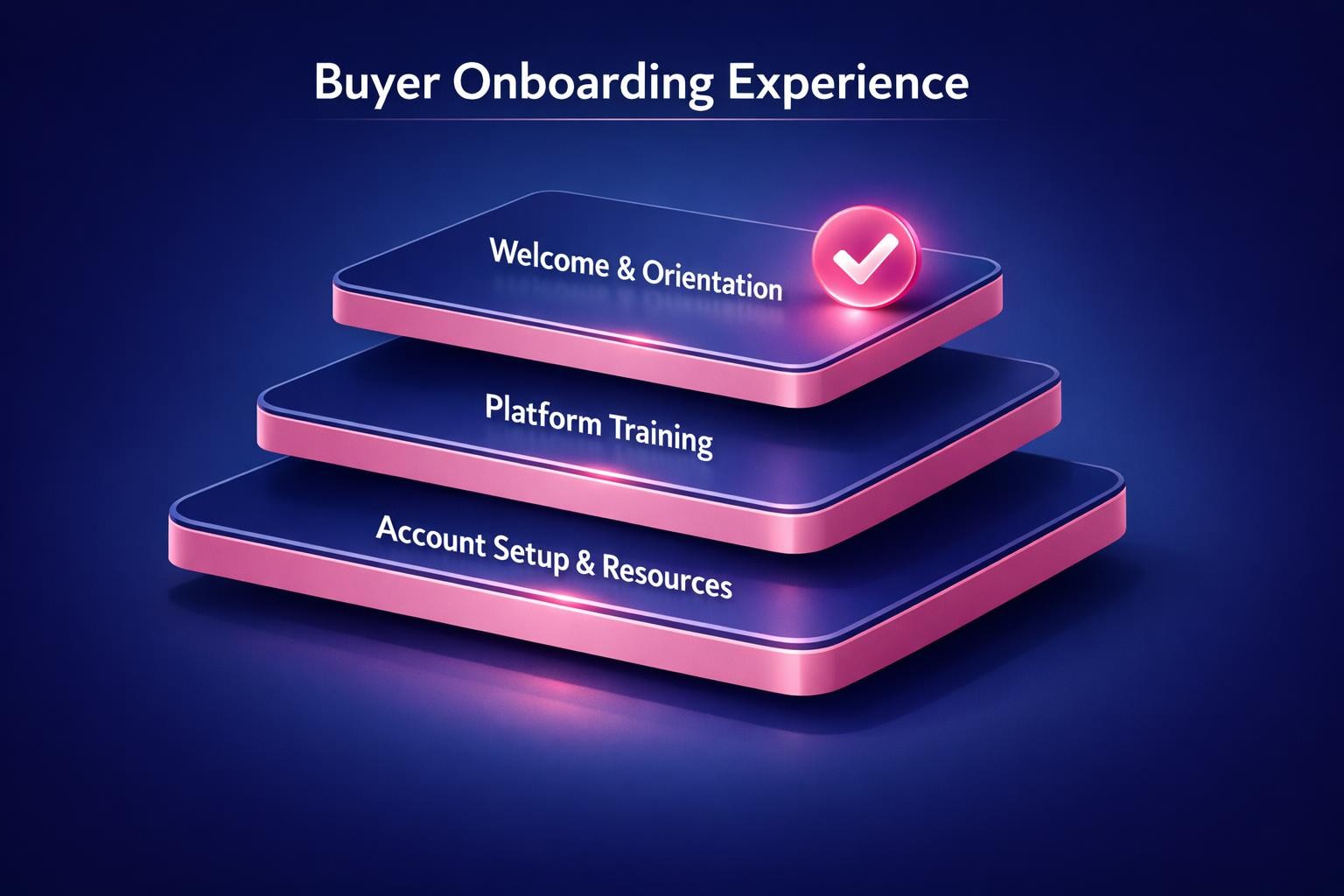
In this guide, “buyer onboarding experience” refers to the pre-close buying journey and the revenue team’s management of active opportunities. It covers pipeline entry, deal stages, stakeholder engagement, buyer signals, coaching, and win-loss reviews. It does not cover post-sale customer onboarding.
Five recurring mistakes can make opportunities harder to assess and advance: treating improvement as a temporary project, relying on intuition alone, depending on one stakeholder, confusing activity with progress, and failing to learn from completed deals.
Where the pre-close buying journey breaks down
Unsuitable opportunities can enter the pipeline, qualified deals can stall in the middle of the cycle, and late-stage opportunities can encounter procurement surprises, unstated objections, or stakeholder concerns.
Potential points of friction across the pre-close buying journey.
Five buyer onboarding experience mistakes and their fixes
1. Treating improvement as a one-time initiative
A new approach can drift when daily pipeline pressure takes priority. The source guidance recommends permanent ownership, standing review meetings, defined metrics, and quarterly improvement goals.
The fix: Assign an accountable owner and make improvement part of the operating cadence instead of a temporary project.
2. Relying on intuition instead of data
Recent or memorable deals can shape decisions even when they do not represent the full opportunity portfolio. Define three to five leading indicators and review them weekly. Relevant indicators can include stakeholder engagement, content consumption, mutual action plan progression, and deal velocity.
The fix: Compare rep context with portfolio-level evidence and investigate discrepancies. Revspire Buyer Enablement is presented in the source material as a way to surface deal-level signals.
3. Single-threading the relationship
Building the entire relationship around one stakeholder leaves the opportunity without a fallback if that person becomes unavailable, changes roles, or leaves the company.
The fix: Map relevant stakeholders, assign coverage, and track engagement across the buying group. Give additional scrutiny to opportunities with only one active contact.
Strategic and execution mistakes that can put active opportunities at risk.
4. Confusing activity with progress
Emails, calls, and tasks can accumulate while an opportunity remains in the same stage. Measure outcomes, not activities. Track stage progression, buyer engagement quality, deal velocity, and stakeholder coverage.
The fix: When activity is high but outcomes are weak, examine what is happening inside the deal instead of asking only for more activity.
5. Failing to learn from completed deals
Every won and lost deal contains insights about what works and what does not in your approach to Buyer Onboarding Experience. Without structured reviews, observations about stakeholder gaps, objections, qualification, content, and timing may never reach the playbook.
The fix: Document findings from significant wins and losses, then apply those findings to playbooks, coaching, and strategy.
A practical improvement framework
Start with an honest audit. Before you can improve Buyer Onboarding Experience, you need an honest baseline. Review recent opportunities by rep, segment, deal size, and stage. Identify where deals enter incorrectly, stall, lose stakeholder engagement, or leave the pipeline.
An audit can establish a baseline for improving opportunity management.
Define ownership and the operating model
Document the actions that should happen at each deal stage, when they should happen, and who is accountable. Define clear milestones, documented criteria, and a shared vocabulary. A simple model that teams follow is more useful than a complex model they ignore.
Use leading and lagging indicators
Leading indicators provide an opportunity to intervene before an outcome is final. Lagging indicators such as win rate, cycle time, and average deal size can help confirm whether the overall approach is working. Review both in pipeline, coaching, and territory discussions.
Make coaching part of the weekly cadence
Use weekly pipeline discussions to identify what needs to change in active opportunities. Deal-specific coaching can examine live opportunities, locate execution gaps, and work through corrective actions with the rep.
Practices for defining, measuring, coaching, and improving the process.
Align technology with the process
The technology layer for Buyer Onboarding Experience should reduce friction, not add it. Evaluate whether each tool makes the next action visible, supports high-value work, and allows data to move between systems without unnecessary manual updates.
Create continuous feedback loops
Capture findings through post-deal interviews, CRM analysis, structured win-loss reviews, and buyer feedback. Review results against targets and update playbooks when new patterns emerge.
Ownership, process, technology, data, and feedback support continuous improvement.
A focused 90-day plan
- Establish the baseline: Review recent opportunities and identify common points of leakage or delay.
- Select priorities: Choose two or three specific improvements tied to revenue outcomes.
- Assign ownership: Name an accountable leader and clarify responsibilities for managers and reps.
- Define measures: Track a balanced set of leading and lagging indicators.
- Embed the cadence: Add structured reviews and deal-level coaching to weekly workflows.
- Review the results: Assess performance after 90 days and update the playbook with buyer and win-loss feedback.
Explore the platform
Fixing these mistakes requires the right process, data, and platform working in alignment. See how Revspire helps B2B revenue teams eliminate these patterns.