AI Sales Training in 2026: Role-Play and Deal Coaching
A practical perspective for connecting this idea to your revenue team’s next move.
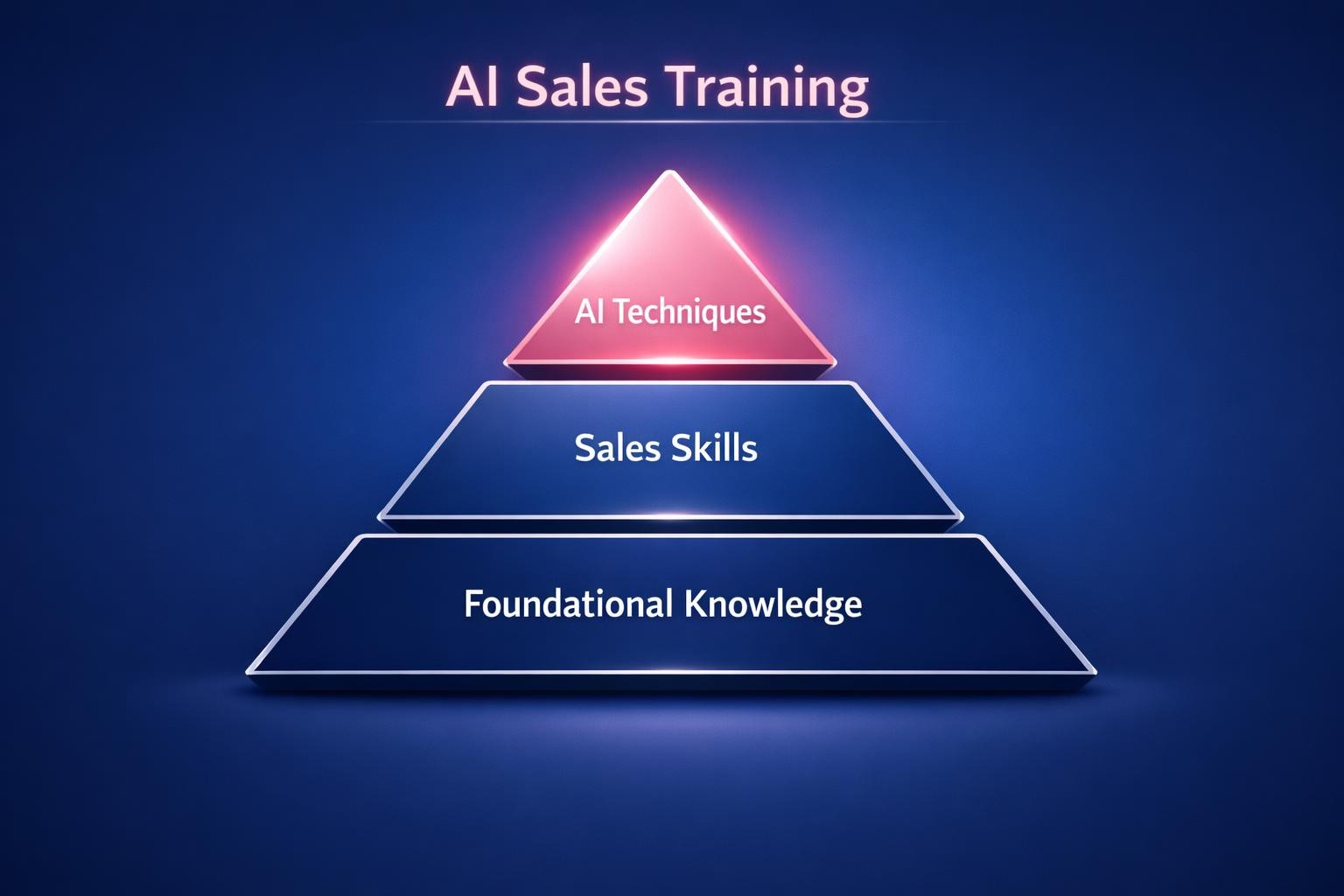
This article presents a bounded AI sales training workflow for B2B revenue leaders. It covers the two AI uses supported by the supplied sources: AI role-play training and AI-surfaced deal signals used to guide live-opportunity coaching.
1. Set a Stage-Specific Standard
Write down what excellent execution looks like at each deal stage. Use clear milestones, documented criteria, and shared vocabulary across the team. This gives the rep a defined standard to practice and the manager a consistent reference for review.
Keep the playbook documented, taught, and reinforced by managers. Assign an owner to maintain the standards, metrics, and review cadence. Use this practical workflow to turn sales playbooks into AI role-plays, quizzes, and coaching without detaching training from the approved source.
2. Use the Standard in AI Role-Play
The sources identify AI role-play as a training format but do not document automated scenario generation, adaptive difficulty, scoring, or feedback. A bounded workflow therefore uses the documented sales standard to structure the practice rather than assigning unsupported capabilities to the AI. Before rollout, evaluate the platform with these 12 tests for simulator realism, feedback, and enterprise safety.
- Choose the focus. Select one deal stage, milestone, or execution criterion from the playbook.
- Run the role-play. Ask the rep to practice that defined part of the sales conversation through AI role-play.
- Review the practice. Have the manager compare the rep’s execution with the documented standard.
- Set the next action. Identify one correction to apply in the next practice session or relevant live opportunity.
This is an editorial workflow assembled from the source-supported elements of AI role-play, documented stage standards, and manager-led deal coaching. It does not treat an undocumented AI scoring system as the reviewer. For certification, translate the standard into a weighted sales readiness scorecard with observable evidence, critical gates, and explicit thresholds.
3. Use AI-Surfaced Signals to Select Live Coaching Priorities
The sources identify stakeholder engagement rates, content consumption, mutual action plan progression, and deal velocity as possible leading indicators. Revspire AI Intelligence surfaces these signals automatically.
Use a surfaced signal as a prompt to inspect an opportunity, not as a final judgment. Review the live opportunity with the rep, identify where execution differs from the documented stage standard, and work through the correction in real time.
When activity is high but progress is weak, investigate what is happening inside the deal instead of asking for more activity. Stakeholder mapping, assigned coverage, stage progression, buyer engagement, and engagement tracking can provide evidence for that coaching discussion.
4. Connect Practice With the Weekly Coaching Cadence
Add a standing AI sales training review to the weekly pipeline cadence. Use it as a structured conversation about what needs to change during the next seven days rather than only as a status update.
Keep the roles distinct: AI role-play provides the practice format described by the sources, while live-opportunity coaching applies the documented standard to current deal evidence. The manager connects the practice lesson to the opportunity under review.
Three-part explainer: Set the standard, Embed the practice, and Scale what works.
5. Measure the Workflow Without Overstating Outcomes
Define three to five leading indicators for AI Sales Training and track them weekly. The sources also identify win rates, cycle times, and average deal sizes as lagging indicators.
Build a dashboard that shows both groups. Review it weekly and connect it to coaching conversations and territory reviews. Use a metric to select questions for investigation rather than treating it as proof that training caused a particular business result.
Pull the last six months of deal data. Map opportunities against the relevant stages, identify where deals fall out, and compare patterns by rep, segment, and deal size. Use the assessment to prioritize two or three improvements. Give each improvement a clear owner, a measurable goal, and a 90-day review cadence. Before selecting improvements, run an evidence-based sales training needs analysis to separate trainable behavior gaps from process, access, and data problems.
6. Support Coaching With Connected Data
Evaluate each tool by asking whether it makes AI sales training easier and more consistent or adds friction. Data should flow automatically between the CRM, engagement platform, and deal room.
Connected data can make current opportunity evidence available for review. It does not by itself establish that training caused a change in win rate, cycle time, or deal size.
7. Return Deal Findings to the Playbook
Capture findings through post-deal interviews, CRM data analysis, and structured win-loss reviews. Feed those findings back into playbooks, training, and strategy.
Review training metrics against targets, update the playbook when the team learns something new, and solicit buyer feedback. This keeps the training standard connected to documented deal findings without promising unsupported revenue, buyer, talent, or retention outcomes.
A Bounded Starting Sequence
- Document one stage-specific execution standard.
- Use that standard as the focus of AI role-play.
- Have the manager review the practice against the standard.
- Use an AI-surfaced deal signal to select a live opportunity for review.
- Work through one execution gap with the rep.
- Track selected indicators and return relevant findings to the playbook.
The path to consistently strong AI Sales Training runs through the right system, the right data, and the right culture. Talk to Revspire to see how your team can get there faster.