Enterprise AE Onboarding: 7 Strategies the Top Revenue Teams Use in 2026
A practical perspective for connecting this idea to your revenue team’s next move.
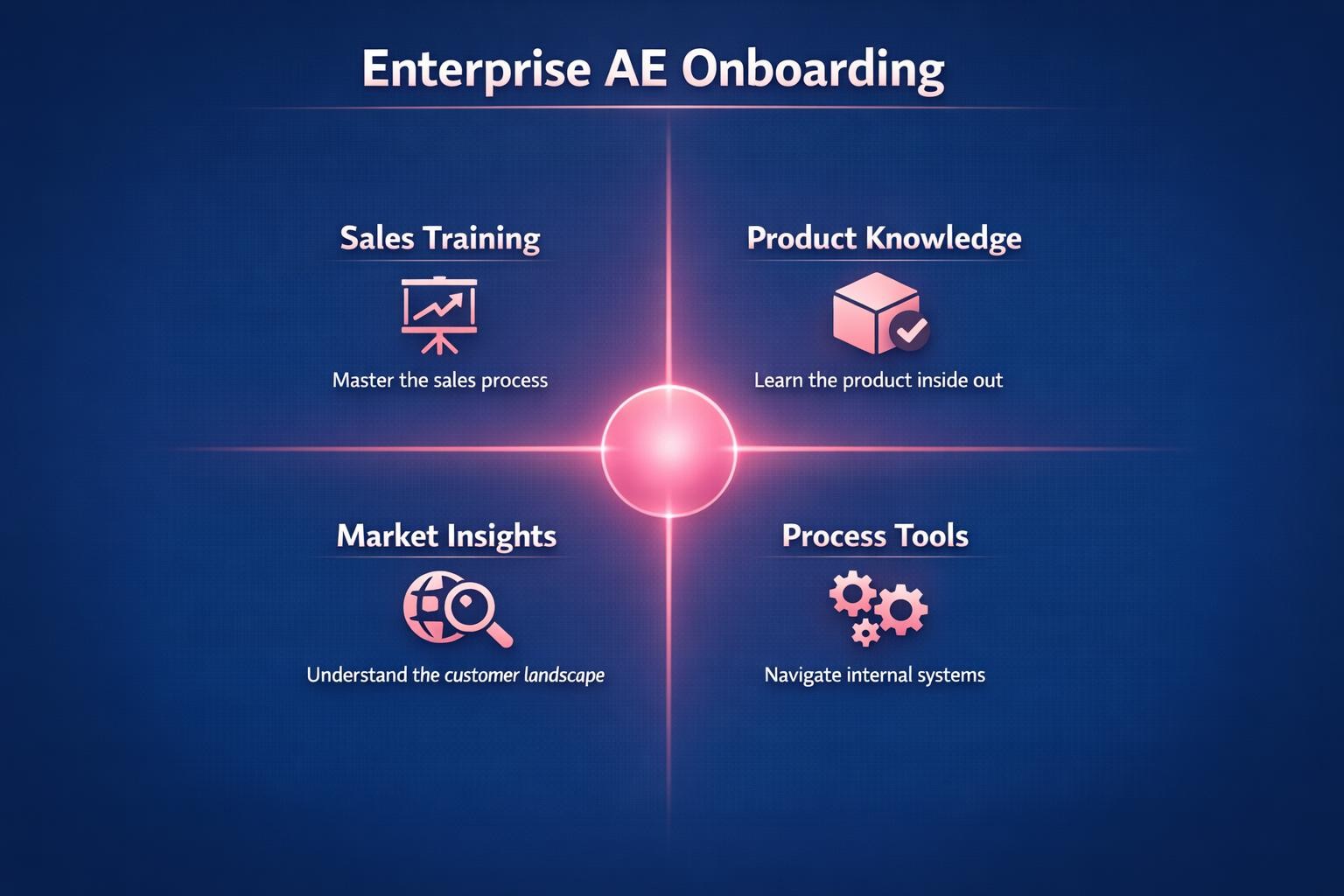
Enterprise AE onboarding prepares a rep to perform the role through documented expectations, coaching, measurement and feedback. Opportunity management is related but distinct: live and completed deals can provide material for coaching, but the condition of an individual deal does not by itself establish rep readiness.
Seven enterprise AE onboarding strategies
1. Define readiness
Document what a rep should know and be able to do during the onboarding programme. Use clear milestones, documented criteria and a shared vocabulary so managers and reps can assess progress against the same expectations.
Readiness criteria can include knowledge of the sales process and the ability to apply it. Keep those criteria separate from the status of any individual opportunity.
2. Establish ownership and an operating model
Someone on the leadership team is accountable for the outcomes, not just the activities. The owner can maintain programme goals, measures, playbooks and review routines.
An operating model for Enterprise AE Onboarding answers three questions: what actions should happen, at what stage, and who is accountable. Document the model and reinforce it through manager coaching.
3. Audit the current state
Before you can improve Enterprise AE Onboarding, you need an honest baseline. Review the current programme, its milestones, available performance data and the points where reps or managers report difficulty.
Where is Enterprise AE Onboarding working well today? Where is it breaking down? What does the data say versus what the narrative says? Use the answers to identify changes, owners and measures for later review.
4. Combine readiness and outcome measures
Lagging metrics like win rate and quota attainment tell you what happened. Review them alongside readiness measures such as completion of defined milestones, demonstrated process knowledge and performance in coached scenarios.
Deal signals such as stakeholder engagement, action-plan progression and stage movement belong to opportunity management. They can provide examples for coaching when a rep works on live opportunities, but they should not replace direct assessment of readiness.
The metrics for Enterprise AE Onboarding should connect directly to revenue outcomes. Build a dashboard that shows readiness and outcome measures. Review it weekly and use it during coaching conversations and territory reviews.
5. Use live opportunities as coaching material
Onboarding can include reviewing live opportunities with each rep. Managers can use those reviews to examine how the rep applies qualification, stakeholder and process guidance in context.
Keep the two purposes explicit: coaching assesses and develops the rep, while decisions about stages, stakeholders and next actions govern the opportunity.
6. Capture lessons from completed deals
Review won and lost deals to identify possible training topics and process questions. Implement a structured loss review process. Document the findings and update playbooks accordingly.
Do not assume that a deal outcome was caused by onboarding. Separate possible rep-readiness issues from account, buyer and opportunity factors.
See how Revspire helps B2B revenue teams eliminate these patterns.
7. Align technology and feedback loops
The technology layer for Enterprise AE Onboarding should reduce friction, not add it. Assess whether each tool supports the documented process and makes relevant information available within rep and manager workflows.
Keep the programme current by reviewing its measures, gathering feedback and updating playbooks when you learn something new. For platform information, see Revspire Sales Onboarding.
Common mistakes and scope checks
- Treating onboarding as a one-time initiative: assign ongoing ownership and schedule recurring reviews.
- Using activity as the only measure: Measure outcomes, not activities.
- Leaving the playbook unchanged: use programme feedback and completed-deal reviews to identify possible revisions.
- Confusing onboarding with opportunity management: assess rep readiness separately from the condition of a particular deal.
- Excluding deal examples from coaching: use relevant opportunities to examine how a rep applies the documented process.
Stakeholder coverage is a deal-execution practice that can also be examined during coaching. Map every stakeholder in the buying committee, assign coverage, and track engagement with each one. That instruction concerns management of the opportunity; the onboarding question is whether the rep understands and can apply the practice.
Build the operating model
The operating model can bring together ownership, documented processes, manager reinforcement, technology, data and a feedback loop. Keep onboarding milestones separate from opportunity stages, including when live deals are used for practice or assessment.
Diagnose, coach and assess readiness
Three-part explainer: Diagnose from live deals, Coach in the workflow, and Prove readiness.
Start with an honest audit. Define readiness, coach against documented expectations and use available evidence to identify where the programme may need revision. Deal information can inform this work without making onboarding synonymous with pipeline or opportunity management.