Revspire blog
Guided Selling with CPQ: 7 Practical Strategies for 2026
A practical guide to seven guided selling with CPQ strategies, from clear standards and leading indicators to coaching, technology, and feedback loops.
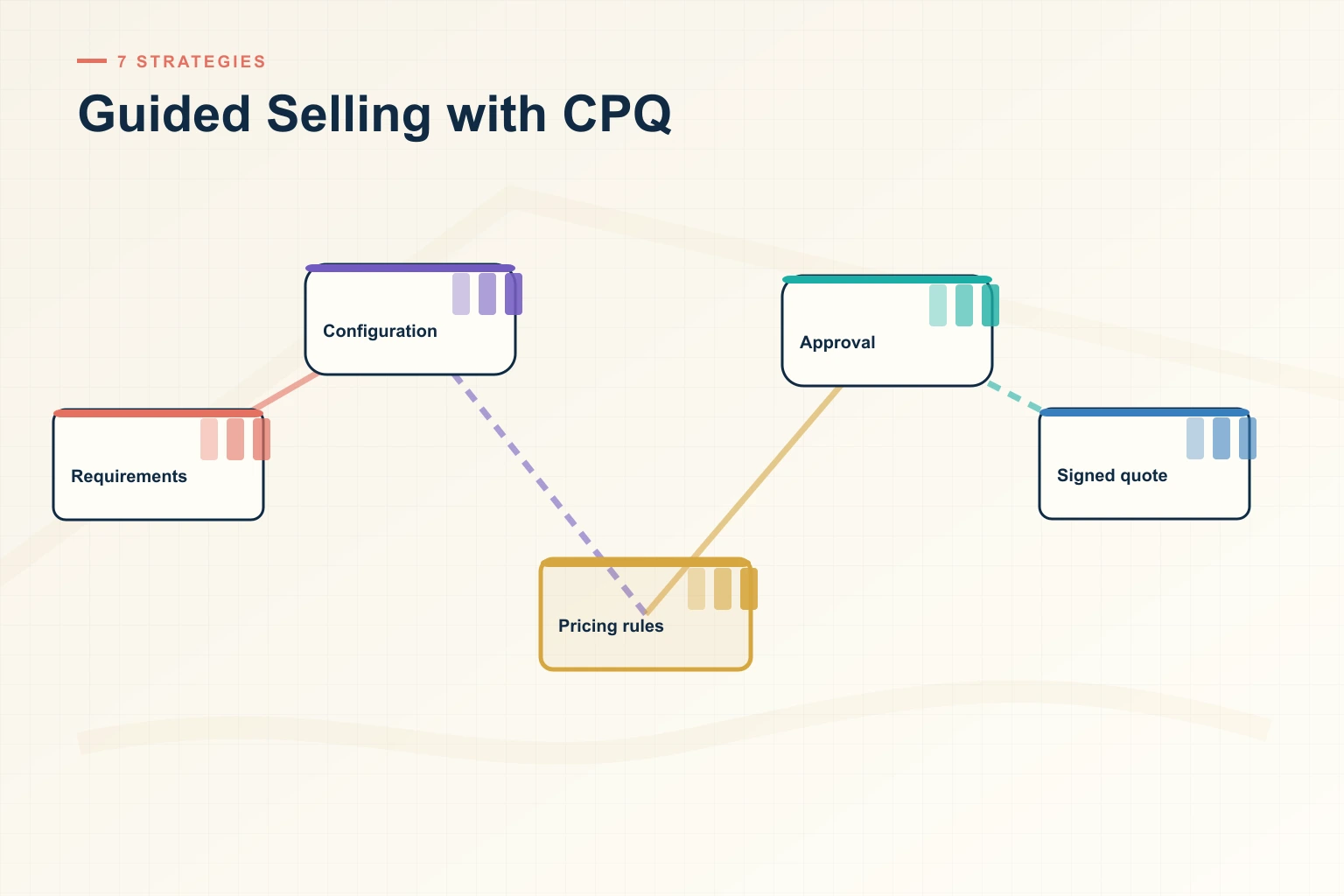
Guided selling with CPQ should be treated as an ongoing operational discipline rather than a one-time initiative. The following seven strategies cover standards, ownership, measurement, coaching, technology, win-loss reviews, and buyer feedback.
1. Audit the current state and define the operating model
Before you can improve Guided Selling with CPQ, you need an honest baseline. Review recent opportunities by rep, segment, deal size, stage, and outcome to identify where deals leave the pipeline or stall.
An operating model for Guided Selling with CPQ answers three questions: what actions should happen, at what stage, and who is accountable.
2. Establish ownership and a weekly cadence
Someone on the leadership team is accountable for the outcomes, not just the activities. That owner can set goals, define metrics, and maintain the operating model as the team learns.
Build a standing review of guided selling with CPQ into the weekly pipeline cadence. Use the review to identify what needs to change during the next seven days and who is accountable for the next action.
3. Use leading and lagging indicators
Leading indicators can help managers identify what may happen next, while lagging indicators such as win rate, cycle time, average deal size, and quota attainment describe completed outcomes.
Measure outcomes, not activities. Track stage progression, buyer engagement quality, stakeholder coverage, and time in stage rather than relying only on counts of calls, emails, or tasks.
Revenue teams evaluating technology for this process can explore Revspire CPQ.
4. Improve stakeholder coverage and deal-level coaching
Map every stakeholder in the buying committee, assign coverage, and track engagement with each one. Deals where only one contact is active should be flagged as high-risk regardless of what the rep reports.
Use deal-specific coaching by reviewing live opportunities, identifying where execution breaks down, and working through the next action with the rep.
5. Align technology and data with the process
Technology should serve the guided selling CPQ B2B process, not define it. Evaluate each tool by whether it makes Guided Selling with CPQ easier and more consistent or adds friction.
The technology layer for Guided Selling with CPQ should reduce friction, not add it. Data should flow between systems so leaders can maintain a current view without requiring reps to update multiple systems manually.
6. Capture win-loss intelligence
Every won and lost deal contains insights about what works and what does not in your approach to Guided Selling with CPQ. Capture those insights through deal data analysis and structured win-loss reviews, then feed the findings into playbooks, coaching, and strategy.
Implement a structured loss review process. Document the findings and update playbooks accordingly.
Three-part explainer: Set the standard, Embed the practice, and Scale what works.
7. Create a continuous improvement loop
Buyers choose vendors not just on product capability but on how easy and confident the buying experience makes them feel. Ask buyers for feedback about their experience and use it alongside deal outcomes when updating the process.
Review Guided Selling with CPQ metrics quarterly against targets and update playbooks when you learn something new.