Revspire blog
How to Improve AI Deal Scoring and Close More B2B Deals in 2026
A practical guide to improving AI deal scoring through defined ownership, documented criteria, pipeline reviews, coaching, and win-loss feedback.
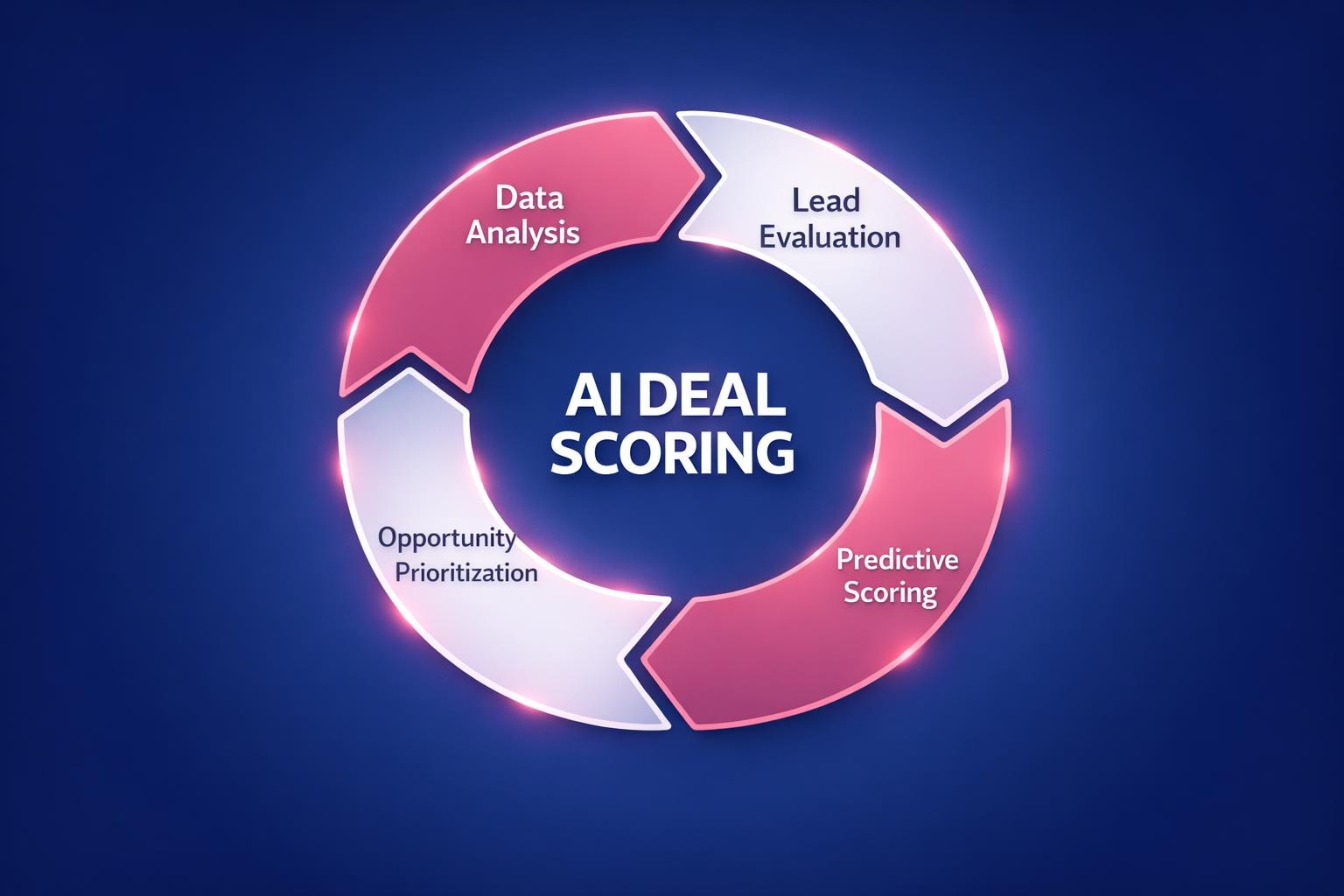
Improving AI deal scoring requires more than introducing a score or dashboard. Revenue teams need a documented operating model, defined deal signals, clear ownership, regular reviews, and a process for incorporating lessons from won and lost opportunities.
This guide presents a practical framework for auditing the current process, defining useful indicators, reviewing opportunities, and correcting common execution problems.
Where Deal-Scoring Problems Appear
Deal-scoring problems can appear at different points in the pipeline:
- Early-stage opportunities may enter the pipeline without sufficient qualification.
- Qualified opportunities may stall without a clear review of stakeholder engagement, deal velocity, or agreed next steps.
- Late-stage opportunities may encounter procurement questions, objections, or stakeholder concerns that were not documented earlier.
A structured scoring process gives revenue teams a consistent way to examine these conditions. The score should support investigation and action rather than replace judgement.
Three-part explainer: Expose the hidden cost, Build the business case, and Start where it matters.
Text summary of the explainer
The explainer considers where weak deal-scoring practices may affect a pipeline, how a revenue team can evaluate the case for a structured process, and why an audit is a practical starting point. The sections below cover those subjects in text.
Build the Foundation
Assign ownership
Assign an owner for the scoring process. The owner can coordinate goals, definitions, metrics, review meetings, and revisions to the playbook. Ownership should cover the ongoing operation of the process rather than only its initial setup.
Document the operating model
An operating model for AI deal scoring should answer three questions: what action should happen, at what stage, and who is accountable? Document the qualification criteria, stage milestones, stakeholder expectations, and evidence required for an opportunity to advance.
Keep the model practical enough to use during normal pipeline and coaching workflows. Managers can reinforce the definitions during reviews and revise them when win-loss findings identify a gap.
Connect the process and technology
Technology should serve the AI deal scoring revenue intelligence process, not define it. Evaluate tools according to whether they make relevant deal information available without unnecessary manual work or disconnected workflows.
For product information, visit Revspire AI Intelligence.
A Practical Improvement Framework
Step 1: Audit the current state
Before you can improve AI Deal Scoring, you need an honest baseline. Review available deal records against the current stages and definitions. Look for opportunities that fell out of the pipeline, remained stalled, or advanced without the required evidence.
Start with an honest audit. Where is AI Deal Scoring working well today? Compare the available data with the team’s account of the process, then identify a limited set of changes to test.
Step 2: Define acceptable evidence
Write down the evidence required for an opportunity to advance. Depending on the organisation’s process, the indicators may include stakeholder engagement, content consumption, mutual action plan progress, deal velocity, buyer engagement quality, and stakeholder coverage.
These indicators should be defined consistently so managers and representatives can discuss the same evidence during reviews. They should not be treated as proof that an opportunity will close.
Step 3: Review leading and lagging indicators
Lagging indicators may include win rate, cycle time, average deal size, and quota attainment. Leading indicators may include observable behaviours or changes that the team has chosen to monitor during an active opportunity.
Build a dashboard that shows both. Review it weekly. Use the review to identify changes that require investigation, while recognising that an indicator does not establish the cause of an outcome.
Step 4: Include scoring in pipeline reviews
Make deal-scoring health a standing part of pipeline calls. Instead of limiting the discussion to status reporting, review what changed, what evidence is missing, which assumptions need to be checked, and who owns the next action.
Deal-level coaching can use live opportunities to examine specific execution gaps. Managers should distinguish between what the record shows and what still needs confirmation from the buyer.
Step 5: Maintain a feedback loop
Capture observations from won and lost deals through structured reviews, CRM analysis, and post-deal interviews where available. Use relevant findings to reconsider qualification criteria, playbooks, training, and scoring rules.
Review the process periodically against the team’s defined goals. Revise it when the available evidence shows that a criterion is unclear, unused, or no longer informative.
Seven Practices for Operationalising AI Deal Scoring
- Define expected execution: Document the milestones, evidence, and responsibilities associated with each deal stage.
- Instrument the stages: Select indicators that help the team examine stakeholder engagement, deal velocity, and buyer progress.
- Review scoring weekly: Use pipeline calls to examine changes and assign follow-up actions.
- Coach at the deal level: Review live opportunities to discuss execution gaps in context.
- Capture win-loss intelligence: Record relevant observations from significant outcomes and consider whether the playbook should change.
- Align technology with the process: Reduce avoidable manual work and define how information should move between systems.
- Maintain feedback loops: Compare results with internal targets, consider buyer feedback where available, and revise the process when warranted.
Five Common Deal-Scoring Mistakes
1. Treating scoring as a one-time initiative
A scoring process can become outdated or inconsistently applied when it has no ongoing owner. Assign responsibility, schedule recurring reviews, define the metrics to examine, and record agreed changes.
2. Relying only on intuition
Recent or memorable opportunities can influence judgement. Compare assumptions with the available portfolio data and investigate disagreements rather than accepting either source uncritically.
3. Depending on one stakeholder
An opportunity centred on one contact may lose information or momentum if that person disengages or changes roles. Map known participants, record stakeholder coverage, and flag opportunities in which engagement depends on a single contact.
4. Confusing activity with progress
Measure outcomes, not activities. Email, call, and task counts do not by themselves demonstrate buyer progress. Review stage movement, buyer engagement quality, deal velocity, stakeholder coverage, and the substance of documented next steps.
5. Failing to examine losses
Use a structured review for significant losses. Identify relevant scoring, qualification, stakeholder, or process gaps, document what is known, and update the applicable guidance when the findings support a change.
See how Revspire helps B2B revenue teams eliminate these patterns
Turn Scores Into Reviewable Decisions
The purpose of a deal score is to support prioritisation, coaching, risk review, and forecasting discussions. It should not be treated as a guarantee or as a substitute for verified buyer information.
Begin with a baseline audit, document the operating model, assign an owner, and choose indicators that the team can define and review consistently. Use subsequent deal evidence to decide whether the process or its scoring rules need to change.