Revspire blog
How to Improve AI Pipeline Management and Close More B2B Deals in 2026
Improve AI pipeline management with clear ownership, meaningful metrics, weekly coaching, connected data, and structured win-loss reviews.
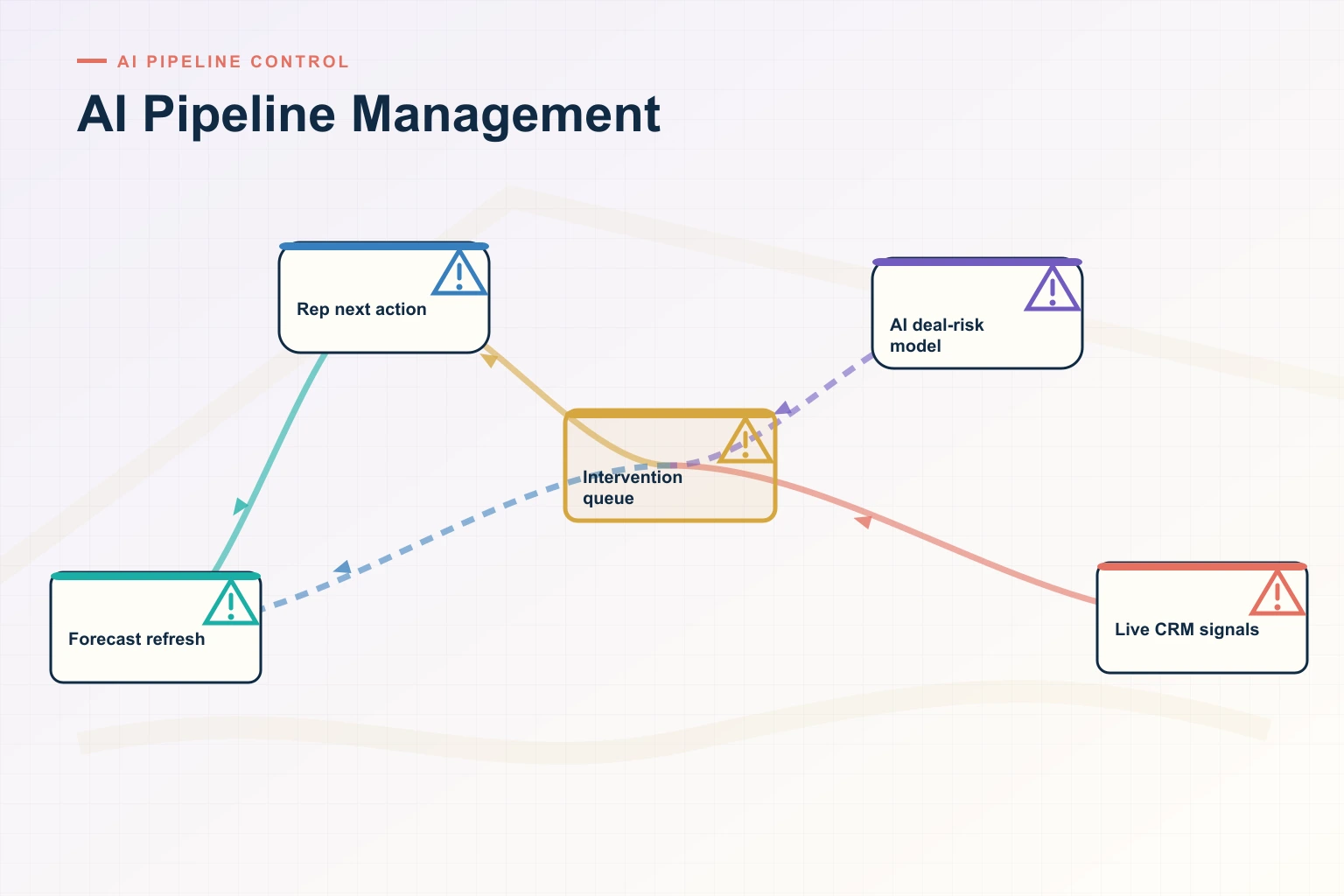
AI pipeline management works best as a continuous, data-driven discipline rather than a one-time initiative. A practical system combines documented standards, clear ownership, pipeline signals, regular coaching, and feedback from won and lost deals.
The conventional approach is often reactive rather than deliberate, with teams relying on tribal knowledge, manager intuition, and previous playbooks. The source framework also references Revspire AI Intelligence.
A Practical AI Pipeline Management Framework
Three-part explainer: Audit the current state, Build the operating model, and Measure and improve.
1. Audit the current state
Start with an honest baseline. Review recent deal data, map opportunities against pipeline stages, and identify where deals fall out. Break the findings down by rep, segment, and deal size so the team can prioritize specific improvements.
2. Define the operating model
Document what should happen at each stage and who is accountable. Include clear milestones, decision criteria, and a shared vocabulary. Keep the model simple enough for the team to follow consistently.
3. Use leading and lagging indicators
Use both leading and lagging indicators. Leading indicators can include stakeholder engagement, content consumption, mutual action plan progression, and deal velocity. Lagging indicators can include win rates, cycle times, and average deal sizes. Measure outcomes rather than activity counts alone.
4. Establish a weekly cadence
Make pipeline health a standing part of weekly calls. Focus the discussion on what needs to change during the next seven days, and use live opportunities for deal-specific coaching.
5. Align technology with the process
Technology should support the process rather than define it. Evaluate whether each tool makes pipeline management easier and more consistent, and reduce unnecessary manual intervention between connected systems.
6. Build feedback loops
Capture lessons through post-deal interviews, CRM data analysis, and structured win-loss reviews. Feed those findings into playbooks, training, coaching, and strategy, then review metrics against targets each quarter.
Seven Strategies for Stronger Execution
- Define what good execution looks like: create consistent expectations for every deal stage.
- Instrument each stage: monitor indicators that can reveal changes before final results arrive.
- Create a weekly operating rhythm: review pipeline health and immediate next actions.
- Coach at the deal level: use live opportunities to identify execution gaps.
- Capture win-loss intelligence: preserve lessons from completed deals.
- Align technology with the process: reduce friction and manual intervention.
- Continuously improve: review results, update playbooks, and collect buyer feedback.
Five Common Mistakes and Their Fixes
1. Treating improvement as a one-time initiative
Fix: Assign a permanent owner, establish standing reviews, define metrics, and set quarterly improvement goals.
2. Relying on intuition instead of portfolio data
Fix: Define three to five leading indicators and inspect them weekly. Investigate discrepancies between the data and the team’s interpretation.
3. Depending on a single stakeholder
Fix: Map the buying committee, assign stakeholder coverage, and track engagement with each participant. Flag opportunities with only one active contact as high risk.
4. Confusing activity with progress
Fix: Track stage progression, buyer engagement quality, and stakeholder coverage. High activity without forward movement is a reason to inspect the deal rather than request more activity.
5. Failing to learn from losses
Fix: Hold a structured review after significant losses, document the pipeline breakdowns, and update the relevant playbooks.
How to Measure the System
Build a dashboard that combines leading and lagging indicators. Review it weekly and connect the findings to coaching conversations and territory reviews.
- conversion rates by stage;
- time in stage and deal velocity;
- stakeholder engagement and coverage;
- mutual action plan progression;
- buyer engagement quality;
- win rate, average deal size, and cycle time; and
- relationships between specific behaviors and outcomes.
Deploy prioritized improvements with a clear owner, a measurable goal, and a 90-day review cadence.
Build the Business Case
Three-part explainer: Expose the hidden cost, Build the business case, and Start where it matters.
Start with an honest audit, compare the data with the team’s narrative, and prioritize two or three improvements. Assign an owner and measure the results before expanding the program.
Bring the Components Together
Three-part explainer: Unify pipeline evidence, Prioritize with AI, and Act and learn.
A complete operating model includes a documented approach, the right technology, clear ownership across the revenue team, and a feedback loop that improves performance quarter over quarter.
Next Step
Begin with a baseline audit, choose two or three measurable improvements, assign an owner, and review progress after 90 days.