Revspire blog
The Complete 2026 Guide to Pipeline Review Cadence for Revenue Leaders
A practical guide for revenue leaders on pipeline review cadence, from current-state audits and weekly reviews to coaching, metrics, and continuous improvement.
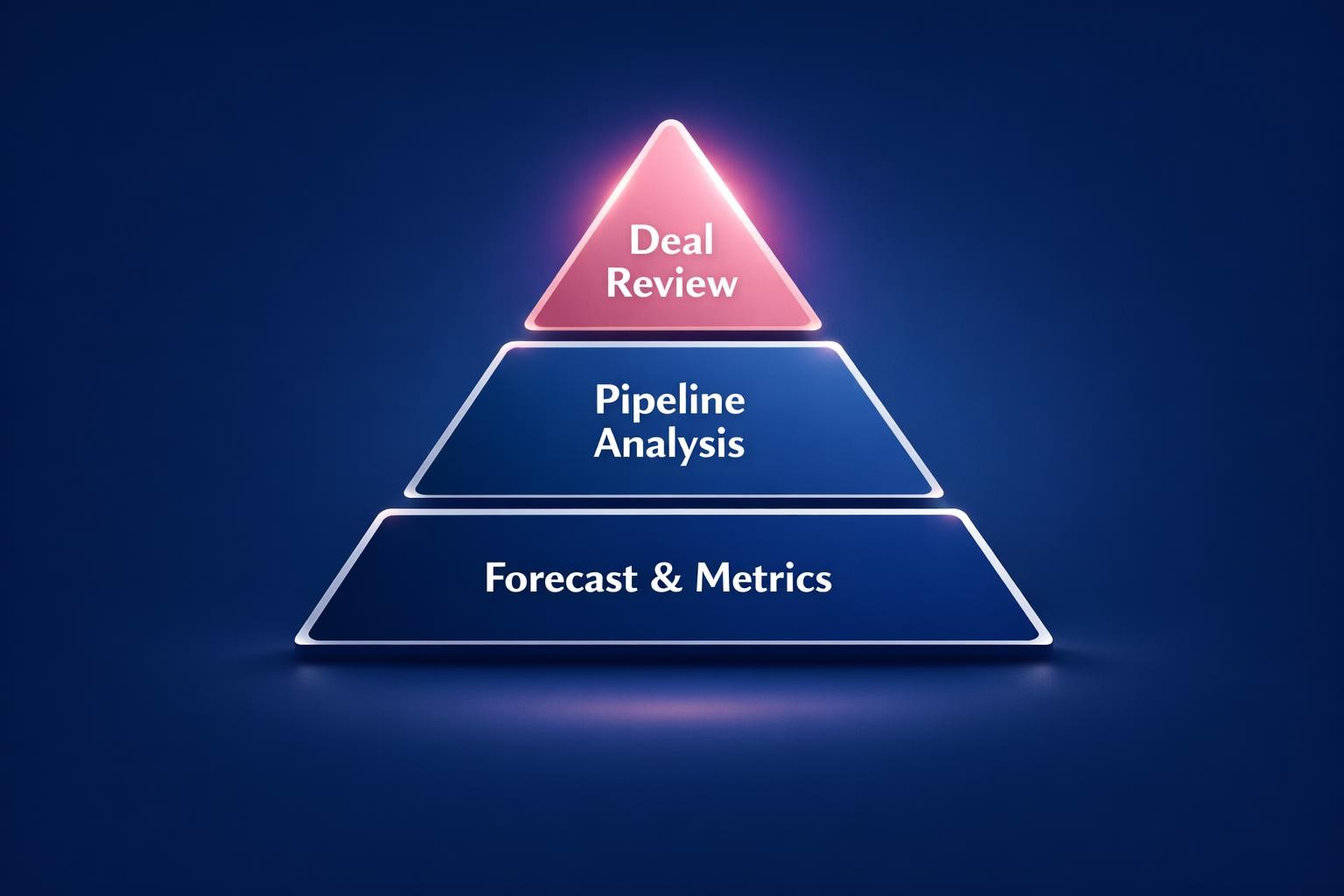
This guide explains how revenue leaders can structure pipeline review cadence around ownership, documented processes, weekly reviews, measurement, coaching, and continuous improvement.
Build an Ongoing Operating Discipline
Treat pipeline review cadence as an ongoing operational discipline, not a one-time initiative. Assign a permanent owner, establish standing reviews, define the metrics, and connect improvement goals to revenue outcomes.
Document what actions should happen, at what stage, and who is accountable. Keep the operating model simple enough for the team to follow consistently.
Technology should support the process rather than define it. Evaluate systems by whether they reduce friction and make relevant information available without unnecessary manual work.
Explore Revspire Pipeline Analytics.
Audit the Current State
Begin with an honest audit of where the cadence works and where it breaks down. Compare the available data with the internal narrative before selecting improvements.
Review the last six months of deal data. Map opportunities against the relevant stages, then identify where deals are falling out and why. Segment the review by representative, segment, deal size, and stage.
Define the Review Framework
- Set stage expectations: Write down what execution should look like at each stage.
- Assign ownership: Name the person accountable for the cadence, its goals, and its improvement cycle.
- Select leading indicators: Consider stakeholder engagement, content consumption, mutual action plan progression, and deal velocity.
- Track lagging indicators: Review measures such as win rate, cycle time, and average deal size alongside leading indicators.
- Create feedback loops: Use buyer feedback and updated playbooks to refine the process.
Run a Structured Weekly Review
Make pipeline review cadence a standing part of the weekly pipeline call. Use the discussion to examine evidence, identify risks, and decide what needs to change during the next seven days rather than providing a generic status update.
Define three to five leading indicators and track them weekly. When data and intuition conflict, investigate the discrepancy.
Use live opportunities for deal-level coaching. Review where execution breaks down and work through the correction in context.
Correct Common Pipeline Review Mistakes
Relying on Activity Counts
Measure outcomes, not activities. Track stage progression velocity, buyer engagement quality, and stakeholder coverage breadth instead of relying only on counts of emails, calls, and tasks.
Single-Threading a Relationship
Map the stakeholders in the buying committee, assign coverage, and track engagement. Flag a deal as high risk when only one contact is active.
Failing to Learn from Losses
Implement a structured loss review after significant lost deals. Analyze the breakdowns, document the findings, and update playbooks accordingly.
Use a 90-Day Improvement Cycle
- Baseline: Complete the current-state audit and identify the most important breakdowns.
- Design: Establish ownership, stage criteria, indicators, and a consistent meeting agenda.
- Deploy: Introduce the cadence and coach against live opportunities.
- Evaluate: Review the selected improvements after 90 days and update the playbook.
Give each improvement a clear owner and a measurable goal. Review the results after 90 days, then build from there.