Revspire blog
How to Improve Self-Serve Buying Experience and Close More B2B Deals in 2026
Improve the B2B self-serve buying experience with a practical framework for ownership, measurement, stakeholder coverage, coaching, and learning.
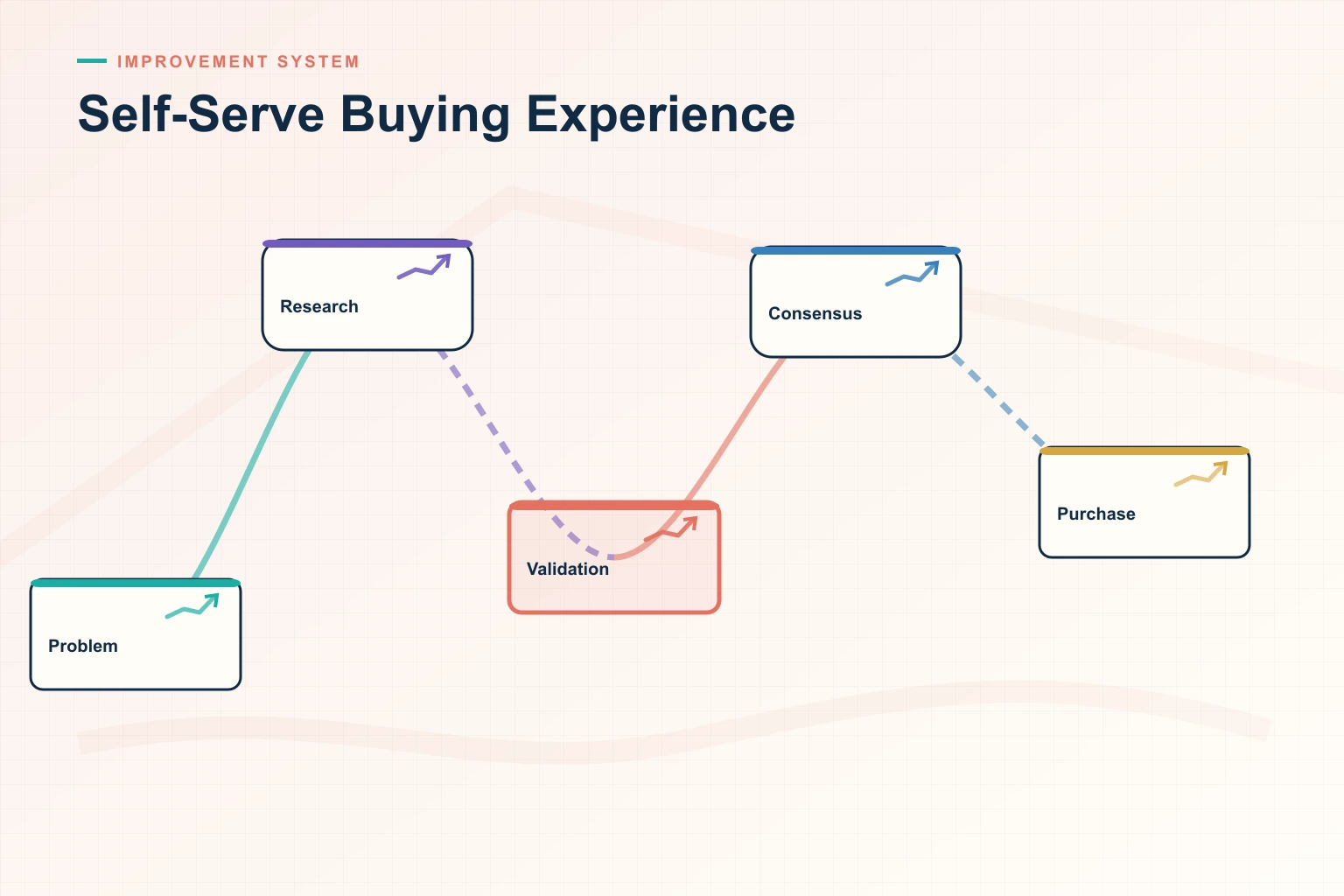
A stronger self-serve buying experience requires more than a one-time content project. Revenue teams need a practical operating model that defines responsibilities, uses buyer and deal data, supports coaching, and improves through regular review.
Build an Ongoing Operating Model
An operating model for Self-Serve Buying Experience answers three questions: what actions should happen, at what stage, and who is accountable.
Assign a permanent owner to Self-Serve Buying Experience outcomes. Document the expected actions, milestones, and responsibilities at each deal stage, then reinforce that model through pipeline reviews and coaching.
Three-part explainer: Audit the current state, Build the operating model, and Measure and improve.
Three-part explainer: Define the system, Operationalize the workflow, and Measure the impact.
A Practical Improvement Framework
1. Audit the Current State
Start with an honest audit. Review recent opportunities, identify where deals stop progressing, and compare the available data with the assumptions used in pipeline discussions. Prioritize two or three improvements, give each one a clear owner, and establish a review cadence.
2. Define What Good Looks Like
Write down what effective execution looks like at each deal stage. Include the milestones, buyer actions, stakeholder expectations, and internal responsibilities that indicate meaningful progress. This gives representatives and managers a shared standard for review and coaching.
3. Use Leading and Lagging Indicators
If you cannot measure it, you cannot improve it. Combine leading indicators with lagging outcomes so the team can identify risks before the end of a quarter and evaluate results afterward.
Leading indicators may include stakeholder engagement, content consumption, mutual action plan progression, and deal velocity. Lagging indicators include win rates, cycle times, and average deal sizes.
4. Make Review and Coaching Part of the Weekly Cadence
Use pipeline reviews to decide what needs to change in the next seven days, not merely to report status. Pair those reviews with deal-specific coaching that examines live opportunities and identifies where execution needs to improve.
5. Expand Stakeholder Coverage
Map every stakeholder in the buying committee, assign coverage, and track engagement with each one. Treat an opportunity that depends on one active contact as a risk requiring attention.
6. Align Technology With the Process
Technology should serve the self serve B2B buying experience process, not define it. Evaluate whether each tool makes execution easier and more consistent or introduces additional operational work. Learn more about Revspire Buyer Enablement.
7. Learn From Wins and Losses
Every won and lost deal contains insights about what works and what does not in your approach to Self-Serve Buying Experience. Capture those findings through structured reviews and use them to update playbooks, coaching, and improvement goals.
Seven practices for defining, measuring, coaching, and improving the buying experience.
Measure Progress, Not Activity
Measure outcomes, not activities. Email volume, meeting counts, and completed tasks do not by themselves show whether a buyer is moving forward. Review stage progression, time in stage, buyer engagement quality, stakeholder coverage, and the relationship between buyer behaviors and deal outcomes.
When the data and the prevailing internal narrative disagree, investigate the difference. Use the findings to improve coaching, operating standards, and future reviews.
Correct Common Strategic and Execution Mistakes
Avoid treating the buying experience as a temporary initiative. Maintain permanent ownership, defined metrics, standing reviews, and quarterly improvement goals.
Do not rely only on intuition, confuse activity with progress, or allow important opportunities to remain dependent on one stakeholder. Conduct structured reviews of significant losses, document the specific breakdowns, and update the playbook.
Common strategic and execution mistakes can be addressed through ownership, data, stakeholder coverage, outcome metrics, and loss reviews.
Connect the Framework to Revenue Operations
Review the buying experience as a system connecting process, data, technology, stakeholder engagement, and coaching. Begin with a focused audit, implement a small number of measurable changes, and use subsequent reviews to refine the model.
A structured buying experience connects buyer confidence with consistent revenue operations.
Ready to see how Revspire supports this operating model? Book a demo.