Revspire blog
The Biggest Buying Signals and Triggers Mistakes Costing Your Team Deals in 2026
Identify five buying signals and triggers mistakes and improve ownership, data use, stakeholder coverage, outcome metrics, and win-loss reviews.
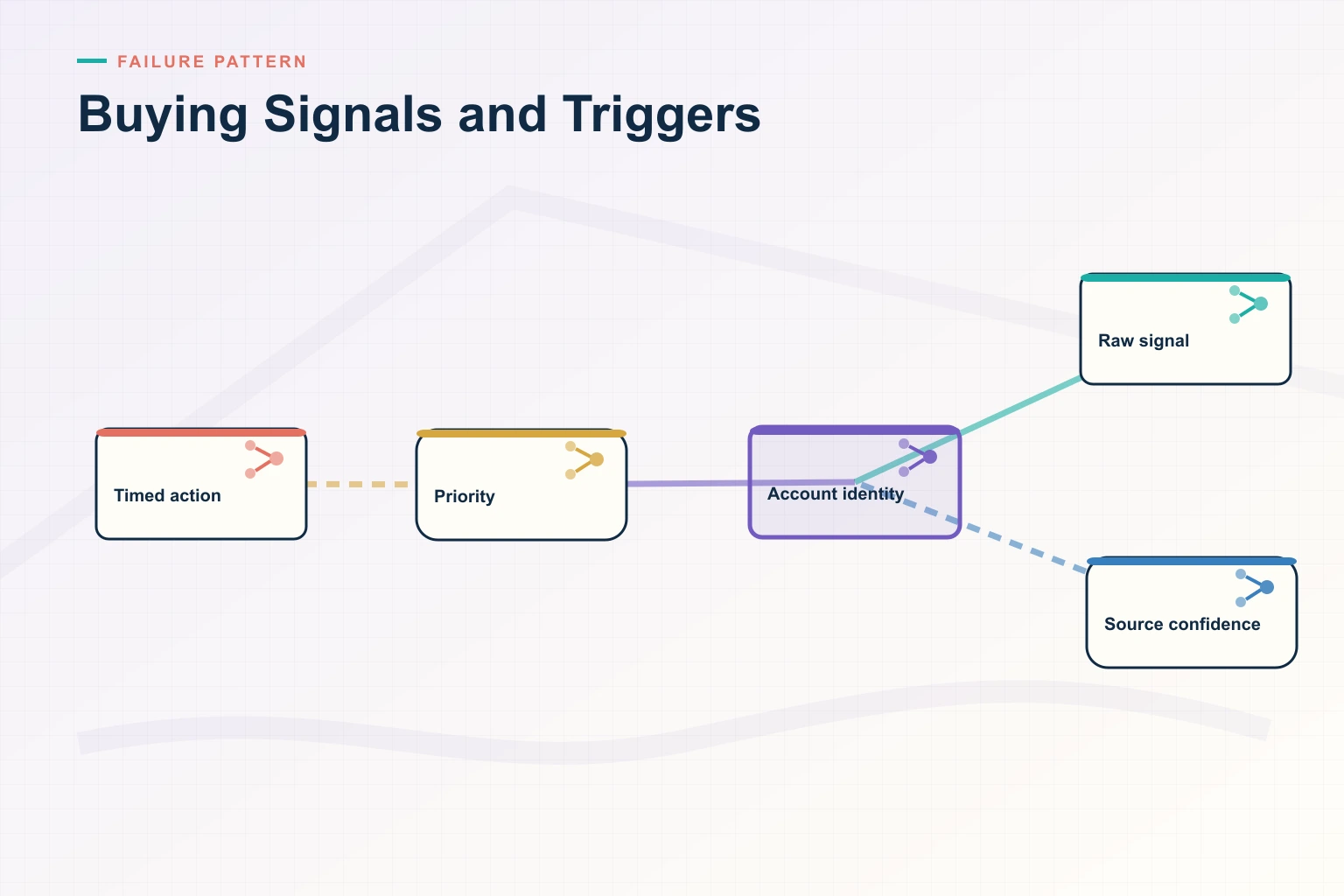
Many B2B revenue teams are making predictable, fixable mistakes in how they approach Buying Signals and Triggers. The most common problems involve temporary initiatives, intuition-led decisions, single-threaded relationships, activity-focused measurement, and limited learning from losses.
Strategic mistakes
1. Treating buying signals and triggers as a one-time initiative
The most common buying signals triggers B2B sales mistake is treating it as a project with a start and end date rather than an ongoing operational discipline.
Assign a permanent owner to buying signals and triggers outcomes. Build the practice into the operating cadence with standing reviews, defined metrics, and quarterly improvement goals.
2. Relying on intuition instead of data
The problem with intuition is that it is subject to availability bias — leaders remember the last few deals vividly and make policy based on them rather than the full portfolio picture.
Define three to five leading indicators and track them weekly. When the data and intuition disagree, investigate the discrepancy before changing the process.
Execution mistakes
Three-part explainer: Recognize the leak, Correct the behavior, and Prevent repeat failure.
3. Single-threading the relationship
One of the most expensive Buying Signals and Triggers mistakes is building the entire relationship around a single stakeholder.
Map the buying committee, assign stakeholder coverage, and flag deals in which only one contact is active.
4. Confusing activity with progress
High activity levels in buying signals triggers B2B sales can mask a complete absence of forward momentum.
Measure outcomes, not activities. Track stage progression velocity, buyer engagement quality, and stakeholder coverage breadth.
5. Failing to learn from losses
Most teams conduct minimal post-mortem analysis on lost deals.
Every won and lost deal contains insights about what works and what does not in your approach to Buying Signals and Triggers.
Use structured win-loss reviews to document findings and update playbooks.
A practical operating model
Before you can improve Buying Signals and Triggers, you need an honest baseline.
Start with an honest audit. Review recent opportunities by representative, segment, deal size, and stage to identify where deals enter without sufficient qualification, stall, or become exposed to late-stage risk.
Define standards and leading indicators
Top teams do not leave buying signals triggers B2B sales to intuition. They write down exactly what excellent execution looks like at each stage of the deal, and they hold every rep accountable to that standard.
Leading indicators might include stakeholder engagement rates, content consumption, mutual action plan progression, or deal velocity at each stage.
Review leading and lagging indicators
The right metrics for Buying Signals and Triggers sit at the intersection of leading and lagging indicators.
Build a dashboard that shows both. Review it weekly.
Align technology and process
The technology layer for Buying Signals and Triggers should reduce friction, not add it.
Technology should serve the buying signals triggers B2B sales process, not define it.
Create feedback loops
Review metrics against targets, update playbooks when new patterns emerge, and incorporate findings from win-loss reviews into coaching and strategy.
Fixing these mistakes requires the right process, data, and platform working in alignment. See how Revspire helps B2B revenue teams eliminate these patterns.