The Complete 2026 Guide to Forecast Cadence for Revenue Leaders
A practical perspective for connecting this idea to your revenue team’s next move.
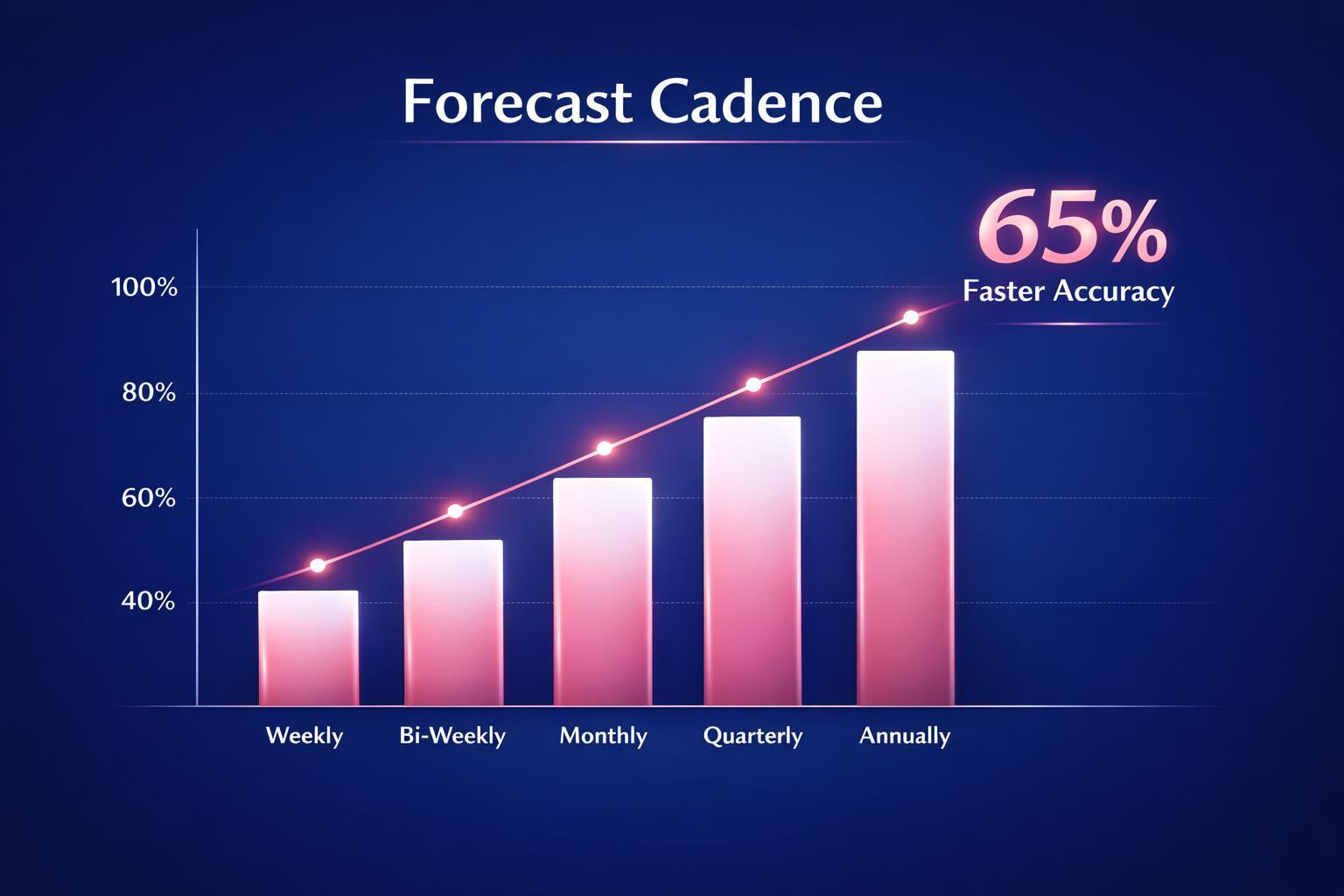
This guide gives you the complete playbook.
What does mastery look like? It means having a documented approach, the right technology in place, clear ownership across the revenue team, and a feedback loop that improves performance quarter over quarter.
The Core Components of an Effective Forecast Cadence System
Strategy and Ownership
Someone on the leadership team is accountable for the outcomes, not just the activities. They set the goals, define the metrics, and ensure the approach evolves as market conditions change.
Process and Playbooks
The process that governs sales forecast cadence weekly monthly must be documented, taught, and enforced. This means embedded workflows, manager reinforcement, and technology that surfaces the right action at the right moment.
Technology and Data
The technology layer for Forecast Cadence should reduce friction, not add it. Data should flow automatically between systems — CRM, engagement platform, deal room — so that leaders always have a current, accurate view of what is happening across the portfolio.
Explore Revspire Deal Intelligence.
Audit the Current State
Start with an honest audit. Before you can improve Forecast Cadence, you need an honest baseline.
An operating model for Forecast Cadence answers three questions: what actions should happen, at what stage, and who is accountable. Document this explicitly.
The metrics for Forecast Cadence should connect directly to revenue outcomes. Avoid vanity metrics like activity counts. Focus instead on conversion rates at each stage, time-in-stage benchmarks, and the correlation between specific behaviors and win rates.
Seven Practices for Forecast Cadence
- Define the standard. Top teams do not leave sales forecast cadence weekly monthly to intuition.
- Use leading indicators. Leading indicators might include stakeholder engagement rates, content consumption, mutual action plan progression, or deal velocity at each stage.
- Review it weekly. The best revenue teams build a standing review of Forecast Cadence health into their rhythm.
- Coach live opportunities. What works is deal-specific coaching — reviewing live opportunities with each rep.
- Capture win-loss intelligence. Every won and lost deal contains insights about what works and what does not in your approach to Forecast Cadence.
- Align technology with the process. Technology should serve the sales forecast cadence weekly monthly process, not define it.
- Create feedback loops. This means reviewing Forecast Cadence metrics quarterly against targets, updating playbooks when you learn something new, and soliciting feedback from buyers on their experience.
Measure the Impact
If you cannot measure it, you cannot improve it. The right metrics for Forecast Cadence sit at the intersection of leading and lagging indicators.
- Stakeholder engagement rates
- Content consumption
- Mutual action plan progression
- Deal velocity at each stage
- Win rates
- Cycle times
- Average deal sizes
Build a dashboard that shows both. Review it weekly. Tie it directly to coaching conversations and territory reviews.
Forecast Cadence Mistakes to Avoid
Treating Forecast Cadence as a One-Time Initiative
Assign a permanent owner to Forecast Cadence outcomes. Build it into your operating cadence with standing review meetings, defined metrics, and quarterly improvement goals.
Relying on Intuition Instead of Data
Define three to five leading indicators for Forecast Cadence and track them weekly. When the data disagrees with the intuition, trust the data first and investigate the discrepancy.
Single-Threading the Relationship
Map every stakeholder in the buying committee, assign coverage, and track engagement with each one. Deals where only one contact is active should be flagged as high-risk regardless of what the rep reports.
Three-part explainer: Recognize the leak, Correct the behavior, and Prevent repeat failure.
Confusing Activity With Progress
Measure outcomes, not activities. Track stage progression velocity, buyer engagement quality, and stakeholder coverage breadth.
Failing to Learn From Losses
Implement a structured loss review process. Document the findings and update playbooks accordingly.
Build a Consistent Operating Discipline
The path to consistently strong Forecast Cadence runs through the right system, the right data, and the right culture.