Revspire blog
The Complete 2026 Guide to Pipeline Analytics for Revenue Leaders
Build a pipeline analytics system with clear ownership, practical metrics, deal coaching, continuous improvement strategies, and common mistakes to avoid.
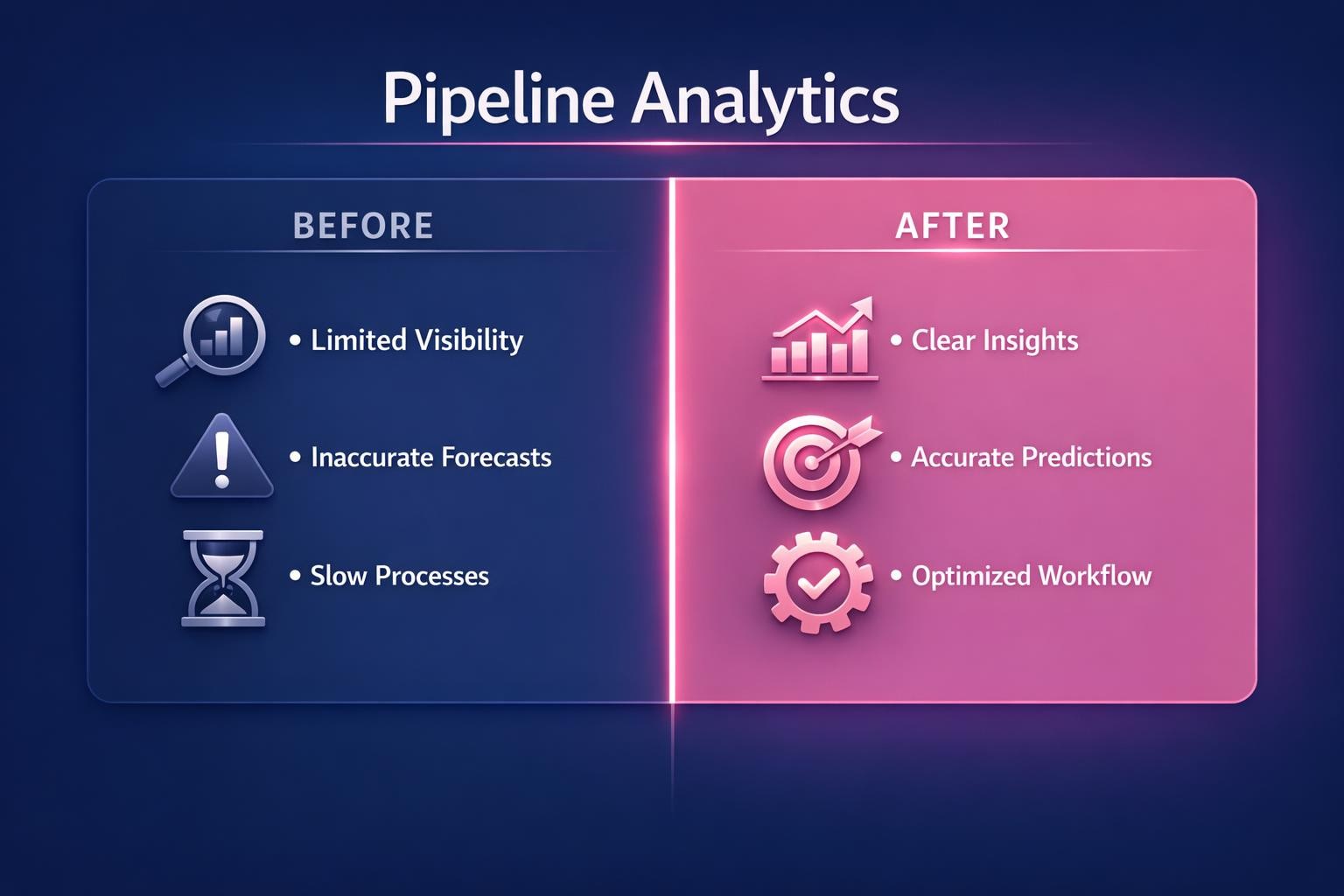
This guide brings together an operating model, measurement framework, business-case considerations, improvement strategies, and common mistakes for revenue leaders working with pipeline analytics.
Build Pipeline Analytics as an Ongoing System
The core problem is that Pipeline Analytics is treated as a one-time event rather than an ongoing system.
A practical governance model assigns a leadership team member accountability for outcomes. That owner can set goals, define metrics, and ensure the approach evolves as market conditions change.
An operating model for Pipeline Analytics answers three questions: what actions should happen, at what stage, and who is accountable.
Document the Process and Maintain the Playbooks
The process that governs pipeline analytics revenue intelligence must be documented, taught, and enforced. Put the process into embedded workflows, reinforce it through managers, and use technology to surface the right action at the right moment.
Treat the Pipeline Analytics playbook as a living document. Update it quarterly with new win-loss learnings rather than setting it once and leaving it unchanged.
Identify Where Revenue Leakage Happens
Review early-stage deals that should not have entered the pipeline, qualified deals that have stalled, and late-stage deals exposed to procurement surprises, unstated objections, or stakeholder concerns.
Start with an honest audit. Compare what the data says with the narrative, then prioritize two or three specific improvements that can have the greatest impact on revenue outcomes. Give each improvement a clear owner, a measurable goal, and a 90-day review cadence.
Assess the Business, Competitive, and Talent Dimensions
For the business case, assess how pipeline analytics connects with representative ramp time, average deal size, customer acquisition cost, forecast accuracy, and resource-allocation decisions. Use your own baseline and measured results rather than assuming a particular return.
For the competitive dimension, examine the buying experience as well as product capability. Consider whether the process makes it easier for buyers to proceed with confidence, builds trust, and reduces perceived risk.
For the talent dimension, consider whether the operating environment helps revenue professionals develop and stay. Treat this as an internal measurement question rather than assuming a universal recruiting or retention effect.
Connect the Process, Technology, and Data
The technology layer for Pipeline Analytics should reduce friction, not add it.
Technology should serve the pipeline analytics revenue intelligence process, not define it. Evaluate whether each tool makes the process easier and more consistent or adds friction.
Learn more about Revspire Pipeline Analytics.
Measure Leading and Lagging Indicators
The right metrics for Pipeline Analytics sit at the intersection of leading and lagging indicators. Leading indicators give teams an opportunity to intervene, while lagging indicators such as win rates, cycle times, and average deal sizes confirm whether the approach is working.
Measure outcomes, not activities. Track stage progression velocity, buyer engagement quality, and stakeholder coverage breadth. When activity is high but outcomes are poor, investigate what is happening inside the deal rather than asking for more activity.
Seven Strategies for Continuous Improvement
- Define excellent execution. Write down what excellent execution looks like at each stage of the deal so the team can coach, measure, and improve against a shared standard.
- Instrument every stage. Track leading indicators such as stakeholder engagement rates, content consumption, mutual action plan progression, or deal velocity at each stage.
- Use a weekly cadence. Include Pipeline Analytics in weekly pipeline calls as a structured discussion about what needs to change during the next seven days.
- Coach at the deal level. Review live opportunities with each representative, identify execution gaps, and work through corrections in context.
- Capture win-loss intelligence. Use post-deal interviews, CRM data analysis, and structured win-loss reviews, then feed the findings into playbooks, training, and strategy.
- Align technology with the process. Consolidate tools where possible and ensure the tools communicate so data flows without manual intervention.
- Create feedback loops. Review Pipeline Analytics metrics quarterly against targets, update playbooks when the team learns something new, solicit buyer feedback about the experience, and identify the next improvement to test.
Five Pipeline Analytics Mistakes to Avoid
Treating Pipeline Analytics as a One-Time Initiative
Assign a permanent owner, establish standing review meetings and defined metrics, and set quarterly improvement goals.
Relying on Intuition Instead of Data
Define three to five leading indicators and track them weekly. When data and intuition disagree, investigate the discrepancy.
Single-Threading the Relationship
Map the buying committee, assign stakeholder coverage, track engagement with each stakeholder, and flag deals where only one contact is active.
Confusing Activity with Progress
Use stage progression, buyer engagement quality, and stakeholder coverage as the primary lens for coaching and pipeline reviews.
Failing to Learn from Losses
After a significant lost deal, conduct a structured review, document the pipeline breakdowns that contributed to the loss, and update the relevant playbooks.
Put the Framework Into Practice
The path to consistently strong Pipeline Analytics runs through the right system, the right data, and the right culture.