Revspire blog
The Complete 2026 Guide to Factors Slowing Deal Velocity for Revenue Leaders
Audit the ownership, stakeholder coverage, process, coaching, technology, and measurement issues that can slow B2B deal velocity.
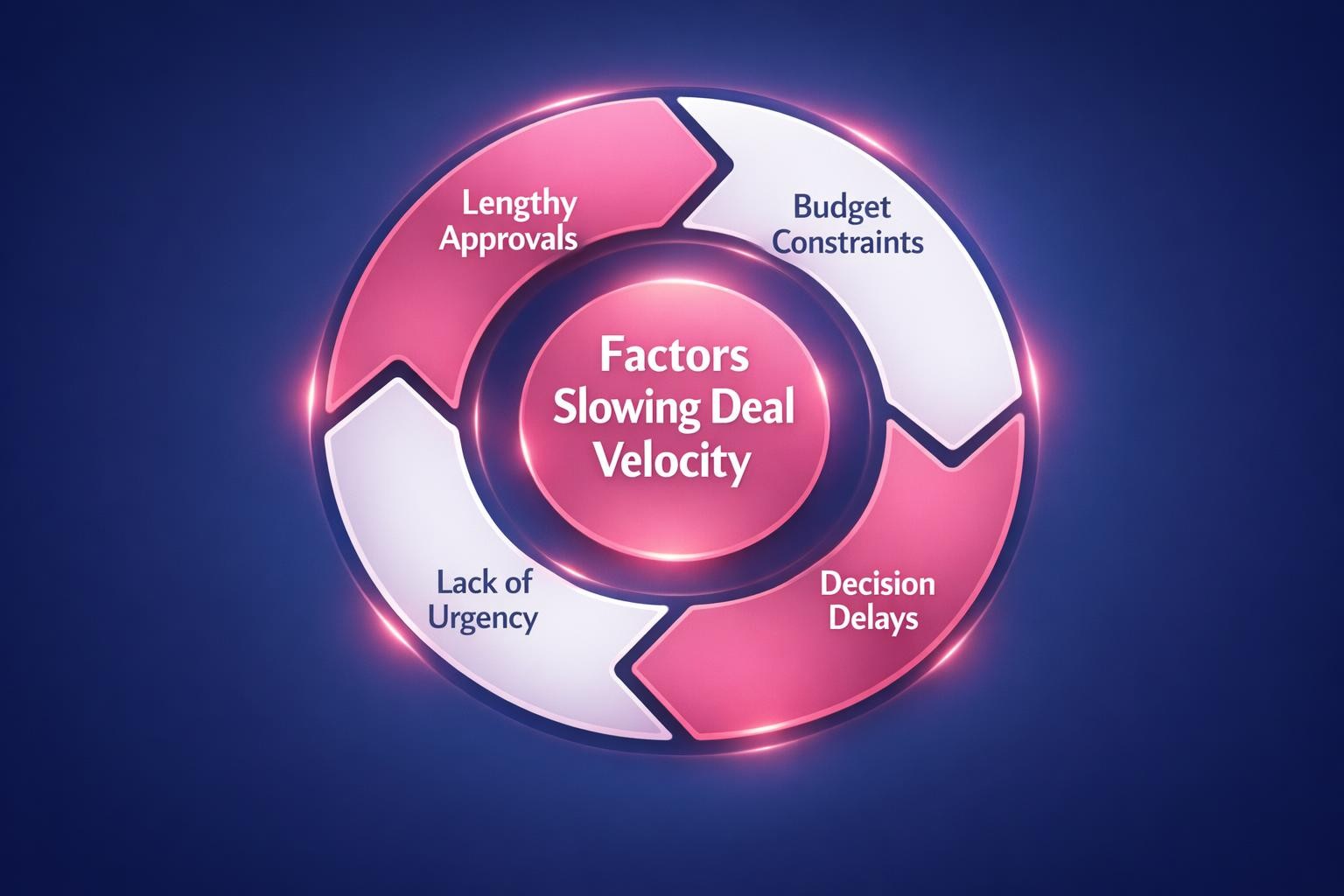
Use this guide to examine qualification, ownership, stakeholder engagement, process, and measurement in your own B2B pipeline. The recommendations are audit steps and operating practices; evaluate their effect against your organization’s documented baseline.
Audit Where Opportunities Stop Progressing
Begin with an internal baseline. Review recent opportunities by stage, segment, deal size, and owner. Record where each opportunity stopped progressing, and separate CRM evidence, buyer feedback, and internal interpretation.
Examine three points in the pipeline: early opportunities that do not meet your qualification criteria; qualified opportunities that remain in one stage without a documented next step; and late-stage opportunities with procurement questions, objections, or stakeholder concerns. Treat these as review categories, not universal causes or prevalence claims.
Teams evaluating technology for this workflow can learn about Revspire Deal Acceleration.
Build a Documented Operating Model
Organize the operating model around a shared definition of execution, stage-level data, and feedback from won and lost opportunities. Document the milestones, evidence, actions, and ownership required at each stage.
Assign Strategy and Ownership
Assign a leader who is accountable for outcomes, not just activities. Define that owner’s review cadence, metrics, decision rights, and responsibility for process changes.
Document Process and Playbooks
Record the actions, evidence, and accountable role for each stage. Reinforce the documented process through manager coaching and workflows. Revise a playbook when internal evidence supports a specific change.
Align Technology and Data
Evaluate each tool against the documented workflow. Determine whether it reduces manual steps and makes stage evidence easier to review. Where organizational policy permits, connect relevant CRM, engagement, and deal-room data, and identify the authoritative system for each data type.
Seven Practices to Test Against Your Baseline
1. Define Stage Evidence
Write down what acceptable execution looks like at each stage, including the evidence required before an opportunity advances. Apply the same definitions in pipeline reviews and coaching.
2. Review Multiple Indicators
Review stage progression, stakeholder engagement, content consumption, and mutual action plan status alongside win rate, cycle time, and average deal size. Use each measure as a signal for investigation rather than proof that one factor caused an outcome.
3. Add a Weekly Deal-Health Review
For each priority opportunity, identify the available evidence of progress, unresolved risks, accountable owner, and next action. Record changes so later reviews can compare decisions with outcomes.
4. Coach With Current Opportunities
Compare a live opportunity’s available evidence with the documented stage criteria. Identify a specific gap and agree on a correction that can be reviewed at the next cadence.
5. Capture Win-Loss Information
Collect information through post-deal interviews, CRM analysis, and structured win-loss reviews. Keep buyer statements, recorded data, and internal interpretation distinct before updating training, playbooks, or strategy.
6. Make Technology Support the Process
Assess whether each tool supports the documented workflow or introduces avoidable manual work. Define which system is authoritative for each type of deal information and consider consolidating redundant tools.
7. Maintain a Feedback Loop
Compare selected measures with the baseline, record process changes, and review later results. Update the operating model only when the organization’s evidence supports the revision.
Common Risks to Review
Temporary Ownership
A time-limited initiative may leave no owner for later reviews. Assign ongoing responsibility and document the cadence for checking metrics, playbooks, and process changes.
Decisions Based Only on Recent Anecdotes
Compare a manager’s interpretation with the available portfolio data. If they differ, investigate the discrepancy before changing policy.
Dependence on One Stakeholder
If an opportunity depends on one active contact, the team may lack another route for information or engagement when that contact becomes unavailable. Map known stakeholder roles, assign coverage, and flag the dependency for review.
Activity Without Documented Progress
Email, call, and task volume do not by themselves establish that an opportunity has advanced. Review stage evidence, buyer engagement, next-step completion, and stakeholder coverage alongside activity counts.
Undocumented Loss Findings
For a significant loss, record the available evidence, the buyer’s stated reasons, and the team’s interpretation as separate categories. Change the playbook only when the findings support a defined revision.
Measure Changes Without Overstating Cause
Select measures that correspond to the process change under review. These may include conversion by stage, time in stage, cycle time, win rate, forecast variance, average deal size, or stakeholder coverage. Document the baseline, review period, and other relevant changes before drawing conclusions.
Build a dashboard that combines early signals with final outcomes. Use a consistent review cadence, and avoid attributing an outcome to one intervention unless the organization’s analysis supports that conclusion.
A repeatable review process begins with defined ownership, documented stage criteria, separated evidence and interpretation, and measurement against an internal baseline. Talk to Revspire to see how your team can get there faster.