Revspire blog
The Complete 2026 Guide to RevOps Metrics and KPIs for Revenue Leaders
Learn how to build a RevOps measurement system with clear ownership, leading and lagging indicators, weekly reviews, coaching, and feedback loops.
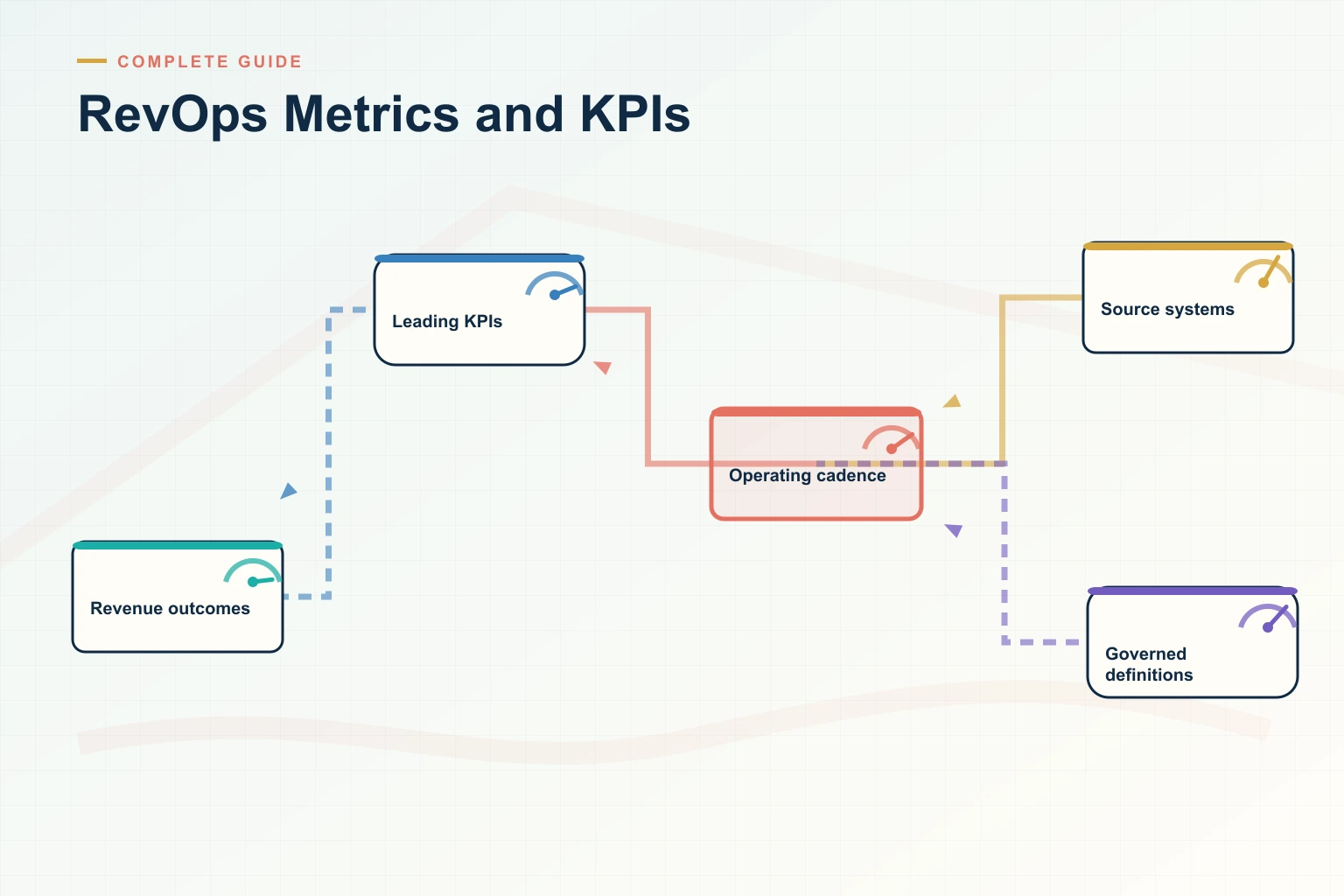
An effective RevOps metrics and KPIs system combines a documented approach, appropriate technology, clear ownership across the revenue team, and a feedback loop.
Build the operating foundation
Define clear milestones, documented criteria, and a shared vocabulary across the team. Then document what actions should happen, at what stage they should happen, and who is accountable.
A simple model that people follow is more useful than a sophisticated model that the team ignores.
Three-part explainer: Define the system, Operationalize the workflow, and Measure the impact.
Audit the current state
Before you can improve RevOps Metrics and KPIs, you need an honest baseline. Review recent opportunity data, map opportunities against the current stages, and examine where deals are falling out. Segment the findings by representative, market segment, and deal size.
Ask what the data says versus what the narrative says. Use that assessment to prioritize two or three specific improvements connected to revenue outcomes, then assign each improvement a clear owner, a measurable goal, and a 90-day review cadence.
Identify where revenue leakage occurs
Revenue leakage can occur when unsuitable opportunities enter the pipeline, qualified deals stall during the sales cycle, or late-stage deals encounter procurement surprises, unstated objections, and stakeholder concerns.
Three-part explainer: Unify the evidence, Run the cadence, and Close the measurement loop.
Use leading and lagging indicators together
Lagging metrics like win rate and quota attainment tell you what happened. Depending on the sales process, leading indicators might include stakeholder engagement, content consumption, mutual action plan progression, and deal velocity at each stage.
The metrics for RevOps Metrics and KPIs should connect directly to revenue outcomes. Instead of relying primarily on activity counts, examine conversion rates, time in stage, stage progression, buyer engagement quality, and stakeholder coverage.
Review the evidence every week
Build a dashboard that shows both leading and lagging indicators. Review it weekly and connect it to coaching conversations and territory reviews.
Use the weekly pipeline review as a structured conversation about what needs to change during the next seven days. Deal-specific coaching can then focus on live opportunities, execution gaps, and the actions needed to address them.
Align technology with the process
Technology should support the RevOps process, not define it. Evaluate whether each tool makes the process easier and more consistent or adds friction. Where possible, data should flow between the CRM, engagement platform, and deal environment without manual intervention.
The source material presents Revspire Revenue Intelligence as a way to centralize signals, content, and stakeholder intelligence.
Capture learning and maintain feedback loops
Every won and lost deal contains insights about what works and what does not in your approach to RevOps Metrics and KPIs. Capture those insights through post-deal interviews, CRM data analysis, and structured win-loss reviews, then feed them back into playbooks, training, and strategy.
Review metrics against targets, update playbooks when new evidence emerges, and gather buyer feedback about the experience. Assign permanent ownership so the process remains part of the operating cadence.
Three-part explainer: Set the standard, Embed the practice, and Scale what works.
Five RevOps measurement mistakes to avoid
1. Treating measurement as a one-time initiative
Assign a permanent owner to RevOps Metrics and KPIs outcomes. Build the work into the operating cadence with standing reviews, defined metrics, and recurring improvement goals.
2. Relying on intuition instead of portfolio data
Define a limited set of leading indicators and track them weekly. When the data disagrees with intuition, investigate the discrepancy against the full portfolio rather than relying on the most recent deals.
3. Building the relationship around one stakeholder
When the only active stakeholder stops engaging, changes roles, or leaves the organization, the team has no fallback. Map the buying group, assign relationship coverage, and flag deals in which only one contact is active.
4. Confusing activity with progress
Measure outcomes, not activities. High email, call, or task volume does not by itself establish forward movement. When activity is high but outcomes are weak, investigate what is happening inside the deal rather than asking only for more activity.
5. Failing to learn from losses
Implement a structured loss review process. After a significant lost deal, analyze the relevant breakdowns, document the findings, and update the playbook.
Explore the platform
The path to consistently strong RevOps Metrics and KPIs runs through the right system, the right data, and the right culture.