Revspire blog
Why Closing Playbook Is the Highest-Leverage Move in B2B Sales
Build a practical B2B closing playbook with clear ownership, useful metrics, weekly reviews, deal-level coaching, and structured win-loss analysis.
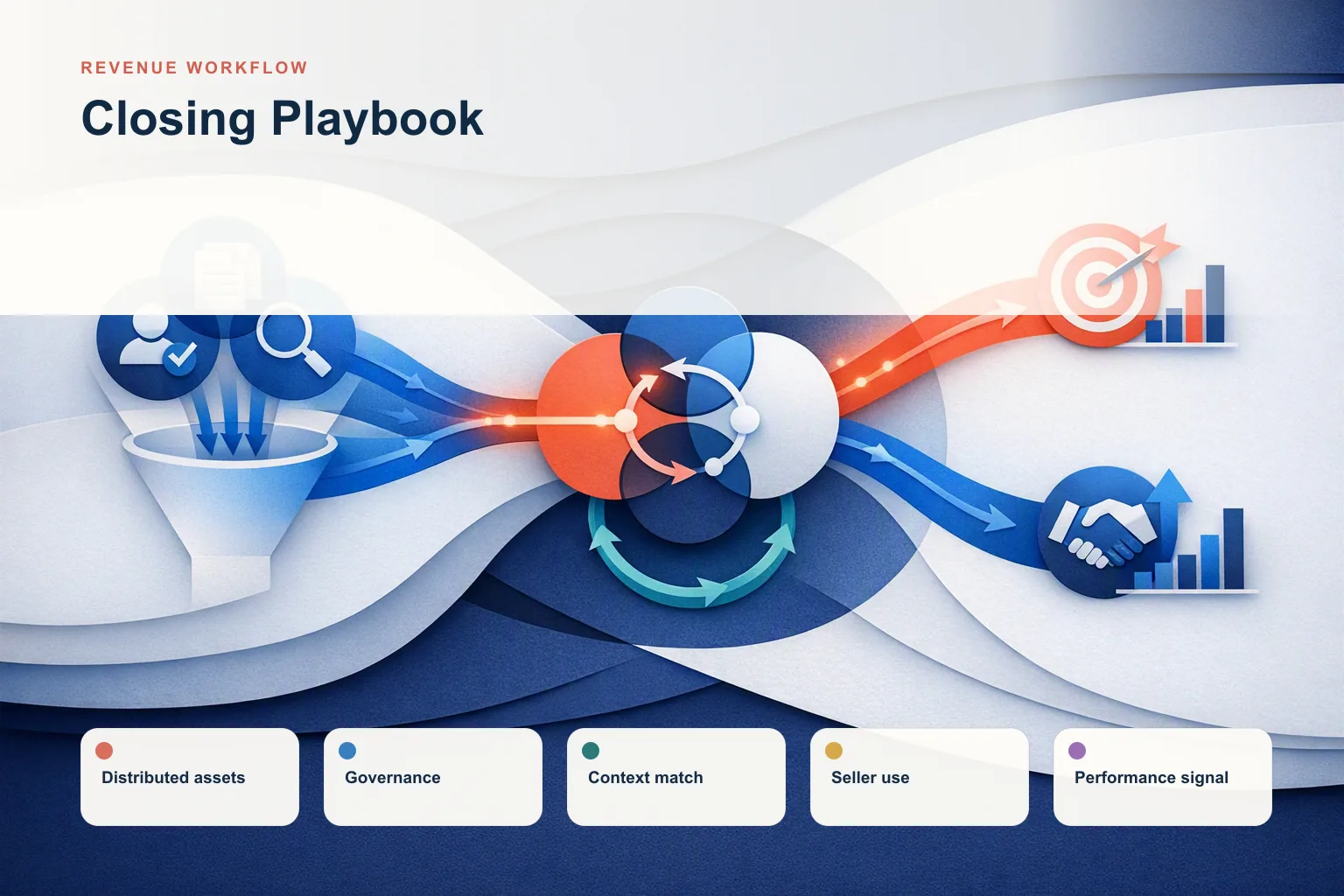
A documented closing playbook gives revenue teams a shared process for reviewing opportunities, assigning ownership, measuring progress, and improving execution.
Why a Closing Playbook Matters
Teams piece together a process from tribal knowledge, manager intuition, and whatever the previous playbook said. The result is inconsistency: some reps thrive, most struggle, and leadership cannot tell why.
Revenue leakage from poor Closing Playbook practice concentrates in three places. Unqualified opportunities can consume capacity, qualified deals can stall during the sales cycle, and late-stage deals can encounter procurement issues, unstated objections, or stakeholder concerns.
Three-part explainer: Expose the hidden cost, Build the business case, and Start where it matters.
A Practical Closing Playbook Framework
1. Audit the current state
Before you can improve Closing Playbook, you need an honest baseline. Pull the last six months of deal data. Map opportunities by stage and identify where deals are falling out and why. Review the results by rep, segment, and deal size.
2. Define the operating model and ownership
An operating model for Closing Playbook answers three questions: what actions should happen, at what stage, and who is accountable. Document the milestones, criteria, responsibilities, and conditions for advancing an opportunity.
Someone on the leadership team is accountable for the outcomes, not just the activities. That owner can define the goals and metrics and maintain the review cadence.
3. Use leading and lagging indicators
Lagging metrics like win rate and quota attainment tell you what happened. For Closing Playbook, leading indicators might include stakeholder engagement rates, content consumption, mutual action plan progression, or deal velocity at each stage. Lagging indicators — win rates, cycle times, average deal sizes — confirm whether your approach is working.
Build a dashboard that shows both. Review it weekly. Tie it directly to coaching conversations and territory reviews.
4. Align technology with the process
The technology layer for Closing Playbook should reduce friction, not add it. Data should flow automatically between systems — CRM, engagement platform, deal room — so leaders have a current view of the portfolio.
Evaluate every tool in your stack against a simple question: does this make Closing Playbook easier and more consistent, or does it add friction?
The Revspire Playbook Engine is presented in the source articles as a platform for surfacing relevant deal signals and supporting closing-playbook workflows.
Seven Practices for Continuous Improvement
- Define excellent execution: Write down what strong execution looks like at each deal stage.
- Track leading indicators: Monitor buyer and opportunity signals alongside final outcomes.
- Establish a weekly cadence: Review closing-playbook health and agree on next actions.
- Coach with live opportunities: Use deal-specific coaching to identify execution gaps.
- Capture win-loss intelligence: Use post-deal interviews, CRM analysis, and structured reviews.
- Reduce technology friction: Consolidate tools where practical and reduce duplicate data entry.
- Build feedback loops: Review metrics, buyer feedback, and lessons from completed deals.
The best teams capture them deliberately — through post-deal interviews, CRM data analysis, and structured win-loss reviews — and feed them back into playbooks, training, and strategy.
Five Closing Playbook Mistakes to Correct
Treating the playbook as a one-time initiative
Assign a permanent owner to Closing Playbook outcomes. Build it into the operating cadence with standing reviews, defined metrics, and quarterly improvement goals.
Relying on intuition instead of portfolio data
Review a focused set of indicators each week and investigate when the data conflicts with the prevailing narrative.
Single-threading the buyer relationship
One of the most expensive Closing Playbook mistakes is building the entire relationship around a single stakeholder. Map the buying committee, assign coverage, and flag opportunities with only one active relationship for closer review.
Confusing activity with progress
Measure outcomes, not activities. Review stage progression, buyer engagement quality, deal velocity, and stakeholder coverage rather than relying only on email, call, or task volume.
Failing to learn from losses
Implement a structured loss review process. Document the findings from significant lost deals and use them to update playbooks, coaching, and training.
Three-part explainer: Recognize the leak, Correct the behavior, and Prevent repeat failure.
Where to Start
Start with an honest audit. Use the assessment to prioritize two or three improvements, assign a clear owner, set a measurable goal, and establish a 90-day review cadence.