Revspire blog
The Business Case for Investing in a Discovery Playbook
Evaluate the business case for a B2B sales discovery playbook and learn how to build, measure, coach, and improve the operating model.
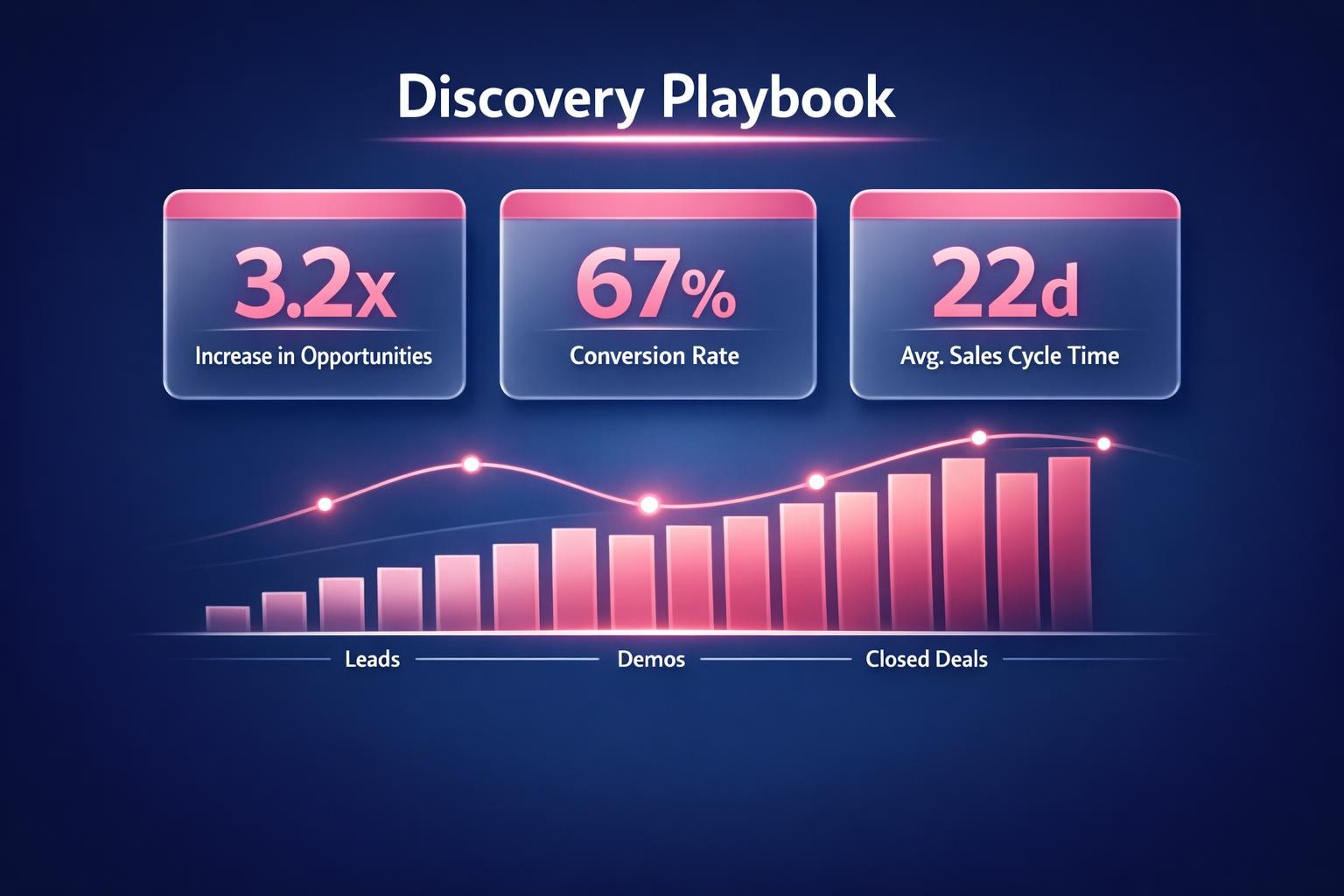
A structured discovery playbook combines a documented approach, supporting technology, clear ownership, and a feedback loop for improving performance.
Why Discovery Needs an Operating System
The conventional approach to Discovery Playbook in B2B sales is reactive rather than deliberate. Teams piece together a process from tribal knowledge, manager intuition, and whatever the previous playbook said. The result is inconsistency: some reps thrive, most struggle, and leadership cannot tell why.
The core problem is treating Discovery Playbook as a one-time event rather than an ongoing system. A stronger foundation includes clear milestones, documented criteria, a shared vocabulary, stage-level data, and feedback from won and lost deals.
Revenue leakage from poor Discovery Playbook practice concentrates in three places: unsuitable opportunities enter the pipeline, qualified deals stall because of discovery gaps, and late-stage process failures surface too late. Revspire Playbook Engine is designed to close these gaps at every stage.
Evaluate the Business Case
The business case described in the canonical source includes faster ramp times for new representatives, higher average deal sizes, lower customer acquisition costs, and improved forecast accuracy. Teams can assess those outcomes against their own baseline.
Discovery can also affect the buying experience. In markets where a product is differentiated but not unique, buyers consider both product capability and how easy and confident the buying experience makes them feel.
Top-performing revenue professionals actively seek out organizations that take Discovery Playbook seriously. The canonical source describes an environment where strong representatives want to work, develop faster, and stay longer.
Build the Foundation
Audit the Current State
Before improving Discovery Playbook, establish an honest baseline. Review opportunities by representative, segment, deal size, and stage to identify where deals leave the pipeline and why.
Define the Operating Model
An operating model for Discovery Playbook answers three questions: what actions should happen, at what stage, and who is accountable. Document the model and assign an owner who sets goals, defines metrics, and remains accountable for outcomes.
Define Excellent Execution
Top teams write down what excellent execution looks like at each stage and hold every representative accountable to that standard. A shared definition supports consistent coaching, measurement, and improvement.
Align Technology with the Process
The technology layer for Discovery Playbook should reduce friction, not add it. Evaluate each tool by whether it makes the process easier and more consistent or adds operational overhead.
Measure, Coach, and Learn
Track conversion rates at each stage, time-in-stage benchmarks, and correlations between specific behaviors and win rates. Leading indicators may include stakeholder engagement, content consumption, mutual action plan progression, or deal velocity; lagging indicators include win rates, cycle times, and average deal sizes.
Build a dashboard that shows both leading and lagging indicators. Review it weekly and tie it directly to coaching conversations and territory reviews.
Use deal-specific coaching to review live opportunities, identify where execution breaks down, and work through the fix in real time.
Capture insights through post-deal interviews, CRM data analysis, and structured win-loss reviews, then feed the findings back into playbooks, training, and strategy.
Correct Common Execution Mistakes
- One-time ownership: Assign a permanent owner, establish standing reviews, define metrics, and set recurring improvement goals.
- Intuition without portfolio data: Define leading indicators, track them weekly, and investigate discrepancies between intuition and the data.
- Single-threaded relationships: Map every stakeholder in the buying committee, assign coverage, and track engagement with each one.
- Activity without progress: Measure outcomes rather than activity counts by tracking stage progression, buyer engagement quality, and stakeholder coverage.
- Unexamined losses: Review significant lost deals, document discovery breakdowns, and update the playbook.
Where to Start
Start with an honest audit. Compare the data with the prevailing narrative, prioritize two or three improvements, and give each improvement a clear owner, a measurable goal, and a 90-day review cadence.