Revspire blog
Win-Loss Program Design: 7 Strategies the Top Revenue Teams Use in 2026
A practical guide to win-loss program design with seven strategies, a three-step implementation framework, useful metrics, and five common mistakes to correct.
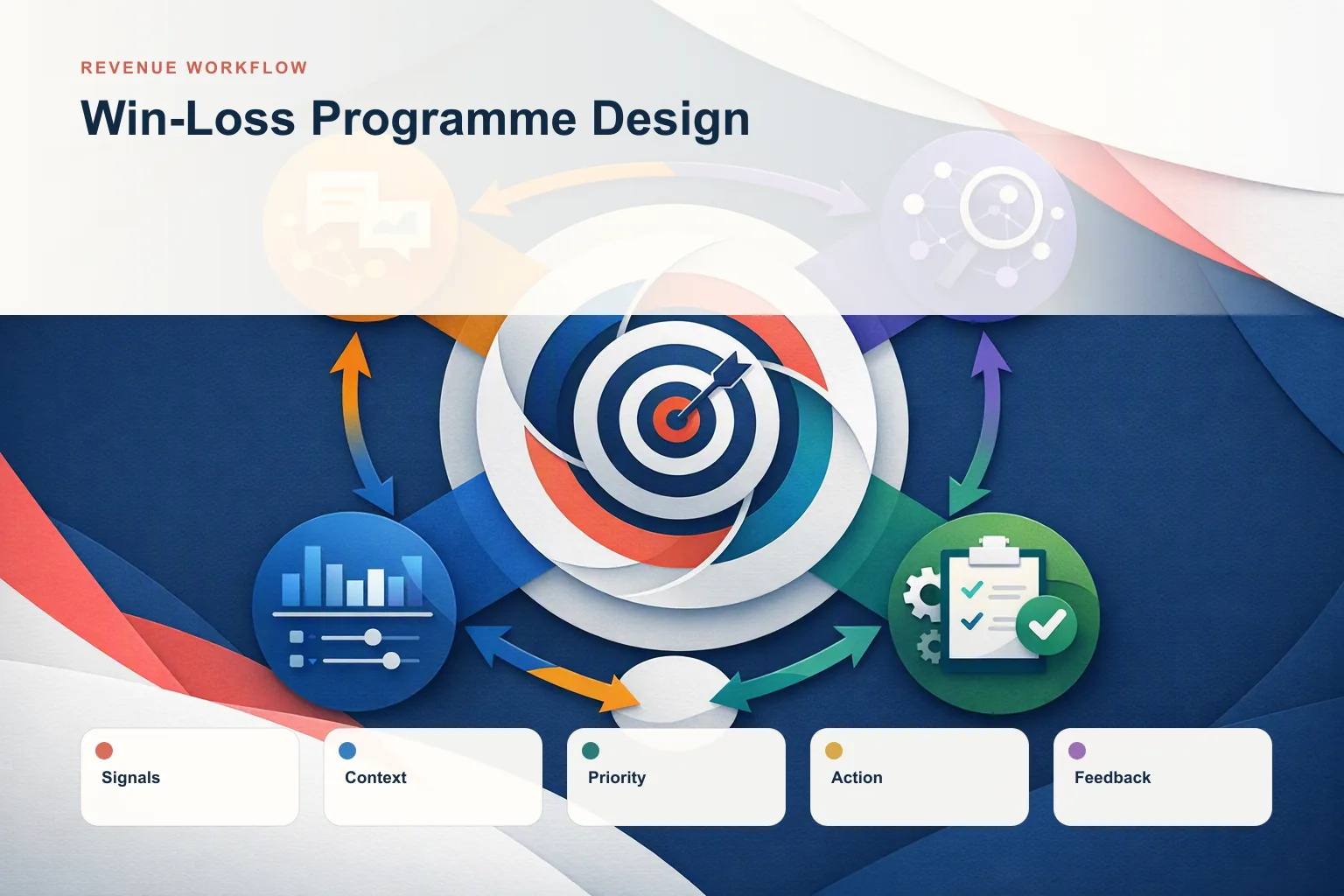
Win-loss program design works best as an ongoing operating discipline rather than a one-time initiative. A structured approach combines clear ownership, documented standards, deal-level evidence, practical coaching, appropriate technology, and feedback loops.
Why Win-Loss Program Design Matters
Revenue leakage can appear throughout the pipeline. Poorly qualified opportunities consume representative capacity, qualified deals can stall, and late-stage deals can encounter procurement surprises, unstated objections, or stakeholder concerns.
Start with an honest audit. Compare deal data with the explanations supplied by the team, identify where the process is breaking down, and prioritize two or three improvements with clear owners and measurable goals.
Build the Operating Model
An operating model for Win-Loss Program Design answers three questions: what actions should happen, at what stage, and who is accountable. Keep the model simple enough to follow and explicit enough to support measurement and coaching.
- Ownership: Assign responsibility for outcomes, metrics, and continued program development.
- Process: Document how wins and losses are reviewed, how findings are recorded, and how playbooks are updated.
- Technology and data: Use tools that reduce friction and allow data to move between the systems used by the revenue team.
- Cadence: Review leading indicators weekly and broader program performance quarterly.
Build a dashboard that shows both leading and lagging indicators. Review it weekly and tie it directly to coaching conversations and territory reviews.
For an example of a platform designed to centralize deal signals and stakeholder intelligence, explore Revspire Win-Loss Intelligence.
A Three-Step Implementation Framework
Three-part explainer: Audit the current state, Build the operating model, and Measure and improve.
1. Audit the Current State
Review recent opportunities by representative, segment, deal size, and pipeline stage. Identify where deals leave the process and compare the recorded reasons with the available deal evidence.
2. Build the Operating Model
Define the required actions, decision criteria, and accountable owner for each stage. Establish a shared vocabulary and make the process part of existing pipeline and coaching routines.
3. Measure and Improve
Track conversion rates, time in stage, deal velocity, stakeholder engagement, and the relationship between specific behaviors and outcomes. Use the findings to update coaching and playbooks.
Seven Strategies for Win-Loss Program Design
Three-part explainer: Set the standard, Embed the practice, and Scale what works.
1. Define What Great Execution Looks Like
Write down what excellent execution looks like at each deal stage. Clear milestones, documented criteria, and a shared vocabulary give managers a consistent basis for coaching and measurement.
2. Instrument Every Stage with Leading Indicators
Use leading indicators such as stakeholder engagement, content consumption, mutual action plan progression, and deal velocity alongside lagging measures such as win rate and quota attainment.
3. Embed the Program in the Weekly Cadence
Make program health a standing part of weekly pipeline conversations. Use the review to determine what needs to change next rather than treating it as another status update.
4. Coach at the Deal Level
Review live opportunities with representatives, identify where execution is breaking down, and work through the correction in context.
5. Capture Win-Loss Intelligence Systematically
Every won and lost deal contains insights about what works and what does not in your approach to Win-Loss Program Design. Capture those insights through post-deal interviews, CRM data analysis, and structured reviews, then feed the findings into playbooks, training, and strategy.
6. Align Technology with the Process
Technology should support the win-loss analysis process rather than define it. Evaluate whether each tool makes execution easier and more consistent, whether systems exchange data effectively, and whether the technology reduces operational friction.
7. Create Continuous Feedback Loops
Review program metrics against targets, update playbooks when new patterns emerge, and ask buyers about their experience. This cycle turns individual deal findings into an operating system that can improve over time.
Five Common Mistakes and Their Corrections
Treating the Program as a Temporary Initiative
Correction: Assign a permanent owner, establish standing reviews, and connect improvement goals to revenue outcomes.
Relying on Intuition Instead of Portfolio Evidence
Correction: Define three to five leading indicators, track them weekly, and investigate discrepancies between the data and the internal narrative.
Depending on a Single Stakeholder
Correction: Map the buying committee, assign stakeholder coverage, and flag deals in which only one contact is active.
Confusing Activity with Progress
Correction: Measure outcomes, not activities. Track stage progression velocity, buyer engagement quality, and stakeholder coverage breadth.
Failing to Learn from Losses
Correction: Implement structured reviews for significant lost deals, document the contributing breakdowns, and update the relevant playbooks.
Put the Program into Practice
Begin with a baseline audit, choose two or three high-impact improvements, and assign an owner to each. Establish a weekly measurement cadence and a quarterly review cycle for updating standards, technology, and playbooks.