Revspire blog
ABS for Enterprise: 7 Account-Based Selling Strategies for 2026
Seven practical ABS for Enterprise strategies for documenting the process, assigning ownership, using deal signals, coaching teams, and improving playbooks.
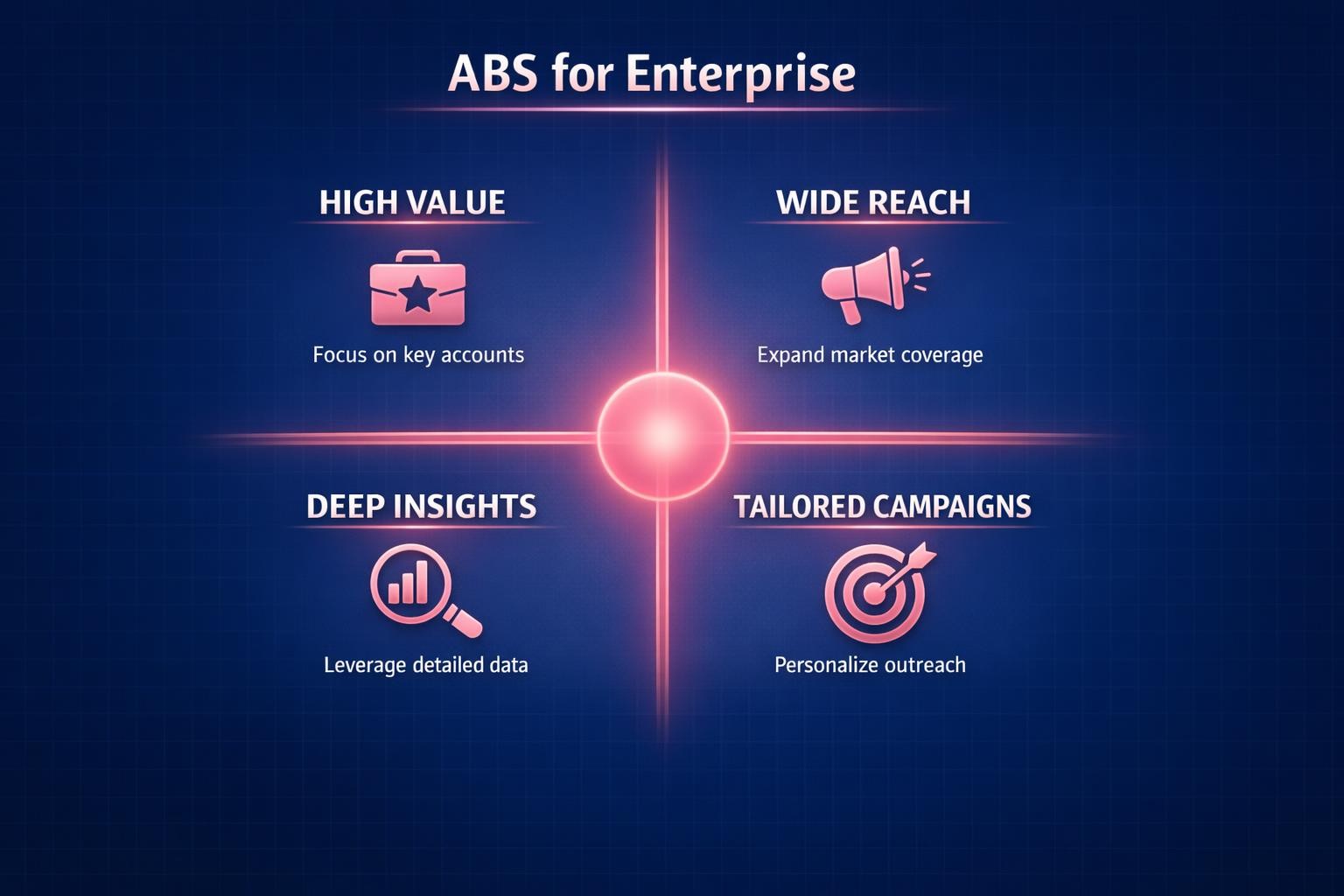
Here, ABS for Enterprise refers to account-based selling for enterprise deals. This guide presents seven practical ways to document the process, assign ownership, use deal signals, coach against current opportunities, and incorporate lessons from wins and losses.
Build an ABS Operating System
Before you can improve ABS for Enterprise, you need an honest baseline. Review recent opportunities and identify where deals advanced, stalled, or exited. Segment the review by representative, market segment, deal size, and stage.
An operating model for ABS for Enterprise answers three questions: what actions should happen, at what stage, and who is accountable. Document the model, connect it to existing workflows, and give one owner responsibility for goals, metrics, and updates.
Three-part explainer: Detect the account trigger, Match account and message, and Coordinate the next step.
Seven Strategies for ABS for Enterprise
1. Define What Good Execution Looks Like
Write down the milestones, criteria, actions, ownership, and shared vocabulary expected at each deal stage. A documented standard gives managers and representatives a common reference for reviews and coaching.
2. Use Leading and Lagging Indicators
Lagging metrics like win rate and quota attainment tell you what happened. Leading indicators can include stakeholder engagement, content consumption, mutual action plan progression, and deal velocity. Review a focused combination of both rather than relying on activity counts alone.
Learn more about Revspire Account Intelligence.
3. Add ABS to the Weekly Cadence
Include ABS health in pipeline calls, coaching conversations, and territory reviews. Use the discussion to identify what should change during the next seven days, who owns the action, and how the team will review progress.
4. Coach Against Current Deals
Review live opportunities with each representative, identify where execution is breaking down, and work through the next corrective action. This connects the playbook to the current stakeholder, stage, and risk conditions.
Seven strategies for documenting and improving an ABS operating model.
5. Capture Win-Loss Intelligence
Use post-deal interviews, CRM data analysis, and structured win-loss reviews. Document the findings and feed relevant lessons into playbooks, coaching, and strategy.
6. Align Technology With the Process
Technology should support the account-based selling process, not define it. Evaluate whether each tool reduces friction, supports high-value work, and allows data to move between systems without repeated manual updates.
7. Create Feedback Loops
Review metrics against targets, update playbooks when new patterns emerge, and solicit feedback from buyers about their experience. Treat the playbook as a living document that can change when the team learns from closed-won and closed-lost opportunities.
A Practical Implementation Framework
Audit the Current State
Start with an honest audit. Examine early-stage qualification, mid-cycle execution, and late-stage risks such as procurement surprises, unstated objections, and stakeholder concerns.
Build the Operating Model
Specify the required actions, deal stage, and accountable owner. Keep the model simple enough to follow and reinforce it through existing manager workflows.
Measure and Improve
Build a dashboard that shows both. Review it weekly. Tie it directly to coaching conversations and territory reviews. Use broader quarterly reviews to update goals and playbooks.
Three-part explainer: Audit the current state, Build the operating model, and Measure and improve.
Common Mistakes to Correct
Treating ABS as a Temporary Initiative
Assign a permanent owner, define metrics, and include improvement work in the regular operating cadence.
Relying on Intuition Alone
Define three to five leading indicators for ABS for Enterprise and track them weekly. When the data and the team’s assumptions disagree, investigate the discrepancy.
Single-Threading the Relationship
Map stakeholders in the buying committee, assign coverage, track engagement, and flag opportunities in which only one contact remains active.
Confusing Activity With Progress
Measure outcomes, not activities. Review stage progression, buyer engagement quality, and stakeholder coverage when activity remains high but an opportunity does not advance.
Failing to Learn From Losses
Implement a structured loss review process. After a significant lost deal, document the relevant breakdowns and update the applicable playbook or coaching material.
Strategic and execution mistakes to examine during ABS reviews.
Three-part explainer: Expose the hidden cost, Build the business case, and Start where it matters.
Start With Focused Improvements
Use the audit to prioritize two or three specific improvements. Assign a clear owner, define a measurable goal, and use a 90-day review cadence before selecting the next priorities.
Ready to put these strategies to work? Book a Revspire demo.