18 Best LMS for Sales Training and Sales Teams (2026)
A practical perspective for connecting this idea to your revenue team’s next move.
The best sales LMS depends on whether you want training built around selling or a company-wide LMS that sales also uses. For sales-specific learning with practice, look at Allego, Highspot, Mindtickle, SalesHood, Seismic Learning or Showpad. For a general LMS, 360Learning, Absorb LMS, Continu, Docebo, iSpring Learn, Juno Journey, LearnUpon, Learn:Up, Litmos or TalentLMS. Gong Enable and Revspire build training into a wider sales platform.
Short answer
The 18 best sales LMS platforms in 2026 are Allego, Highspot, Mindtickle, SalesHood, Seismic Learning, Showpad, Gong Enable, Revspire, 360Learning, Absorb LMS, Continu, Docebo, iSpring Learn, Juno Journey, LearnUpon, Learn:Up, Litmos and TalentLMS. Which one fits depends on whether you need a general learning system, a sales-specific readiness platform, or training built into the tools reps already use.
- Revspire : pick it when you want seller training, practice and certification in the same system as content and deal rooms, and can leave compliance training in a corporate LMS; priced by module with unlimited user licenses (about $25,000 USD a year on average).
- Allego : pick it when field reps learn on the road, often offline.
- Showpad : pick it when field sellers need content and training in one app.
- TalentLMS : pick it when you want published prices and a free plan to test with.
Revspire publishes this guide and has one entry. The full list below is grouped by type, not ranked.
If you are still deciding whether you need an LMS or a sales enablement platform at all, read our LMS vs sales enablement platform guide first. This page assumes you are choosing a learning management system for sales teams and compares 18 options with the pricing each vendor publishes, one limitation each and when to choose them.
Last updated: 9 November 2026
What changed on 9 November 2026: we added six general LMSs that sales teams also shortlist (Absorb LMS, Continu, iSpring Learn, Juno Journey, LearnUpon and Litmos), with prices read on each vendor’s own page that day, and updated the Revspire entry for SCORM and its Conversation Intelligence module.
Disclosure: Revspire publishes this list. Revspire has one entry, in the group of sales platforms with built-in training, and is not ranked above other tools. Tools are grouped by type and listed alphabetically within each group. Every price and feature below was checked on the vendor’s own website on 27 October 2026.
Sales LMS options compared: summary table
| Tool | Type | Best for | Published pricing (checked 27 Oct to 9 Nov 2026) |
|---|---|---|---|
| Allego | Sales readiness platform | Mobile and offline field teams | Per user per month, billed annually; no figures |
| Highspot | Sales readiness platform | Training next to a content library | Not published; training from the Better plan |
| Mindtickle | Sales readiness platform | Large onboarding and everboarding programmes | Not published |
| SalesHood | Sales readiness platform | Building programmes from existing content | Not published; Essential, Pro, Unlimited |
| Seismic Learning | Sales readiness platform | Course-led training with recertification | Not published on the pages we opened |
| Showpad | Sales readiness platform | Field sales with certification workflows | Not published; licensed per user |
| Gong Enable | Training in a revenue platform | Teams already recording calls in Gong | Not published; no free trial |
| Revspire | Training in an enablement platform | Practice-led onboarding, certification and call scoring | Per module, unlimited user licenses; about $25,000 USD a year |
| 360Learning | General LMS | Small teams starting monthly | Team $8 per user a month (up to 100 users) |
| Absorb LMS | General LMS | Mobile and offline learning | Not published; Vendr median $20,000 a year (51 purchases) |
| Continu | General LMS | Tracks, workshops and video coaching | Not published; plans by monthly active users |
| Docebo | General LMS | Enterprise and extended-enterprise learning | Not published; priced on active learners |
| iSpring Learn | General LMS | A published per-active-user price | $6.91 per active user a month at 100 users |
| Juno Journey | General LMS and LXP | HR-led programmes with a sales track | $8 per user a month, billed yearly, up to 200 users |
| LearnUpon | General LMS | Separate portals for each audience | Not published; plans from 100 users |
| Learn:Up (formerly WorkRamp) | General LMS with sales simulations | Fast-growing companies | Not shown on the product page |
| Litmos | General LMS | Training tied to Salesforce records | Not published; quoted on active learners |
| TalentLMS | General LMS | Published prices and a free plan | Free (5 users); Core $119, Grow $229, Pro $449 a month |
For every vendor’s published price or dated contract data in one table, see our sales training platform pricing guide.
USD list prices from each vendor’s site, 27 October 2026. Entries below link each page.
What should a sales LMS do?
Sales teams buy an LMS for onboarding, product launches and ongoing skills. When you evaluate one, check for these, in this order:
- Role-based paths: separate onboarding for SDRs, account executives and partners, so nobody repeats material they do not need.
- Practice, not only courses: role-play or pitch recording with scoring, because reading about objection handling is not the same as doing it.
- Certification on skill: a pass based on a scored practice or pitch, not only on finishing a course.
- Links to selling content: lessons that point to the same approved decks and battlecards reps use with buyers.
- Reinforcement: short refreshers after onboarding and after each launch.
- Manager view: who is ready for which conversations, by team.
Keep paths short. Gartner’s survey of 1,026 B2B sellers (January to March 2024) found 72% feel overwhelmed by the number of skills their job requires, and overwhelmed sellers were 45% less likely to attain quota (Gartner, 16 September 2024). That is a correlation, but it argues for fewer, focused modules. Our sales readiness checklist helps define what “ready” means before you build paths.
Sales readiness platforms with LMS features
These platforms are built for revenue teams and include courses, paths, practice and certification. Our sales readiness platforms guide and sales training platforms guide compare them on readiness and training more broadly.
Allego
Best for: Mobile and offline field teams.
- What it does: Modern Learning gives new hires guided experiences by role, lets reps learn on mobile or offline, supports instructor-led sessions alongside LMS integrations, and uses AI to turn existing material into programmes with courses, reinforcement and reminders (Allego Modern Learning).
- Pricing: per user per month, billed annually upfront; no figures; typical contract three years; lower list price for channel and partner users (Allego pricing, checked 27 October 2026).
- Limitation: the Modern Learning page does not mention SCORM or certification paths, so confirm both.
- Choose it when: field reps learn on the road, often offline.
Highspot
Best for: Training next to a content library.
- What it does: role-specific learning paths, AI-accelerated course authoring, adaptive learning that lets reps skip what they have mastered, SCORM import, role-based certifications and AI role-play tied to deal context (Highspot sales training).
- Pricing: not published; training features start on the Better plan, described as “Train and practice” (Highspot pricing, checked 27 October 2026). Vendr reports a median Highspot contract of $60,005 a year (351 purchases, February 2026).
- Limitation: the entry Good plan lists no training features, and Highspot is now part of Seismic, which also sells Seismic Learning.
- Choose it when: training should live next to the content library reps already use.
Mindtickle
Best for: Large onboarding and everboarding programmes.
- What it does: one platform for onboarding, everboarding, coaching and certifications, with microlearning on mobile, assessments, AI role-plays, AI translation and document-to-video tools, and a Readiness Index that links programmes to skill gains; it integrates with CRM, HRIS and 100+ tools (Mindtickle training).
- Pricing: not published (Mindtickle pricing, checked 27 October 2026). Vendr reports a median Mindtickle contract of $44,356 a year (65 purchases, February 2026).
- Limitation: the training page does not mention SCORM, which matters if you plan to import existing courses.
- Choose it when: you run large onboarding cohorts and want readiness scored by role.
SalesHood
Best for: Building programmes from existing content.
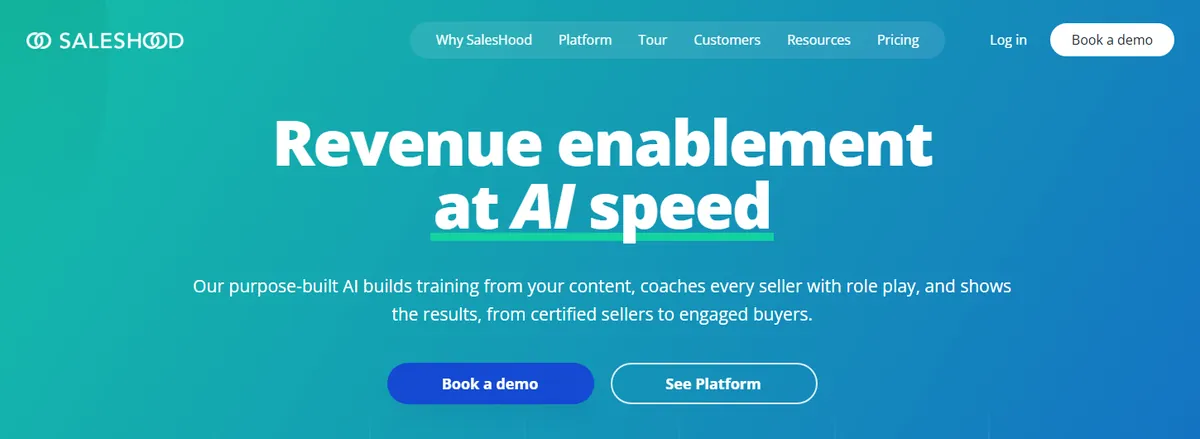
- What it does: an AI Program Builder turns existing material into onboarding, learning and certification programmes, with learning paths, milestones, courses, assessments and coaching feedback (SalesHood learning management).
- Pricing: not published; Essential, Pro and Unlimited; AI role-play and AI pitch practice allow 10, 80 or unlimited submissions per licence (SalesHood pricing, checked 27 October 2026).
- Limitation: Essential caps learning paths at 10 and AI practice at 40 submissions per licence.
- Choose it when: you want programmes built quickly from content you already have.
Seismic Learning
Best for: Course-led training with recertification.
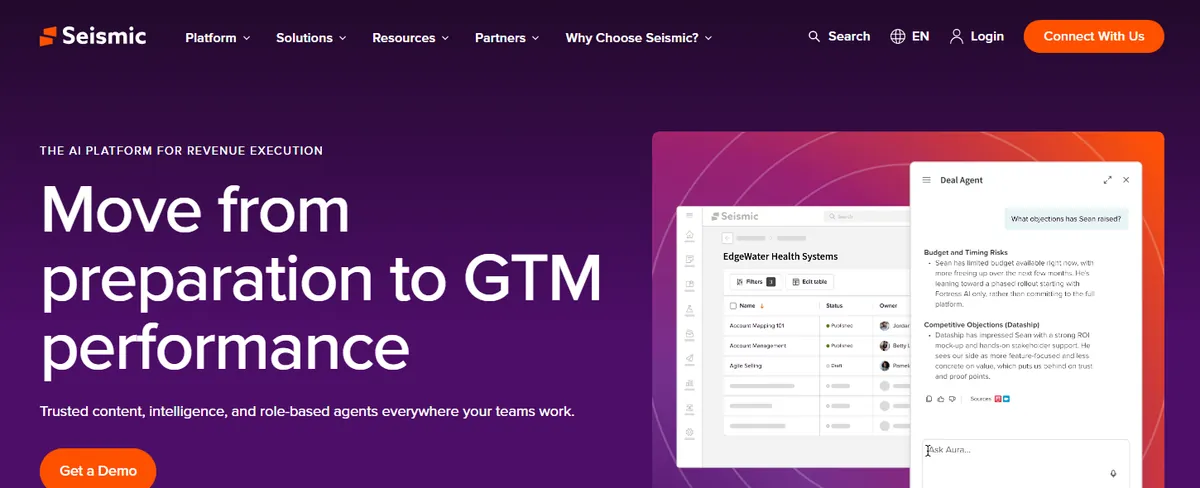
- What it does: interactive online training courses, AI-powered role-plays, personalised coaching plans and AI feedback, with an option to integrate your LMS (Seismic Learning); certifications are learning paths that issue certificates and can expire once or on a recurring basis, with automatic reassignment 30 days before expiry (Seismic Learning help: certifications).
- Pricing: no prices on the Seismic pages we opened (checked 27 October 2026). Vendr reports a median Seismic contract of $31,950 a year (415 purchases, February 2026).
- Limitation: the product page does not mention SCORM or learning paths; the detail comes from the help centre.
- Choose it when: recurring certification on a fixed cycle matters, for example after each product release.
Already on Seismic Learning and weighing a move? Our Seismic Learning alternatives guide covers what to export and ten replacements.
Showpad
Best for: Field sales with certification workflows.

- What it does: role-based learning paths, automated certification workflows, Roleplay AI, coaching dashboards and competency evaluations that link scores to courses (Showpad Sales Readiness).
- Pricing: not published; Professional includes the training library and courses, Advanced adds Roleplay AI, knowledge checks and certifications, and Expert adds Authoring AI; licensed per user (Showpad pricing, checked 27 October 2026). Vendr reports a median Showpad contract of $34,875 a year (50 purchases, February 2026).
- Limitation: certifications and role-play start at Advanced, not Professional.
- Choose it when: field sellers need content and training in one app.
Training built into a broader sales platform
These are not LMSs in the traditional sense. They put training next to the calls, deals and content sellers already work with.
Gong Enable
Best for: Teams already recording calls in Gong.
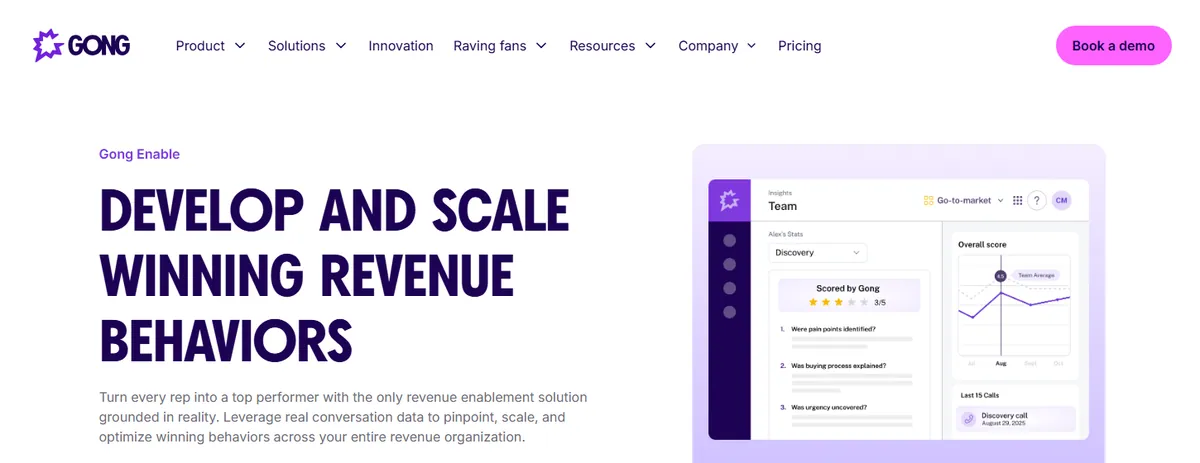
- What it does: Lessons (role-specific programmes with micro-learning, practice and assessments), AI Trainer that turns past calls into role-plays, Dry Run practice before meetings and AI Call Reviewer scoring (Gong Enable).
- Pricing: not published; Gong prices per-user licences plus a platform fee (Gong pricing, checked 27 October 2026).
- Limitation: the page does not mention certification and says there is no free trial.
- Choose it when: lessons should draw on your own recorded calls.
Revspire
Best for: Practice-led onboarding and certification.
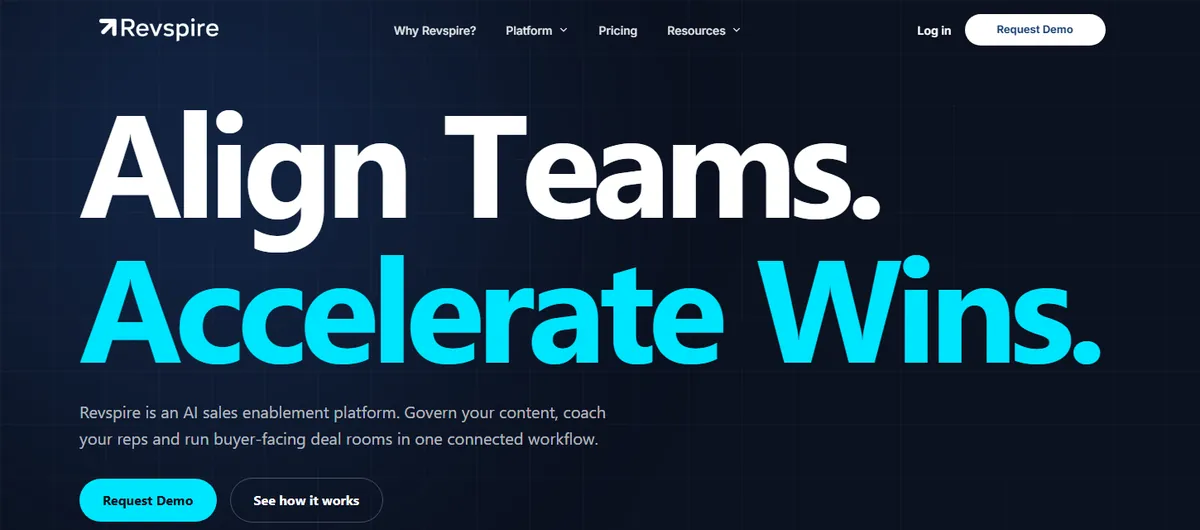
- What it does: Revspire’s AI Sales Training and Coaching module, sold as Academy (training and certification), covers seller onboarding, training and certification without a separate LMS, with courses built from video, PDF, SCORM packages, quizzes and live sessions. Reps practise buyer conversations with AI video role-play and deal-specific objection practice, get instant AI scores for clarity, confidence and objection handling, and managers track readiness and improvement by team. Training uses the same approved content and playbooks as Content Hub and deal rooms, and Partner Portal runs partner training and certifications on the same engine, and Revspire Conversation Intelligence scores recorded sales calls on seven behaviours and suggests courses for the weak ones.
- Pricing: priced by module with unlimited user licenses; about $25,000 USD a year on average (Revspire pricing).
- Limitation: Revspire courses accept SCORM packages, but its published integrations include no LMS or HRIS connector, so compliance and HR training records should stay in your corporate LMS.
- Choose it when: you want seller training, practice and certification in the same system as content and deal rooms, and can leave compliance training in a corporate LMS.
General LMSs that sales teams use
These serve the whole company. They are strong on courses, standards and administration; check how much sales-specific practice they offer.
360Learning
Best for: Small teams starting monthly.
- What it does: an LMS with AI-assisted authoring, an AI Companion, a SCORM player and integrations with HRIS systems such as Workday, Microsoft Teams, Slack and Zoom (360Learning pricing).
- Pricing: Team $8 per user a month for up to 100 users, billed monthly with no annual commitment; Business and Enterprise custom; no minimum users; 30-day free trial (checked 27 October 2026).
- Limitation: the pricing page does not mention Salesforce or sales role-play.
- Choose it when: a small team wants to start this month without an annual contract.
Absorb LMS
Best for: Field and mobile sales teams that learn offline.
- What it does: an AI-powered LMS whose sales training page lists an Absorb app for Salesforce, predictive AI that suggests courses, automated enrollment, certification tracking and delivery, gamification, and iOS and Android apps that also work offline (Absorb sales training, checked 9 November 2026).
- Pricing: not published; quoted on active learners. Vendr reports a median Absorb contract of $20,000 a year from 51 purchases, ranging from $5,151 to $49,025 (last updated February 2026).
- Limitation: the sales training page does not mention AI role-play or SCORM.
- Choose it when: one LMS must serve sales and the rest of the company, and reps need to learn on mobile, offline.
Continu
Best for: Mid-size and large companies that want tracks, workshops and video coaching in one LMS.
- What it does: an LMS with learning tracks, SCORM, assessments, workshops, learning journeys and automation workflows on every plan; Professional adds Continu AI, video coaching, multi-language support and Extend for external users (Continu pricing, checked 9 November 2026).
- Pricing: no prices published; plans by monthly active users: Growth under 1,000, Professional 1,000 to 5,000 and Enterprise above 5,000. The FAQ says implementation is 10% of the first-year contract value.
- Limitation: Salesforce is not mentioned on the pricing page, and Continu AI starts on Professional.
- Choose it when: you want video coaching and external learners in a general LMS and train more than a few hundred people.
Docebo
Best for: Enterprise and extended-enterprise learning.
- What it does: the Elevate plan includes certification and compliance tracking and AI-powered content creation; Enterprise adds extended enterprise for up to 10 domains; Docebo for Salesforce adds in-context learning inside Salesforce (Docebo pricing).
- Pricing: not published; priced on active learner usage (monthly, yearly or registered active user models) (checked 27 October 2026).
- Limitation: Docebo for Salesforce is a paid add-on, and AI content creation uses credits.
- Choose it when: one LMS must serve employees, partners and customers.
iSpring Learn
Best for: Budget-conscious teams that want a published per-active-user price.
- What it does: iSpring’s corporate LMS, sold beside the iSpring Suite course authoring tool, which costs $970 per author a year (iSpring Suite pricing, checked 9 November 2026).
- Pricing: Business $6.91 per active user a month for 100 users, shown as $8,286 a year, where a user is active after one login in the month; Enterprise is quoted for larger teams (iSpring LMS pricing, checked 9 November 2026).
- Limitation: the LMS pricing page lists no sales-specific features such as AI role-play or a CRM integration.
- Choose it when: you want to build courses in PowerPoint-style authoring and pay only for people who log in.
Juno Journey
Best for: HR-led programmes where sales is one audience among employees, customers and partners.
- What it does: an LLM-native “people readiness platform”: Juno Training (an LMS with AI authoring, certification management and compliance courses), Juno Growth (an LXP with personal development plans), Revenue Enablement journeys, and partner academies with certification programs. Its MCP server lets ChatGPT, Claude, GitHub Copilot or Cursor build and assign courses after you confirm (Juno Journey, checked 9 November 2026).
- Pricing: Juno Training and Juno Growth are each $8 per user a month, billed yearly, for up to 200 users; above 200 users, and for the customer and partner workspaces, prices are custom (Juno Journey pricing, checked 9 November 2026).
- Limitation: the pages we checked name no AI role-play, call recording or sales content library.
- Choose it when: HR owns learning and wants one platform for onboarding, compliance and careers, with sales training as one track. See our Juno Journey alternatives for sales-specific options.
LearnUpon
Best for: Companies training employees, customers and partners in separate branded portals.
- What it does: an LMS whose pricing page compares SCORM and xAPI support, a Salesforce integration and single sign-on across its plans, with portals for separate audiences and an implementation consultant, customer success and 24/7 support on every plan (LearnUpon pricing, checked 9 November 2026).
- Pricing: no prices published; plans are tailored, from 100 users for employees, 300 for customer education and 150 for associations.
- Limitation: minimums start at 100 users, and the page does not show which features sit on which plan.
- Choose it when: you run customer or partner education beside employee training and want a separate portal for each audience.
Learn:Up (formerly WorkRamp)
Best for: Fast-growing companies.
- What it does: Confirm’s AI-first LMS, formerly WorkRamp, with AI simulations for sales conversations, video and written pitch certifications, AI Assist course drafting, and integrations with Salesforce, Slack, Zoom, Okta and Google Workspace (Learn:Up). See our WorkRamp pricing page.
- Pricing: no prices on the product page; add-on products are sold separately (checked 27 October 2026).
- Limitation: the page does not describe how deep the Salesforce integration goes.
- Choose it when: one LMS should cover employee training and sales certification.
Litmos
Best for: Salesforce-centred companies training reps, customers and channel partners.
- What it does: an LMS whose Salesforce integration trains licensed users, contacts and community users, covers employee, customer, channel and compliance training, and combines Salesforce data with training data in dashboards (Litmos for Salesforce, checked 9 November 2026).
- Pricing: not published; quoted on active learners, feature tier and contract length. Vendr notes that optional content libraries can add an estimated 20 to 40% to the contract (February 2026).
- Limitation: its Salesforce page does not mention AI role-play or certifications.
- Choose it when: training must be tracked against Salesforce records for reps, customers and partners.
TalentLMS
Best for: Published prices and a free plan.
- What it does: an LMS with SCORM 1.2, Tin Can and cmi5 support and gamification on every plan, TalentCraft AI course creation with credits that vary by plan, and a HubSpot integration from Core (TalentLMS pricing).
- Pricing: Free for up to 5 users and 10 courses; Core $119, Grow $229 and Pro $449 a month, priced on unique users who log in each month; annual billing 20% off; Enterprise custom (checked 27 October 2026).
- Limitation: the pricing page does not mention Salesforce or AI role-play.
- Choose it when: you want published prices and a free plan to test with.
Can a sales enablement platform replace your LMS?
For seller training, often yes. Readiness platforms such as those above cover onboarding paths, practice and certification, and Revspire’s training module is designed to replace an LMS for seller onboarding, training and certification. What usually stays in a corporate LMS is compliance and HR training: harassment, data protection, code of conduct, and anything an auditor asks for. Many companies run both and keep each to its job.
Before you move sales training out of your LMS, check three things: whether you need to import existing SCORM courses, whether HR needs seller completions in its system of record, and whether any sales training is mandatory for regulatory reasons.
How do you choose a sales LMS?
- Pilot one real programme. Rebuild your next new-hire cohort or product launch in two shortlisted tools, not a demo course.
- Score a practice session. Have the AI and two managers score the same role-play and compare.
- Check plan tiers. Certification, role-play and AI authoring often start above the entry plan, as at Showpad and Highspot.
- Price the users you have. Per-user, active-learner and per-module models give very different totals for a 300-seller team with partners. Per-module pricing with unlimited users, as at Revspire (about $25,000 a year on average), does not change with head count.
- Ask about content. Lessons should link to the live version of each deck, not a copy that goes stale. Revspire’s training, for example, uses the same approved content and playbooks as its Content Hub.
Our sales onboarding software guide covers onboarding-specific tools. To see training, practice and certification next to content and deal rooms, book a Revspire demo.
Testing on a budget first? Our list of free sales enablement tools covers TalentLMS and ten other tools with real free plans, and where each plan stops.
Training distributors and dealers? See our guide to sales training software for distributors, which compares partner LMSs, PRMs with training and enablement platforms with partner portals.
Comparing costs? Our sales LMS pricing guide sets out what 12 learning platforms charge and how each one counts users.
More guides on this topic: sales LMS requirements checklist, corporate LMS vs sales readiness platform, SCORM and xAPI for sales training, onboarding as a 30-60-90 learning path, microlearning for sales reps.
Frequently asked questions
What is a sales LMS?
A sales LMS is a learning management system used to onboard and train salespeople: courses and paths by role, assessments, certification and progress reports. Sales-specific platforms add role-play practice, scoring and links to selling content.
What is the best LMS for sales teams?
For sales-only training with practice, readiness platforms such as Mindtickle, Allego, Highspot, Showpad, SalesHood and Seismic Learning fit best. If one LMS must serve the whole company, Docebo, 360Learning, Absorb LMS, Juno Journey, LearnUpon, Litmos, TalentLMS or Learn:Up are common choices.
For the shortlists teams build when they leave either vendor, see Highspot alternatives and Seismic alternatives.
What is the difference between a sales LMS and a sales coaching platform?
An LMS delivers and tracks courses and certifications. A coaching platform focuses on practice and feedback, often scoring role-plays or real calls. Many readiness platforms now do both.
Does a sales LMS need SCORM?
Only if you plan to import existing e-learning courses or export them. Highspot, 360Learning, TalentLMS, Continu and LearnUpon list SCORM support on the pages we checked, and Revspire courses accept SCORM packages; if you build all sales training from scratch, it matters less.
How much does a sales LMS cost?
Most sales readiness platforms do not publish prices. Among general LMSs, 360Learning’s Team plan is $8 per user a month, Juno Journey lists $8 per user a month for up to 200 users, iSpring $6.91 per active user a month at 100 users and TalentLMS starts at $119 a month; Revspire averages about $25,000 USD a year with unlimited user licenses. For what the main vendors actually charge, see our sales enablement software pricing guide.
Sources
- Absorb LMS: sales training (checked 9 November 2026)
- Vendr: Absorb LMS pricing (checked 9 November 2026; data last updated February 2026)
- Continu pricing (checked 9 November 2026)
- iSpring LMS pricing (checked 9 November 2026)
- iSpring Suite pricing (checked 9 November 2026)
- Juno Journey (checked 9 November 2026)
- Juno Journey pricing (checked 9 November 2026)
- LearnUpon pricing (checked 9 November 2026)
- Litmos for Salesforce (checked 9 November 2026)
- Vendr: Litmos pricing (checked 9 November 2026; data last updated February 2026)
- Gartner Sales Survey Reveals Sellers Who Partner With AI Are 3.7 Times More Likely to Meet Quota, Gartner, 16 September 2024, accessed 27 October 2026
- Allego Modern Learning and Allego pricing, Allego, undated, accessed 27 October 2026
- Highspot sales training software and Highspot pricing, Highspot, undated, accessed 27 October 2026
- Mindtickle sales enablement programs and training and Mindtickle pricing, Mindtickle, undated, accessed 27 October 2026
- SalesHood learning management and SalesHood pricing, SalesHood, undated, accessed 27 October 2026
- Seismic Learning and Seismic Learning help centre: certifications, Seismic, undated, accessed 27 October 2026
- Showpad Sales Readiness and Showpad pricing, Showpad, undated, accessed 27 October 2026
- Gong Enable and Gong pricing, Gong, undated, accessed 27 October 2026
- 360Learning pricing, 360Learning, undated, accessed 27 October 2026
- Docebo pricing, Docebo, undated, accessed 27 October 2026
- Learn:Up, Confirm, undated, accessed 27 October 2026
- TalentLMS pricing, TalentLMS, undated, accessed 27 October 2026