Revspire blog
How to Improve ABS vs Traditional Sales and Close More B2B Deals in 2026
A practical framework for improving ABS vs traditional sales through ownership, pipeline audits, deal signals, coaching, measurement, and win-loss feedback.
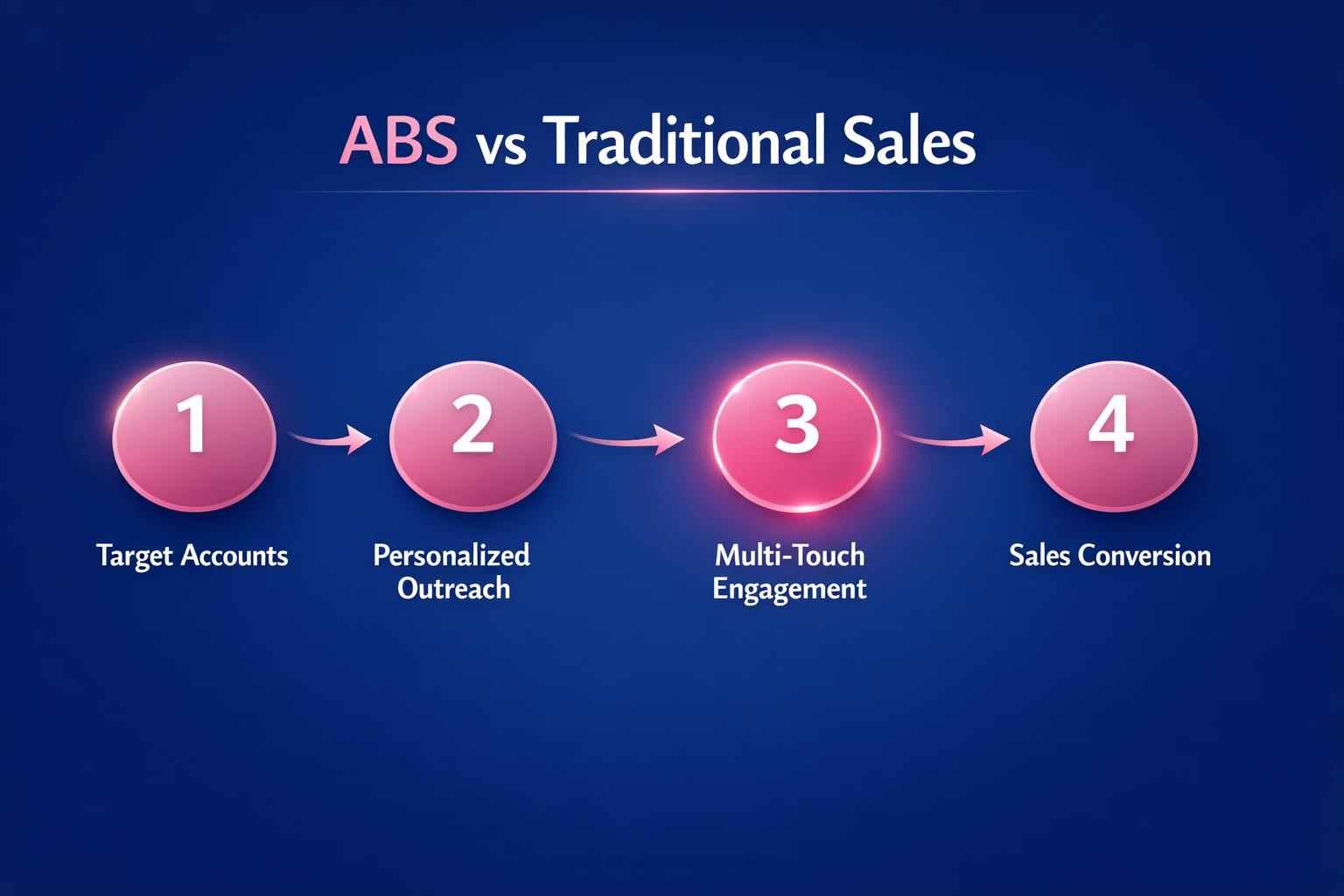
The source material uses “ABS” for the account-based side of the comparison with traditional B2B sales. In this guide, the distinction is operational: ABS centers the process on selected accounts, stakeholder coverage, deal signals, and coordinated next actions, while traditional sales is the contrasted approach.
Improvement requires a documented operating model, clear ownership, meaningful measurements, deal-level coaching, and feedback from wins and losses.
Why ABS vs Traditional Sales Processes Break Down
The conventional approach to ABS vs Traditional Sales in B2B sales is reactive rather than deliberate. Teams piece together a process from tribal knowledge, manager intuition, and whatever the previous playbook said. The result is inconsistency: some reps thrive, most struggle, and leadership cannot tell why.
The most common account based vs traditional B2B sales mistake is treating it as a project with a start and end date rather than an ongoing operational discipline.
Poor execution can affect multiple parts of the pipeline. Early-stage deals that should not advance consume capacity, qualified deals can stall when execution gaps remain unresolved, and late-stage deals can encounter procurement surprises, unstated objections, or stakeholder concerns.
Build an Operating Model
An operating model for ABS vs Traditional Sales answers three questions: what actions should happen, at what stage, and who is accountable.
Someone on the leadership team is accountable for the outcomes, not just the activities. They set the goals, define the metrics, and ensure the approach evolves as market conditions change.
- Define the required actions. Document the milestones and evidence needed to advance an opportunity.
- Connect actions to stages. Make the expected next step visible within the deal process.
- Assign accountability. Establish ownership for the operating model, individual opportunities, and stakeholder relationships.
Keep the model practical. Document it, reinforce it through managers, and update it when win-loss findings or operating data reveal a weakness.
A Practical Improvement Framework
1. Audit the Current State
Start with an honest audit.
Before you can improve ABS vs Traditional Sales, you need an honest baseline. Pull the last six months of deal data. Map every opportunity against the stages of account based vs traditional B2B sales and identify where deals are falling out and why. Be specific: which reps, which segments, which deal sizes.
Compare the data with the team’s assumptions, then select two or three structural problems to investigate first.
2. Define What Good Looks Like
Write down what strong execution requires at each stage. Include milestones, advancement criteria, expected stakeholder coverage, and a shared vocabulary so managers and representatives can review opportunities against the same standard.
3. Track Leading and Lagging Indicators
Leading indicators might include stakeholder engagement rates, content consumption, mutual action plan progression, or deal velocity at each stage. Lagging indicators include win rates, cycle times, and average deal sizes.
Build a dashboard that shows both. Review it weekly.
Measure outcomes, not activities. Track stage progression velocity, buyer engagement quality, and stakeholder coverage breadth.
Seven Strategies for Consistent Execution
- Set a shared standard. Define the expected execution at each stage and use that standard across the revenue team.
- Instrument the process. Capture signals that show engagement, risk, and momentum.
- Add ABS to the weekly cadence. Use pipeline meetings to discuss what needs to change during the next seven days.
- Coach live opportunities. Review active deals, identify execution gaps, and work through the response in context.
- Capture win-loss intelligence. Use post-deal interviews, CRM analysis, and structured reviews to preserve lessons.
- Align technology with the process. Technology should serve the account based vs traditional B2B sales process, not define it.
- Create feedback loops. Review metrics against targets and update playbooks when the evidence changes.
For information about the platform referenced in the source material, see Revspire Account Intelligence.
Five Mistakes to Correct
1. Treating the Process as a One-Time Initiative
Assign a permanent owner, establish standing reviews, define metrics, and connect improvement goals to revenue outcomes.
2. Relying on Intuition Instead of Portfolio Data
Define three to five leading indicators for ABS vs Traditional Sales and track them weekly. When evidence conflicts with the prevailing narrative, investigate the discrepancy.
3. Single-Threading the Relationship
Map the buying committee, assign relationship coverage, and flag opportunities with only one active contact as higher risk.
4. Confusing Activity with Progress
High volumes of emails, calls, and tasks can exist without stage progression. Use outcomes and buyer engagement as the primary lens for coaching and pipeline reviews.
5. Failing to Learn from Losses
Implement a structured loss review process. Document the findings and update playbooks accordingly.
A Focused 90-Day Starting Plan
- Audit recent opportunities and identify where deals leave the pipeline or lose momentum.
- Select two or three improvements connected to revenue outcomes.
- Assign an owner and define leading and lagging measures.
- Add deal reviews and deal-level coaching to the weekly cadence.
- Review the evidence after 90 days and update the playbook.
The objective is a repeatable process in which ownership, data, coaching, technology, and feedback reinforce one another.