Revspire blog
How to Improve Forecast Categories and Close More B2B Deals in 2026
Improve Forecast Categories with a practical framework for audits, ownership, leading indicators, deal coaching, and recurring reviews.
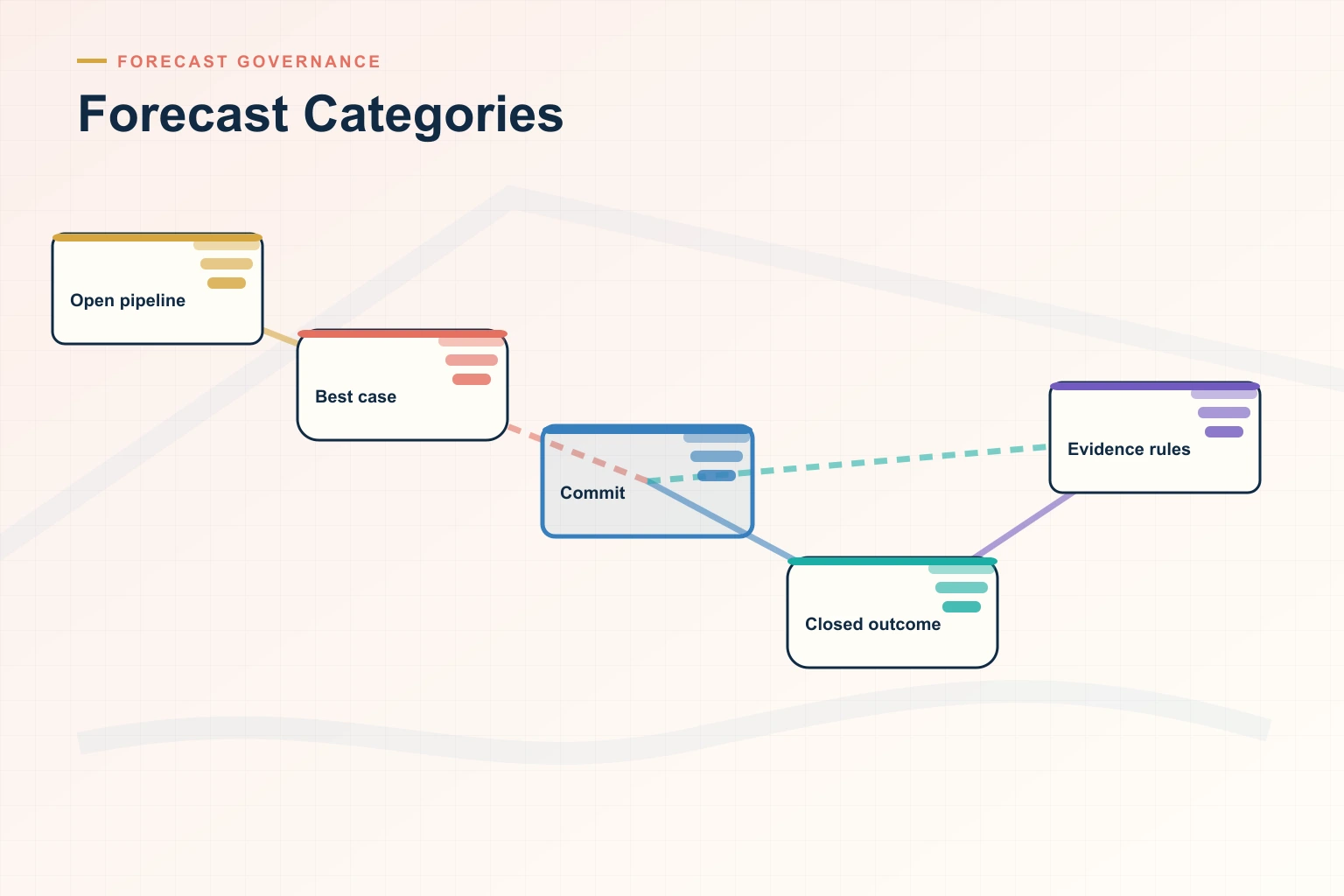
The core problem is that Forecast Categories is treated as a one-time event rather than an ongoing system. To improve the process, manage forecast categories as a continuous discipline with documented criteria, clear ownership, recurring reviews, and feedback from completed deals.
A Practical Framework for Forecast Categories
1. Audit Your Current State
Before you can improve Forecast Categories, you need an honest baseline. Pull the last six months of deal data. Map each opportunity to its deal stage and forecast category, then identify where opportunities stall, move backward, or leave the pipeline.
Use that assessment to prioritize two or three specific improvements that will have the biggest impact on revenue outcomes. Deploy them with a clear owner, a measurable goal, and a 90-day review cadence.
Three-part explainer: Audit the current state, Build the operating model, and Measure and improve.
2. Build the Operating Model
An operating model for Forecast Categories answers three questions: what actions should happen, at what stage, and who is accountable. Document the category criteria, required evidence, review schedule, and person responsible for maintaining the process.
Assign a permanent owner to Forecast Categories outcomes. Build it into your operating cadence with standing review meetings, defined metrics, and quarterly improvement goals.
Technology should serve the sales forecast categories commit pipeline process, not define it. Data should flow automatically between systems — CRM, engagement platform, deal room — so that leaders always have a current, accurate view of what is happening across the portfolio.
Teams evaluating supporting technology can learn more about Revspire Deal Intelligence.
3. Measure What Matters
The metrics for Forecast Categories should connect directly to revenue outcomes. Review conversion rates by stage, time in stage, forecast-category movement, buyer engagement, and stakeholder coverage. Compare the measures over time and use the findings to focus coaching and process changes.
Seven Practices for Improving Forecast Categories
- Define each category. Write down the evidence required before an opportunity can enter or leave a forecast category. Apply the same definitions across the revenue team.
- Track leading indicators. For Forecast Categories, leading indicators might include stakeholder engagement rates, content consumption, mutual action plan progression, or deal velocity at each stage.
- Review forecast health weekly. Make the review a structured conversation about what needs to change in the next seven days rather than a status update.
- Coach on live opportunities. Review live opportunities with each rep, identify where execution breaks down, and work through the correction in real time.
- Build stakeholder coverage. Map every stakeholder in the buying committee, assign coverage, and track engagement with each one.
- Capture win-loss intelligence. Use post-deal interviews, CRM data analysis, and structured win-loss reviews, then feed relevant findings into playbooks, training, and strategy.
- Create feedback loops. Review Forecast Categories metrics quarterly against targets, update playbooks when new information emerges, and collect buyer feedback.
Seven practices for improving Forecast Categories.
Common Forecast Categories Mistakes
Treating Improvement as a One-Time Initiative
The most common sales forecast categories commit pipeline mistake is treating it as a project with a start and end date rather than an ongoing operational discipline. Keep the process active through permanent ownership, recurring reviews, and scheduled updates to category criteria.
Relying on Intuition Instead of Data
Define three to five leading indicators for Forecast Categories and track them weekly. When a manager’s assessment differs from the recorded indicators, investigate the discrepancy before changing the forecast.
Confusing Activity with Progress
Measure outcomes, not activities. Track stage progression velocity, buyer engagement quality, and stakeholder coverage breadth.
Depending on One Stakeholder
Map every stakeholder in the buying committee, assign coverage, and track engagement with each one. Review that coverage during deal reviews so limited engagement is visible.
Failing to Learn from Losses
Implement a structured loss review process. Document relevant deal evidence, identify process breakdowns, and update the playbook when the review supports a change.
Common Forecast Categories mistakes and corrective actions.
Put the Framework Into Practice
Start with the audit, choose a small number of improvements, assign an owner, define measurable criteria, and establish weekly and quarterly review rhythms. Use the resulting evidence to refine category definitions, coaching, and playbooks.
A framework for connecting Forecast Categories improvements to the revenue process.
Ready to see how Revspire helps your team master sales forecast categories commit pipeline? Book a demo.