Revspire blog
How to Improve Deal Velocity Benchmarks and Close More B2B Deals in 2026
A practical framework for establishing a deal-velocity baseline, defining stage standards, reviewing buyer evidence, coaching live deals, and analyzing losses.
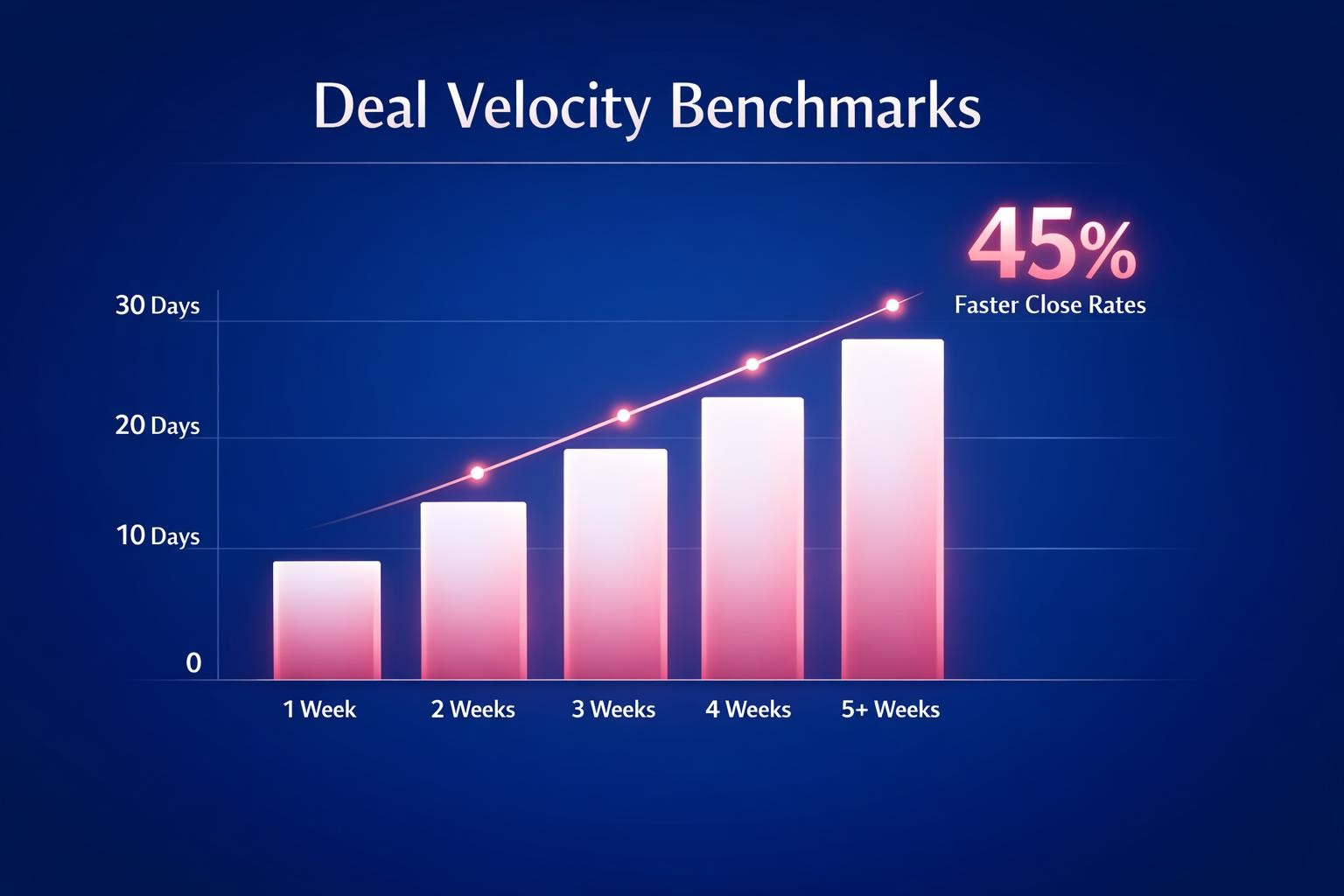
This guide provides a practical process for reviewing deal progression without relying on unsupported universal benchmarks. Use your own opportunity data to establish a baseline, define stage standards, assign ownership, and review changes over a consistent measurement period.
Establish a Relevant Baseline
Start with an honest audit. Before you can improve Deal Velocity Benchmarks, you need an honest baseline. Select a consistent review period and examine opportunities by stage, segment, deal size, and representative. Record where opportunities advanced, stalled, were won, or were lost.
Keep the analysis descriptive. Separate observations in the data from assumptions about why an opportunity changed status. Where the reason is unclear, flag it for review rather than assigning an unsupported explanation.
Define the Operating Model
An operating model for Deal Velocity Benchmarks answers three questions: what actions should happen, at what stage, and who is accountable. Document the expected milestone, buyer action, evidence requirement, and owner for each stage.
Assign a permanent owner to Deal Velocity Benchmarks outcomes. The owner can maintain the definitions, coordinate reviews, document approved changes, and keep the measurement period consistent.
Set Stage Standards
- Define the evidence required to enter and leave each stage.
- Record the buyer action associated with progression.
- Identify the stakeholders required for the current stage.
- Specify who reviews exceptions and who approves process changes.
Use a Balanced Measurement Set
If you cannot measure it, you cannot improve it. Lagging metrics like win rate and quota attainment tell you what happened. Other retrospective measures can include cycle time, stage conversion, and the final disposition of an opportunity.
For current opportunities, review indicators that are appropriate to your sales motion. These can include time in stage, stakeholder engagement, content consumption, mutual action plan progression, buyer engagement quality, and stakeholder coverage. Define each indicator before using it so that representatives and managers apply it consistently.
Measure outcomes, not activities. Treat calls, emails, meetings, and tasks as context rather than proof that an opportunity has progressed. Use documented buyer actions and stage evidence when deciding whether a deal should advance.
Apply the Framework in Weekly Reviews
Add a structured deal-velocity review to the existing operating cadence. For each selected opportunity, compare the current stage with its documented exit criteria, buyer actions, stakeholder coverage, and time in stage. Record the next decision, its owner, and the date for follow-up.
Use live opportunities for deal-specific coaching. Review the available evidence, identify the point at which execution became unclear, and agree on a correction that follows the documented process.
Review Stakeholder Coverage
Map every stakeholder in the buying committee, assign coverage, and track engagement with each one. When only one contact is active, record that dependency for review instead of assuming that broader support exists.
Review Technology Against the Process
Technology should serve the deal velocity benchmarks B2B enterprise process, not define it. Evaluate each tool against the documented workflow and retain it only where the team can identify its role in collecting evidence, reducing manual work, or supporting review.
Revspire Deal Acceleration is the related platform page retained from the source articles.
Correct Common Process Gaps
Treating the Work as a One-Time Project
Correction: Keep an assigned owner, a recurring review, defined metrics, and a documented schedule for evaluating changes.
Using Intuition Without Checking the Portfolio
Correction: Compare the team’s interpretation with the complete review set. Investigate discrepancies before changing stage definitions or coaching guidance.
Confusing Activity With Progress
Correction: Use stage evidence, buyer actions, engagement quality, and stakeholder coverage to assess progression. Keep activity counts as supporting context.
Failing to Review Losses
Correction: Implement a structured loss review process. Document the available evidence, the stage at which the breakdown appeared, and any approved change to the playbook or stage criteria.
A 90-Day Implementation Template
- Document the baseline: Select the review period, segment the opportunity set, and record stage outcomes.
- Choose the initial changes: Prioritize two or three process changes and assign an owner to each one.
- Define the measurement: Record the indicators, definitions, data source, and review frequency before implementation.
- Run the operating cadence: Apply the same stage and evidence standards during pipeline reviews and coaching.
- Complete the review: At the end of the period, compare the recorded results with the baseline and document what to retain, revise, or stop.
Three-part explainer: Expose the hidden cost, Build the business case, and Start where it matters.
Maintain the Feedback Loop
Every won and lost deal contains insights about what works and what does not in your approach to Deal Velocity Benchmarks. Capture the available findings in a consistent format, review them on a defined schedule, and make changes only when the evidence and decision owner are recorded.