Revspire blog
Job Change Signals: 7 Strategies the Top Revenue Teams Use in 2026
A practical guide to job-change signal workflows covering ownership, audits, measurement, coaching, stakeholder coverage, technology, and feedback loops.
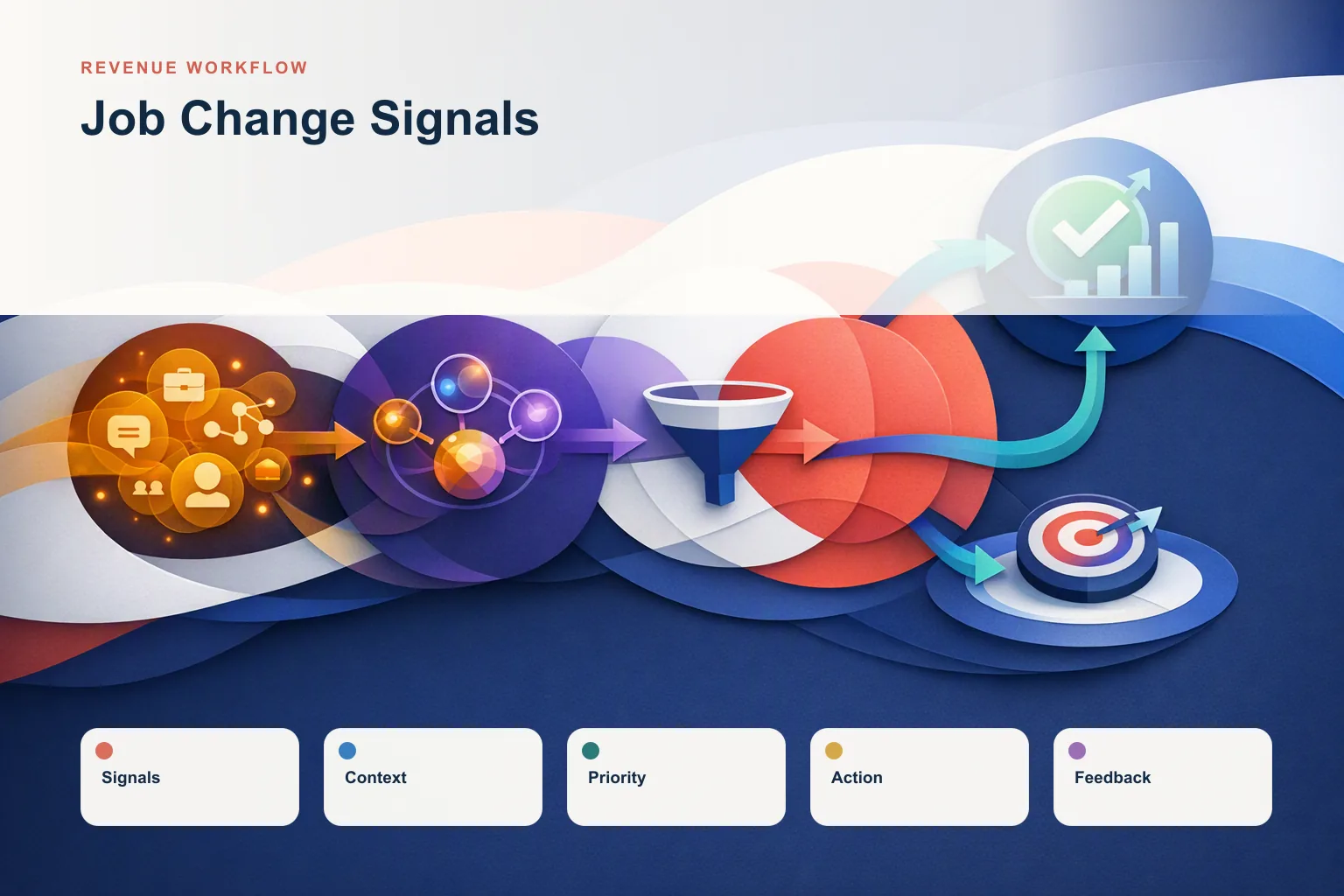
In these sources, the job-change event is former champions moving to new companies.
This guide starts with that event and then covers operating practices for ownership, measurement, coaching, stakeholder coverage, technology, and win-loss reviews. Here are seven strategies the top performers use — and how to apply each one.
1. Define the standard and assign ownership
Top teams do not leave job change intent signal B2B selling to intuition. They write down exactly what excellent execution looks like at each stage of the deal, and they hold every rep accountable to that standard.
Assign a leader who is accountable for outcomes, sets goals, defines metrics, and updates the approach as the team learns.
2. Audit the current state
Before you can improve Job Change Signals, you need an honest baseline. Review recent opportunities to identify where deals fall out and why, with findings separated by rep, segment, and deal size.
Start with an honest audit. Use that assessment to prioritize two or three specific improvements, each with a clear owner and measurable goal.
A framework for auditing and improving job-change signal workflows.
3. Combine leading and lagging indicators
Lagging indicators such as win rates, cycle times, and average deal sizes confirm whether an approach is working. Leading indicators can include stakeholder engagement, content consumption, mutual action plan progression, and deal velocity.
Build a dashboard that shows both. Review it weekly. Tie the results to coaching conversations and territory reviews.
Measure outcomes, not activities. When activities are high but outcomes are poor, investigate what is happening inside the deal instead of simply requesting more activity.
Core components of a job-change signal operating system.
4. Add review and coaching to the weekly cadence
Make job-change signal health a standing part of the weekly pipeline agenda. Use the review as a structured conversation about what needs to change during the next seven days, not merely as a status update.
Use deal-specific coaching to review live opportunities, identify where execution breaks down, and work through the correction with the rep in real time.
5. Protect deals through multi-threading
A relationship centered on one stakeholder can collapse when that person goes dark, is reorganized, or leaves the company. Map the buying committee, assign coverage, and track engagement with each stakeholder.
Use buyer engagement quality, stakeholder coverage, and stage progression as evidence of movement rather than relying on seller activity alone.
Common execution mistakes and corrective practices.
6. Align technology with the process
Technology should serve the job change intent signal B2B selling process, not define it. Evaluate whether each tool makes execution easier and more consistent or adds friction, and connect systems where possible so data can flow without manual intervention.
For a related platform resource, see Revspire Intent Intelligence.
A framework connecting process, signals, stakeholder intelligence, and measurement.
7. Turn wins and losses into feedback
Capture insights from won and lost deals through post-deal interviews, CRM data analysis, and structured win-loss reviews. Feed the findings into playbooks, training, and strategy.
After a significant loss, review the execution breakdowns with the rep, document the findings, and update the relevant playbook. Review metrics against targets each quarter and identify the next improvement to test.
Three-part explainer: Set the standard, Embed the practice, and Scale what works.
Put the strategies into practice
Ready to put these strategies to work with the right platform underneath them? Book a Revspire demo.