Revspire blog
The Biggest Deal Rooms for Complex Sales Mistakes Costing Your Team Deals in 2026
Review five deal-room mistakes and practical fixes involving ownership, data, stakeholder coverage, outcome metrics, and win-loss feedback.
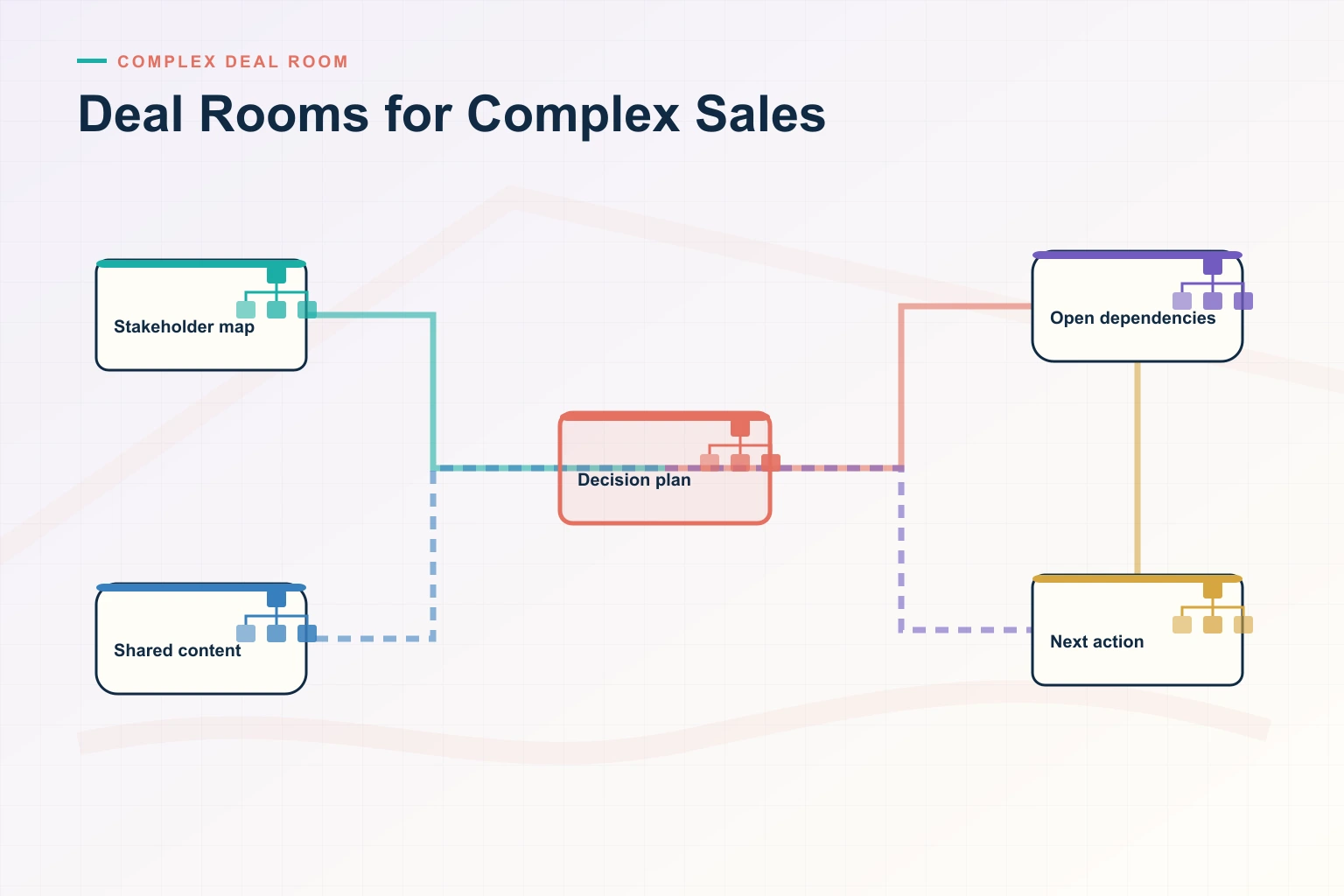
This guide reviews five recurring deal-room mistakes and explains how to correct them.
Start with an audit
Start with an honest audit. Pull the last six months of deal data. Map every opportunity against the stages of complex B2B sales cycles and identify where deals are falling out and why. Review the findings by representative, segment, and deal size, then compare what the data says with the team narrative.
Mistake 1: Treating the deal room as a one-time initiative
Treating the deal-room process as a project with a start and end date can prevent it from becoming an ongoing operational discipline.
The fix: Assign a permanent owner to the outcomes. Add standing review meetings, defined metrics, and quarterly improvement goals to the operating cadence.
Mistake 2: Relying on intuition instead of data
Define leading and lagging indicators, track them consistently, and investigate discrepancies between the data and the team narrative.
Leading indicators might include stakeholder engagement, content consumption, mutual action plan progression, and deal velocity. Lagging indicators include win rates, cycle times, and average deal sizes. Build a dashboard that shows both. Review it weekly.
Mistake 3: Single-threading the relationship
Map every stakeholder in the buying committee, assign coverage, and track engagement with each one. Treat an opportunity with only one active contact as a risk to investigate.
Mistake 4: Confusing activity with progress
Measure outcomes, not activities. Track stage progression velocity, buyer engagement quality, and stakeholder coverage breadth. Use these outcome metrics in coaching conversations and pipeline reviews.
Three-part explainer: Recognize the leak, Correct the behavior, and Prevent repeat failure.
Mistake 5: Failing to learn from wins and losses
Every won and lost deal contains insights about what works and what does not in your approach to Deal Rooms for Complex Sales. Capture those insights through post-deal interviews, CRM data analysis, and structured win-loss reviews, then feed them back into playbooks, training, and strategy.
Build an operating model
An operating model for Deal Rooms for Complex Sales should identify what actions should happen, at what stage, and who is accountable. Technology should support the documented process rather than define it.
For product information, visit Revspire Deal Rooms.
Make improvement continuous
Write down what strong execution looks like at each stage, include deal-room health in the weekly cadence, use deal-specific coaching, and build feedback loops that improve the process over time.
Three-part explainer: Set the standard, Embed the practice, and Scale what works.
See how Revspire helps B2B revenue teams eliminate these patterns