Revspire blog
The Biggest Multi-Threading Tactics Mistakes Costing Your Team Deals in 2026
Learn five common multi-threading mistakes and how to fix them with better ownership, stakeholder coverage, measurement, coaching, and loss reviews.
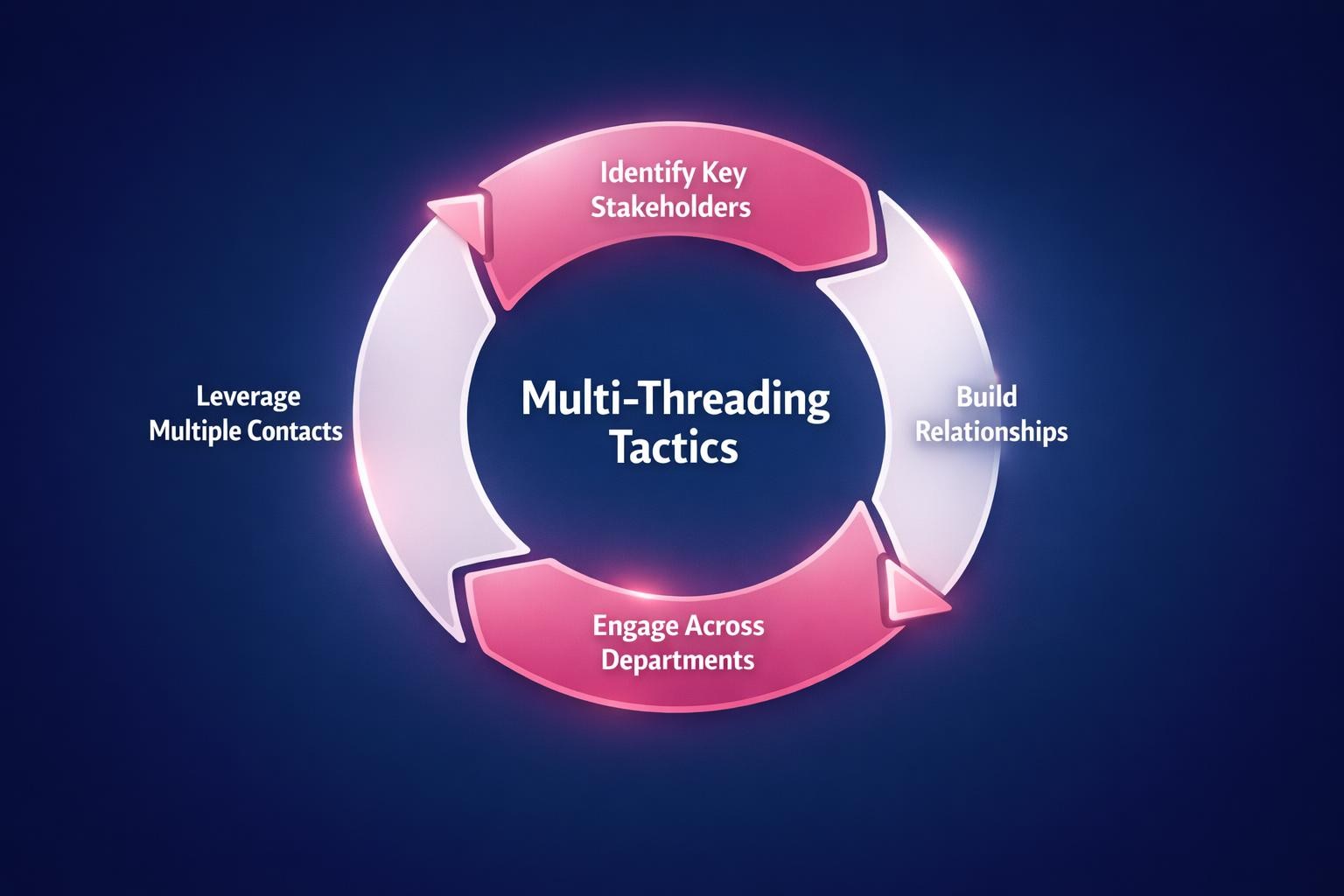
Many B2B revenue teams make predictable, fixable mistakes in how they approach Multi-Threading Tactics. Use this guide to identify five common mistakes, understand their business impact, and build a practical operating framework around ownership, measurement, stakeholder coverage, coaching, technology, and feedback.
Five multi-threading mistakes to review
1. Treating multi-threading as a one-time initiative
A short-term project can lose momentum when routine pipeline work takes priority. Treating Multi-Threading Tactics as a continuous discipline instead creates a basis for consistent execution and improvement.
The fix: Assign a permanent owner to Multi-Threading Tactics outcomes. Build it into your operating cadence with standing review meetings, defined metrics, and quarterly improvement goals.
2. Relying on intuition instead of data
Decisions based only on recent or memorable deals can obscure patterns across the full pipeline.
The fix: Define three to five leading indicators for Multi-Threading Tactics and track them weekly.
3. Single-threading the relationship
Building a relationship around one stakeholder leaves the team without broader coverage when that contact becomes unavailable.
The fix: Map every stakeholder in the buying committee, assign coverage, and track engagement with each one.
4. Confusing activity with progress
Email, call, and task counts do not by themselves show whether an opportunity is moving forward.
The fix: Measure outcomes, not activities. Track stage progression velocity, buyer engagement quality, and stakeholder coverage breadth.
5. Failing to learn from losses
Without a consistent review, lessons from lost opportunities may never reach coaching or playbooks.
The fix: Implement a structured loss review process. Document the findings and update playbooks accordingly.
Why the operating change matters
The effects of weak Multi-Threading Tactics can appear at multiple points in the pipeline. Early-stage opportunities that should not advance can consume representative capacity and distort the forecast. Qualified opportunities can stall in the middle of the cycle when execution gaps are not identified. Late-stage opportunities can encounter procurement surprises, unstated objections, or stakeholder concerns that a structured approach could have surfaced earlier.
There is also a competitive and buyer-experience dimension. When products are differentiated but not unique, buyers consider both product capability and how easy and confident the buying experience feels. Stronger multi-threading can build trust, reduce perceived risk, and make an established relationship harder for a competitor to displace.
The investment rationale extends beyond an individual opportunity. The source business case connects systematic improvement with faster ramp times for new representatives, higher average deal sizes, lower customer-acquisition cost, and improved forecast accuracy for resource-allocation decisions. These are outcomes to test against your own baseline rather than guaranteed results.
Three-part explainer: Expose the hidden cost, Build the business case, and Start where it matters.
Build a practical operating framework
Start with an audit
Before you can improve Multi-Threading Tactics, you need an honest baseline. Start with an honest audit. Where is Multi-Threading Tactics working well today? Where is it breaking down? What does the data say versus what the narrative says?
Use that assessment to prioritize two or three specific improvements. Give each improvement a clear owner, measurable goal, and review cadence.
Three-part explainer: Expose single-thread risk, Build role-specific paths, and Coordinate the next action.
Define the standard and operating model
Write down what strong execution looks like at each stage of a deal so managers and representatives have a shared standard for coaching and measurement. Include clear milestones, documented criteria, and shared terminology.
An operating model for Multi-Threading Tactics answers three questions: what actions should happen, at what stage, and who is accountable. Document this explicitly.
Keep the process and playbooks documented, taught, and reinforced through workflows and manager guidance. Update them as structured reviews produce new lessons.
Connect measurement and coaching
Use leading indicators to monitor behaviors that may predict future outcomes, and use lagging indicators such as win rates and cycle times to assess completed results. Build a dashboard that shows both leading and lagging indicators. Review it weekly. Tie it directly to coaching conversations and territory reviews.
Use deal-specific coaching to review live opportunities, identify where execution is breaking down, and work through the next action with the representative.
Add a weekly review
Use a standing review of Multi-Threading Tactics as a structured conversation about what needs to change in the next 7 days to improve outcomes.
Capture win-loss learning
Use post-deal interviews, CRM data analysis, and structured win-loss reviews to capture what worked and what did not. Feed the findings into playbooks, training, and strategy.
Align technology and data with the process
Technology should serve the process, not define it. Evaluate whether each tool makes Multi-Threading Tactics easier and more consistent or adds friction. Where systems are connected, data can move between the CRM, engagement platform, and deal room without requiring the team to maintain separate views manually. Revspire Stakeholder Intelligence is the platform resource referenced in the source guidance.
Create a feedback loop
Review Multi-Threading Tactics metrics quarterly against targets, update playbooks when you learn something new, and solicit feedback from buyers on their experience.
See the framework in action
See how Revspire helps B2B revenue teams eliminate these patterns