Revspire blog
A Practical Multi-Threading Strategy for B2B Sales
A practical framework for B2B revenue leaders to audit stakeholder coverage, define standards, measure progress, coach live deals, and learn from losses.
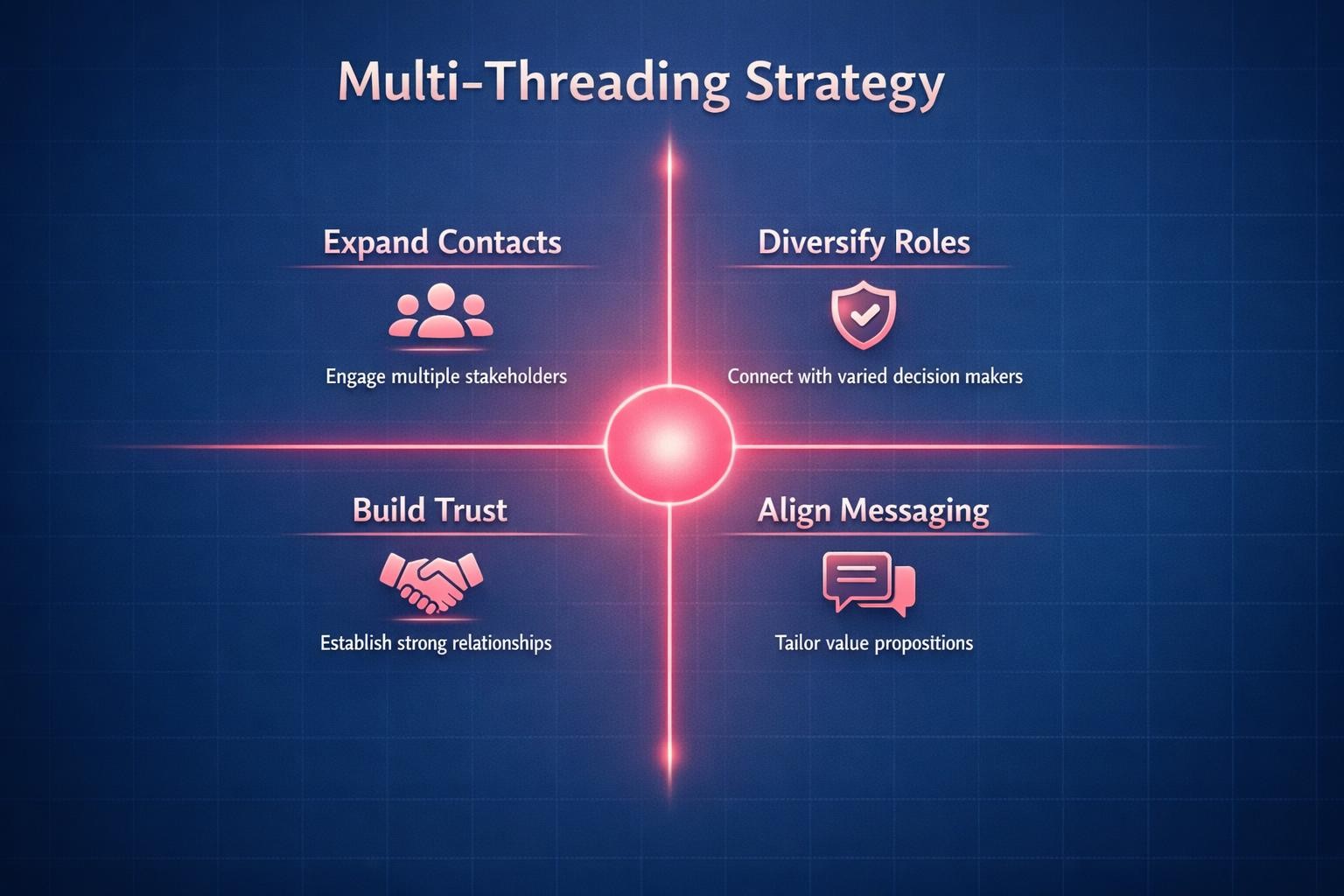
The core problem is that Multi-Threading Strategy is treated as a one-time event rather than an ongoing system. The teams that excel at multi-threading B2B deals strategy treat it as a continuous, data-driven discipline embedded into their daily workflow — not a quarterly initiative.
Define the operating model
An operating model for Multi-Threading Strategy answers three questions: what actions should happen, at what stage, and who is accountable.
Someone on the leadership team is accountable for the outcomes, not just the activities. They set the goals, define the metrics, and ensure the approach evolves as market conditions change.
Top teams do not leave multi-threading B2B deals strategy to intuition. They write down exactly what excellent execution looks like at each stage of the deal, and they hold every rep accountable to that standard.
Audit and measure the current process
Start with an honest audit.
Before you can improve Multi-Threading Strategy, you need an honest baseline. Pull the last six months of deal data. Map every opportunity against the stages of multi-threading B2B deals strategy and identify where deals are falling out and why.
If you cannot measure it, you cannot improve it.
For Multi-Threading Strategy, leading indicators might include stakeholder engagement rates, content consumption, mutual action plan progression, or deal velocity at each stage.
Measure outcomes, not activities. Track stage progression velocity, buyer engagement quality, and stakeholder coverage breadth.
Build the process into regular workflows
If multi-threading B2B deals strategy does not appear on your weekly pipeline call agenda, it will not get the attention it needs.
Technology should serve the multi-threading B2B deals strategy process, not define it.
The technology layer for Multi-Threading Strategy should reduce friction, not add it.
Revspire Stakeholder Intelligence
Three-part explainer: Define the system, Operationalize the workflow, and Measure the impact.
Coach live deals and strengthen stakeholder coverage
What works is deal-specific coaching — reviewing live opportunities with each rep, identifying exactly where their multi-threading B2B deals strategy execution breaks down, and working through the fix in real time.
Map every stakeholder in the buying committee, assign coverage, and track engagement with each one. Deals where only one contact is active should be flagged as high-risk regardless of what the rep reports.
Learn from wins and losses
Every won and lost deal contains insights about what works and what does not in your approach to Multi-Threading Strategy. The best teams capture them deliberately — through post-deal interviews, CRM data analysis, and structured win-loss reviews — and feed them back into playbooks, training, and strategy.
Implement a structured loss review process. Document the findings and update playbooks accordingly.