Revspire blog
The Biggest Removing Buying Friction Mistakes Costing Your Team Deals in 2026
Learn five common B2B buying-friction mistakes and practical ways to improve ownership, deal data, stakeholder coverage, measurement, and loss reviews.
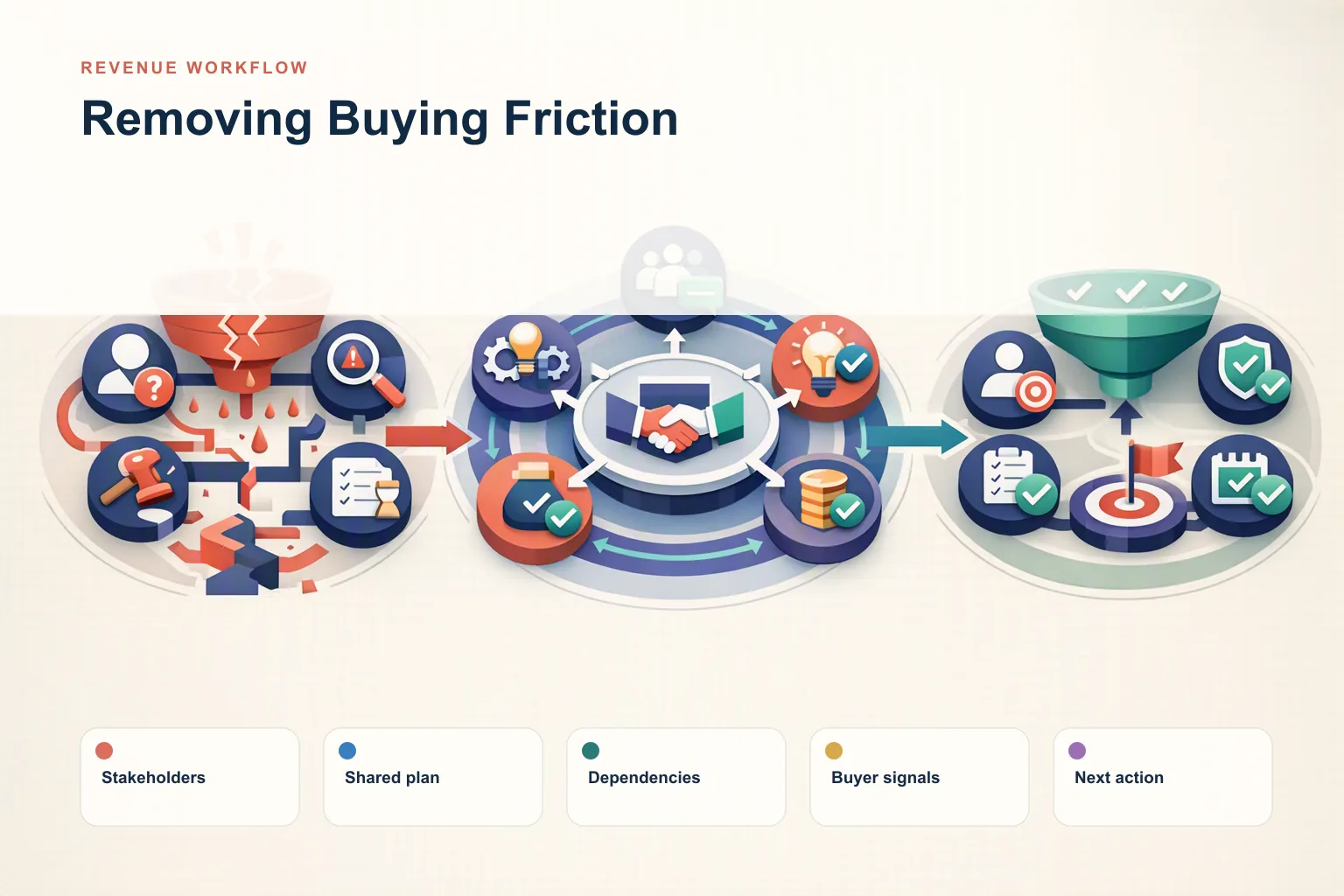
Buying friction can persist when revenue teams rely on one-time initiatives, intuition, single-threaded relationships, activity counts, or limited analysis of lost deals. This guide outlines five mistakes and practical ways to address them.
Five Buying-Friction Mistakes and Their Fixes
1. Treating Buying Friction as a One-Time Initiative
A project with a start and end date can drift as daily pipeline pressure takes over. The source material instead presents buying-friction management as an ongoing operational discipline.
The fix: Assign a permanent owner, define metrics, include the topic in standing reviews, and set quarterly improvement goals.
2. Relying on Intuition Instead of Data
Decisions based only on recent or memorable deals may not reflect the full portfolio. Define a small set of indicators, track them weekly, and investigate differences between the data and the team’s assumptions.
The source materials also reference Revspire Deal Acceleration as a way to surface deal-level data.
Three-part explainer: Recognize the leak, Correct the behavior, and Prevent repeat failure.
3. Single-Threading the Relationship
A deal centered on one stakeholder has no alternative relationship path if that contact becomes unavailable. Map the buying committee, assign relationship coverage, and track engagement with each stakeholder.
4. Confusing Activity with Progress
Email, call, and task counts can remain high while an opportunity stays in place. Measure outcomes, not activities. Review stage progression, buyer engagement, stakeholder coverage, and agreed next steps when evaluating progress.
5. Failing to Learn from Losses
Without a structured review, the process breakdowns associated with a lost deal may not reach the team’s playbooks or coaching. Review significant losses with the rep, document the relevant breakdowns, and update the applicable guidance.
Build an Operating Model
An operating model should answer three questions: what actions should happen, at what stage, and who is accountable. Document the model and keep it practical enough for the team to follow.
Before you can improve Removing Buying Friction, you need an honest baseline. Review recent opportunities by stage, rep, segment, and deal size to identify where the current process breaks down.
Connect Ownership, Process, and Technology
Document expected actions, responsibilities, and milestones for each stage. Review the process regularly and use evidence from won and lost deals to update it.
Every tool should answer one question: does this help reps spend more time on high-value activities or less? Technology should support the documented process and reduce unnecessary manual updates.
Measure Progress
Lagging metrics like win rate and quota attainment tell you what happened. The source material identifies stakeholder engagement, content consumption, mutual action plan progression, and deal velocity as possible leading indicators.
Use a dashboard that includes both leading and lagging indicators. Review it on a regular cadence and connect the findings to pipeline reviews and deal-level coaching.
A Practical Starting Plan
Start with an honest audit. Use the findings to prioritize two or three improvements, assign each one an owner and measurable goal, and review progress over a 90-day period.
- Audit: Review recent deals and identify recurring process gaps.
- Prioritize: Select a small number of improvements tied to the identified gaps.
- Assign: Give each improvement a responsible owner and measurable goal.
- Apply: Add the expected actions to workflows, reviews, and coaching.
- Review: Monitor the selected indicators and update the playbook with what the team learns.
Explore the Next Step
See how Revspire helps B2B revenue teams eliminate these patterns