Revspire blog
Sales Efficiency Metrics Mistakes Costing Your Team Deals
Learn five sales efficiency metrics mistakes and practical ways to improve ownership, measurement, stakeholder coverage, and loss reviews.
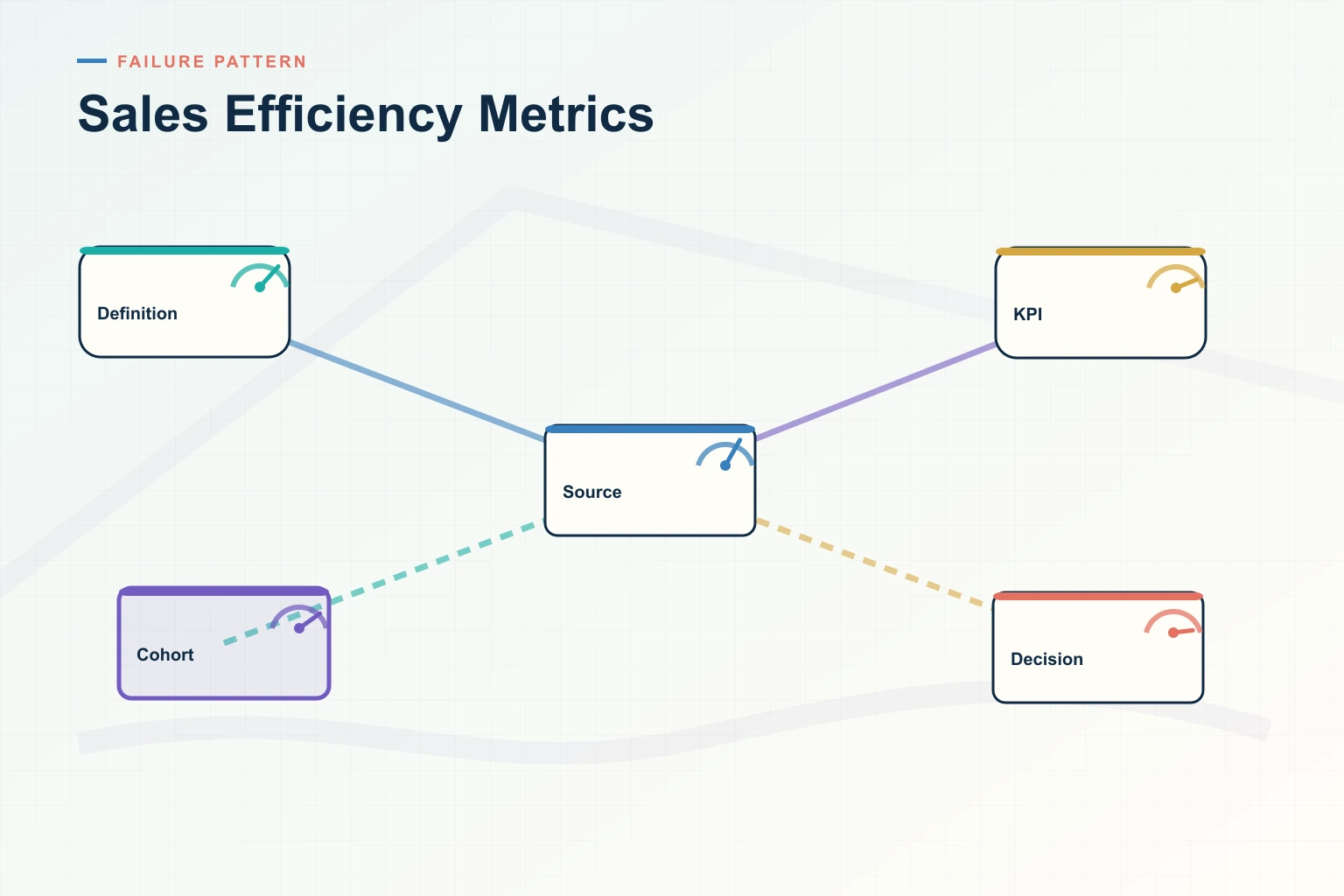
This guide uses “sales efficiency metrics” to describe the indicators and operating practices used to assess deal progress and revenue-team execution.
Five recurring problems stand out: treating sales efficiency as a temporary initiative, relying on intuition instead of data, depending on one stakeholder, confusing activity with progress, and failing to learn from lost deals.
Recognize the leak, correct the behavior, and prevent repeat failure.
Five sales efficiency mistakes and how to correct them
1. Treating sales efficiency as a one-time initiative
Treating sales efficiency as a project with a start and end date can allow the work to drift when daily pipeline pressure takes over.
Correction: Assign a permanent owner, establish standing reviews, define the metrics the team will use, and connect improvement goals to revenue outcomes.
2. Relying on intuition instead of data
Recent deal memories can distort the wider portfolio picture. When data and intuition disagree, investigate the discrepancy rather than making policy from a small number of memorable opportunities.
Leading indicators might include stakeholder engagement, content consumption, mutual action plan progression, and deal velocity. Lagging indicators can include win rate, cycle time, average deal size, and quota attainment. Build a dashboard that shows both. Review it weekly.
Teams can also learn more about Revspire Revenue Analytics.
3. Single-threading the buyer relationship
A relationship built around one stakeholder is vulnerable if that person disengages, changes roles, or leaves the company.
Correction: Map the buying committee, assign stakeholder coverage, track engagement, and flag deals with only one active contact as higher risk.
4. Confusing activity with progress
Large numbers of emails, calls, and tasks can exist without forward movement in the pipeline. Measure outcomes, not activities.
Correction: Review stage progression, buyer engagement quality, stakeholder coverage, and the relationship between specific behaviors and win rates. When activity is high but outcomes are weak, investigate what is happening inside the deal.
5. Failing to learn from losses
Without structured loss reviews, teams can repeat the same process problems from one quarter to the next.
Correction: Implement a structured loss review process. Review significant lost deals, document the breakdowns that contributed to each loss, and update playbooks accordingly.
A practical operating framework
Establish a baseline
Start with an honest audit. Before you can improve Sales Efficiency Metrics, you need an honest baseline.
Review recent deal data to identify where opportunities leave the pipeline or stall. Break the findings down by representative, segment, deal size, and stage.
Define the operating model
An operating model should state what actions happen, at what stage, and who is accountable. Keep it simple enough for the team to follow consistently.
Assign ownership and review the right indicators
Someone on the leadership team should be accountable for outcomes, set goals, define metrics, and ensure the approach evolves as conditions change.
Build a dashboard that shows both. Review it weekly. Connect the dashboard to coaching conversations and territory reviews so the team can respond before the end of the quarter.
Expose the hidden cost, build the business case, and start where it matters.
Coach through live deals
Deal-specific coaching reviews live opportunities with each representative, identifies where execution breaks down, and works through the correction in context.
Capture win-loss intelligence
Every won and lost deal contains insights about what works and what does not in your approach to Sales Efficiency Metrics.
Use post-deal interviews, CRM data analysis, and structured win-loss reviews to feed those insights into playbooks, training, and strategy.
Align technology with the process
Technology should reduce friction and help representatives spend more time on high-value work. Data should flow between the CRM, engagement platform, and deal environment so leaders can maintain a current portfolio view.
Take the next step
Fixing these mistakes requires process, data, coaching, ownership, and technology to work together.
See how Revspire helps B2B revenue teams eliminate these patterns