The Complete 2026 Guide to Loss Reasons Analysis for Revenue Leaders
A practical perspective for connecting this idea to your revenue team’s next move.
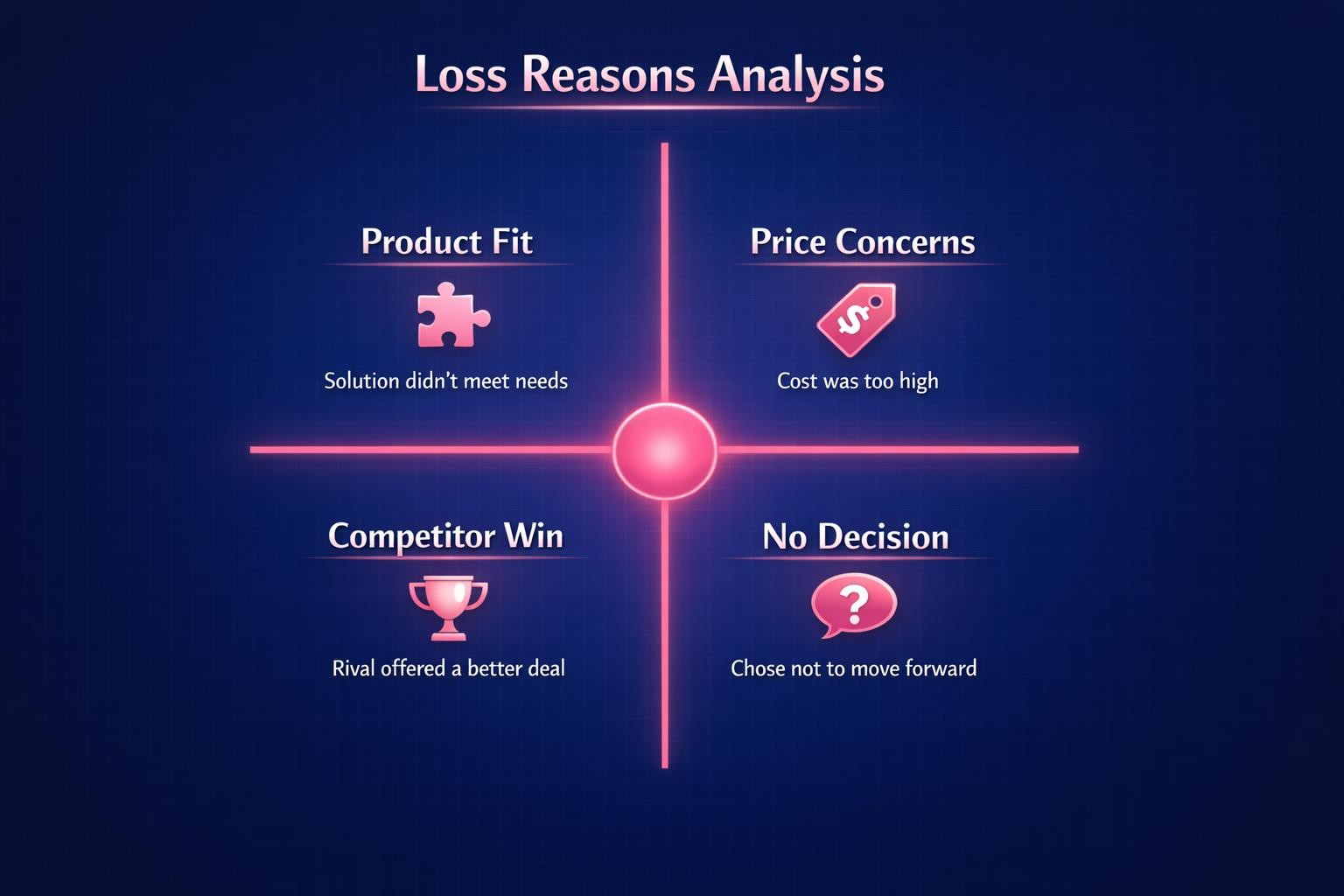
Loss reasons analysis should operate as a continuing discipline rather than a temporary initiative. A complete system combines a documented approach, technology, clear ownership, and a feedback loop. Together, these elements help revenue leaders review deal evidence, identify recurring breakdowns, and turn findings into specific changes.
Establish the Operating Foundation
Begin by assigning a permanent owner for loss reasons analysis outcomes. Define the goals and measures for the practice, document what is expected at each stage, and give managers and representatives a shared vocabulary for reviewing execution.
An operating model should answer three questions: what actions should happen, at what stage, and who is accountable. Keep the model simple enough to follow and reinforce it through regular reviews and coaching.
Audit Deals and Capture Evidence
Review the last six months of deal data to establish a baseline. Map opportunities against the relevant stages and examine where deals are falling out. Break the findings down by representative, segment, and deal size so the review can reveal patterns that a portfolio-wide summary might conceal.
Capture findings through post-deal interviews, CRM data analysis, and structured win-loss reviews. Feed the evidence into playbooks, training, and strategy instead of allowing it to disappear after a deal closes.
Audit the current state, build the operating model, and measure and improve.
Measure Progress and Review It Regularly
Use both leading and lagging indicators. Leading indicators can include stakeholder engagement, content consumption, mutual action plan progression, and deal velocity. Lagging indicators can include win rate, cycle time, and average deal size.
Include loss reasons analysis in the weekly pipeline cadence. Use the review to discuss what needs to change, not merely to report status. Review broader metrics against targets each quarter and update playbooks when the evidence identifies a recurring lesson.
Set the standard, embed the practice, and scale what works.
Correct Common Execution Problems
Do Not Rely on Intuition Alone
Recent deals can dominate a leader’s memory. Compare the prevailing narrative with the available data and investigate discrepancies before changing the process.
Do Not Confuse Activity with Progress
High email, call, or task volume does not necessarily show that an opportunity is advancing. Use stage progression, buyer engagement quality, and stakeholder coverage as the primary context for coaching and pipeline reviews.
Avoid Single-Threaded Relationships
A deal centered on one contact can become vulnerable if that person disengages, changes roles, or leaves the organization. Map relevant stakeholders, assign coverage, and monitor engagement across the relationship.
Learn from Closed Deals
Every won and lost deal contains information about what worked and what did not. Document review findings and use them to revise playbooks, training, and future deal strategy.
Recognize the leak, correct the behavior, and prevent repeat failure.
Support the Process with Technology
Technology should support the loss reasons analysis process rather than define it. Evaluate whether each tool makes the practice easier and more consistent or adds friction. Where possible, allow data to move between systems without manual intervention.
For related product information, visit Revspire Win-Loss Intelligence.
Expose the hidden cost, build the business case, and start where it matters.
Choose a Focused Starting Point
Assess where loss reasons analysis works today, where it breaks down, and what the data says compared with the current narrative. Prioritize two or three improvements, assign a clear owner and measurable goal to each one, and review the results after 90 days.