Revspire blog
The Complete 2026 Guide to CPQ Approval Workflows for Revenue Leaders
Learn how to improve CPQ approval workflows with clear ownership, documented processes, aligned technology, meaningful metrics, and continuous feedback.
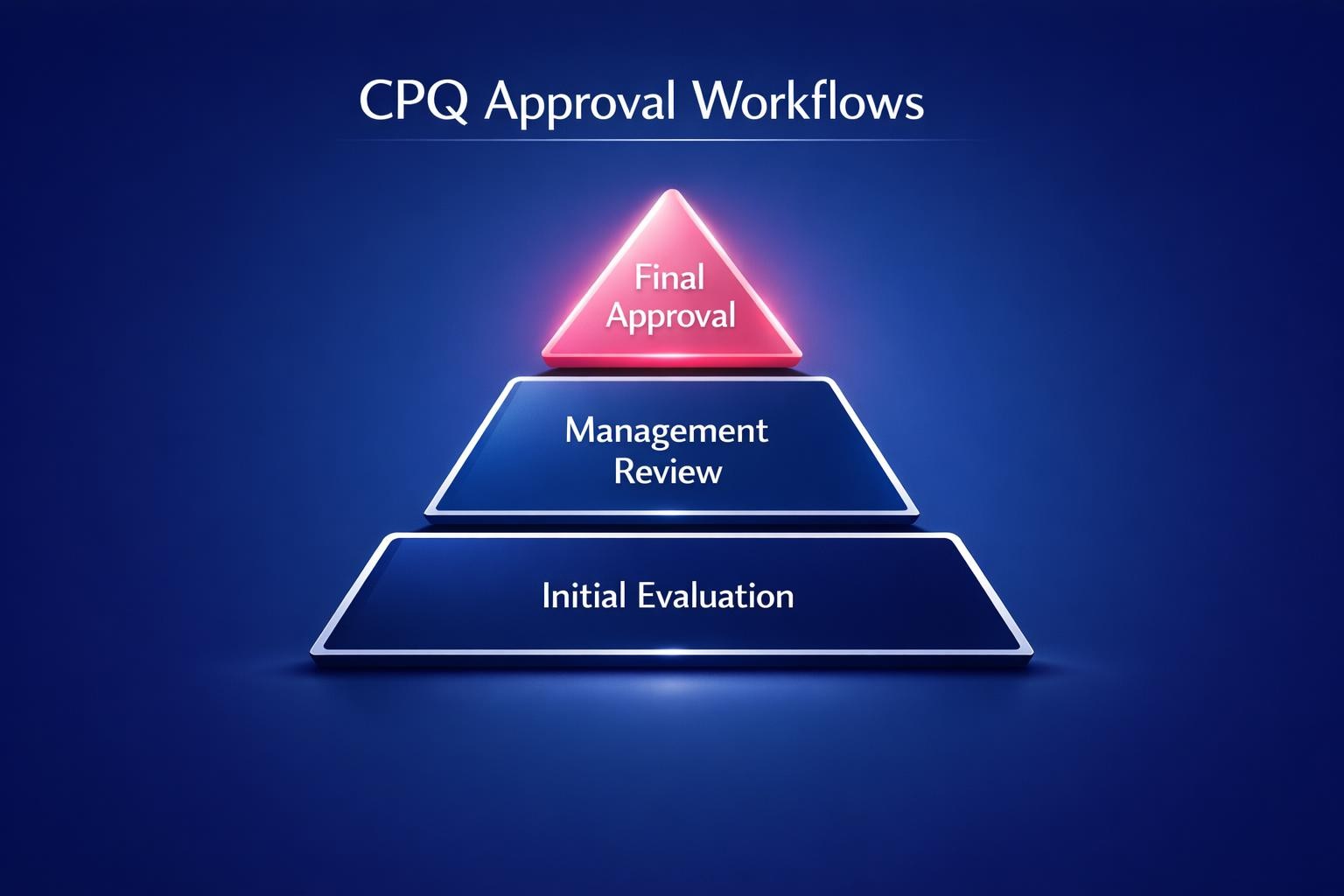
CPQ approval workflows require more than isolated automation. The supplied material describes an operating approach built around ownership, documented processes, supporting technology, measurement, and continuous improvement.
This guide focuses on approval-workflow operations. It treats pipeline qualification, stakeholder engagement, deal coaching, win-loss analysis, and talent development as broader revenue-management practices discussed by the source material, not as technical functions of CPQ approval automation.
Build the foundation
Set ownership and goals
What does mastery look like? It means having a documented approach, the right technology in place, clear ownership across the revenue team, and a feedback loop that improves performance quarter over quarter.
Assign a permanent owner to CPQ Approval Workflows outcomes. The owner can set goals, define metrics, maintain the operating cadence, and ensure the approach evolves when conditions change.
Document the operating model
An operating model for CPQ Approval Workflows answers three questions: what actions should happen, at what stage, and who is accountable.
The process that governs CPQ approval workflow automation must be documented, taught, and enforced. Keep the model practical because a simple process that teams follow is more useful than a sophisticated process they ignore.
Align technology and data
The technology layer for CPQ Approval Workflows should reduce friction, not add it. Technology should serve the CPQ approval workflow automation process, not define it.
Evaluate whether each tool makes the process easier and more consistent. Data should flow between systems without unnecessary manual intervention. Revspire CPQ is the platform identified in the supplied material.
Audit and improve the workflow
Start with an honest audit. Before you can improve CPQ Approval Workflows, you need an honest baseline.
Review recent deal data against the existing process to identify where deals leave the workflow and whether patterns vary by representative, segment, or deal size. The source material recommends using the assessment to prioritize two or three improvements, with a clear owner, measurable goal, and review cadence.
The metrics for CPQ Approval Workflows should connect directly to revenue outcomes. Relevant measures in the supplied material include conversion rates at each stage, time-in-stage benchmarks, and relationships between specific behaviors and win rates.
Use leading and lagging indicators
If you cannot measure it, you cannot improve it. The supplied material distinguishes leading indicators, which can support earlier intervention, from lagging indicators such as win rates, cycle times, and average deal sizes.
Review both types of indicators regularly. Use the findings to identify where the operating model, playbook, or supporting technology may need attention.
Three-part explainer: Expose the hidden cost, Build the business case, and Start where it matters.
Support continuous improvement
Every won and lost deal contains insights about what works and what does not in your approach to CPQ Approval Workflows. The source material recommends structured reviews and feeding the findings back into playbooks, training, and strategy.
Measure outcomes, not activities. High activity does not necessarily demonstrate forward progress, so the source material favors outcome measures for coaching and pipeline reviews.
Review metrics against targets, update playbooks when new information emerges, and ask what change would most improve the workflow’s outcomes.
Keep broader revenue practices distinct
The source material also discusses stakeholder coverage, deal-level coaching, win-loss reviews, and talent development. These practices can inform the surrounding revenue operating model, but they are presented here separately from CPQ approval automation.
One source presents a separate talent argument: a structured approach can help create an environment where strong representatives want to work, develop faster, and stay longer.
Another source recommends a structured loss review process. This remains a broader deal-management recommendation rather than an approval-system capability.
Put the operating model into practice
A practical approach combines an honest baseline, explicit ownership, a documented process, aligned technology, measurable outcomes, and recurring feedback. Begin with a small number of prioritized improvements and refine the system as evidence accumulates.