Revspire blog
The Complete 2026 Guide to Win-Loss Interviews for Revenue Leaders
Learn how to structure post-deal win-loss interviews, separate them from active-deal management, assign ownership, review findings, and improve playbooks.
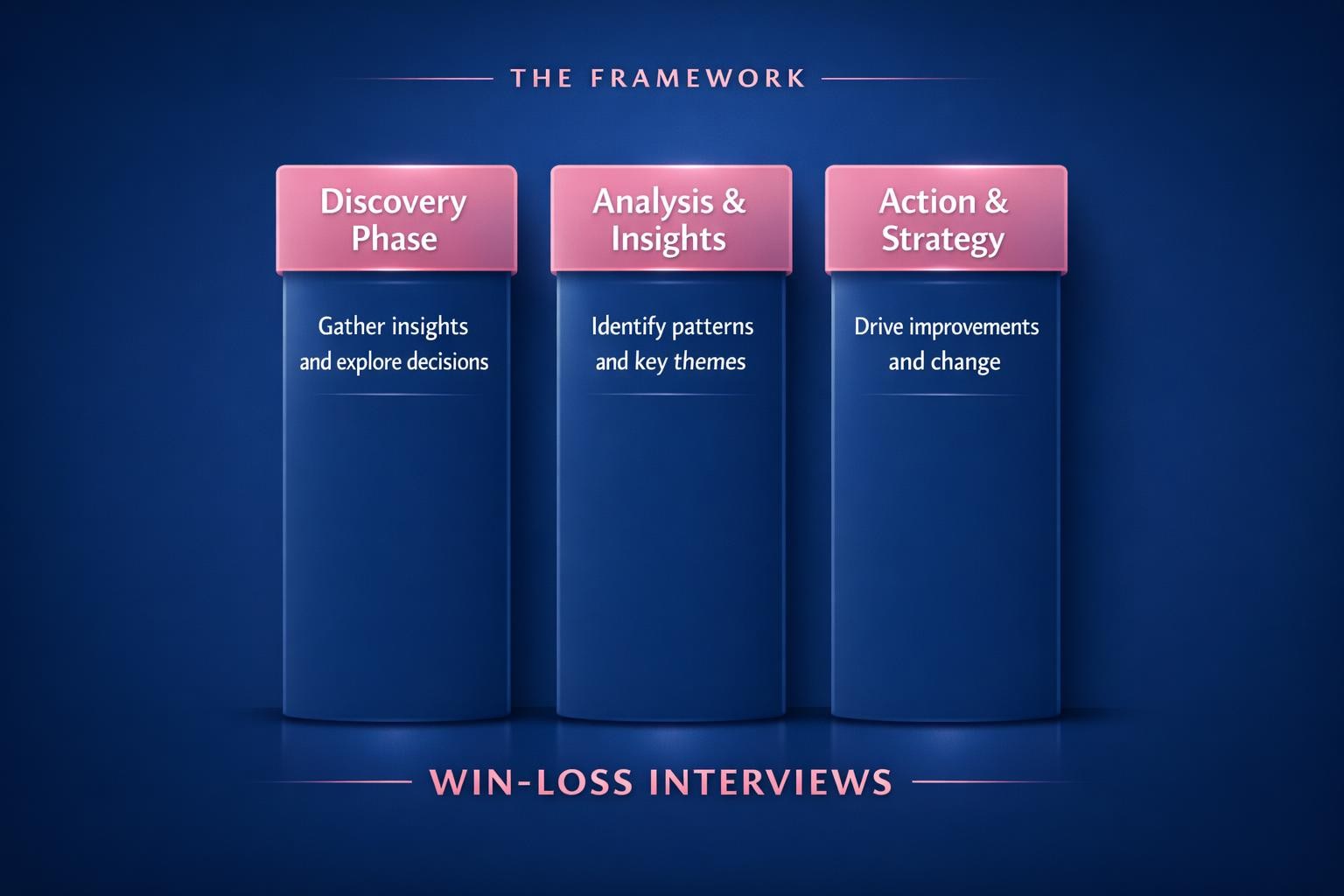
Win-loss interviews give revenue teams a structured way to learn from closed-won and closed-lost deals. Every won and lost deal contains insights about what works and what does not in your approach to Win-Loss Interviews.
For clarity, this guide treats win-loss interviews as post-deal research and review. Active-deal practices such as stakeholder engagement, mutual action plans, pipeline reviews, deal velocity, and coaching are related revenue disciplines, but they are not themselves post-deal buyer interviews.
Teams evaluating technology that supports revenue intelligence can explore Revspire Win-Loss Intelligence.
Build the post-deal interview program
Assign ownership
Someone on the leadership team is accountable for the outcomes, not just the activities. As an operating recommendation, assign a permanent owner who can define the program goals, coordinate participants, schedule reviews, and track agreed actions.
Document the process
An operating model for Win-Loss Interviews answers three questions: what actions should happen, at what stage, and who is accountable.
Document how closed deals are selected, who contacts buyers, who conducts interviews, how findings are analyzed, where findings are stored, and which teams receive them. Keep the process simple enough to follow and revise it when new patterns emerge.
Capture post-deal intelligence
Use post-deal interviews, CRM data analysis, and structured win-loss reviews as distinct inputs. Buyer interviews can capture the buyer’s account, while CRM analysis and internal reviews provide additional context from the revenue team.
Do not treat live stakeholder activity or mutual action plan progression as interview findings. Those signals belong to active-opportunity management and may be reviewed separately from the post-deal program.
Three-part explainer: Audit the current state, Build the operating model, and Measure and improve.
Implement the program
Step 1: Establish a baseline
Start with an honest audit. Before you can improve Win-Loss Interviews, you need an honest baseline.
Review a defined set of closed deals and note which deals received buyer interviews, which received internal reviews, how findings were recorded, and whether agreed actions were completed.
Step 2: Prioritize a focused set of changes
Select two or three improvements, give each one a clear owner and measurable goal, and set a review date. This keeps the program focused while the team evaluates whether the revised process is being followed.
Step 3: Keep technology in a supporting role
Technology should serve the win loss interviews best practices process, not define it.
Evaluate tools by whether they reduce operational friction, preserve interview findings, and make agreed actions visible to the people responsible for them.
Three-part explainer: Expose the hidden cost, Build the business case, and Start where it matters.
Measure the interview program separately from active deals
Program measures can include the number of eligible closed deals, interview completion, recurring themes, distribution of findings, and completion of agreed follow-up actions.
Broader revenue measures can include win rates, cycle times, and average deal sizes. Review them as business outcomes without claiming that the interview program alone caused a change.
For active opportunities, maintain a separate view of stakeholder engagement, stage progression, content consumption, mutual action plans, and deal velocity. Keeping the two measurement sets separate prevents active-deal signals from being mislabeled as post-deal interview evidence.
Common mistakes to avoid
Treating the program as a one-time initiative
Assign a permanent owner to Win-Loss Interviews outcomes. Support that ownership with recurring reviews, defined measures, and documented follow-up actions.
Relying only on internal recollection
Compare internal deal reviews with available buyer feedback and CRM records. Record disagreements between those inputs rather than forcing them into one explanation.
Confusing activity with progress
Measure outcomes, not activities. For the interview program, focus on whether interviews happen, findings are documented, and agreed actions are completed.
Failing to learn from losses
Implement a structured loss review process. Document findings from significant losses and update relevant playbooks when recurring themes support a change.
Win-loss interview checklist
- Assign a permanent program owner.
- Define which closed deals qualify for interviews.
- Document buyer outreach and interview responsibilities.
- Store interview findings and internal review notes clearly.
- Separate post-deal findings from active-opportunity signals.
- Share recurring themes with the teams able to act on them.
- Track agreed actions and review the program regularly.
- Update playbooks when the evidence supports a change.