The Complete 2026 Guide to Pipeline-to-Close Conversion for Revenue Leaders
A practical perspective for connecting this idea to your revenue team’s next move.
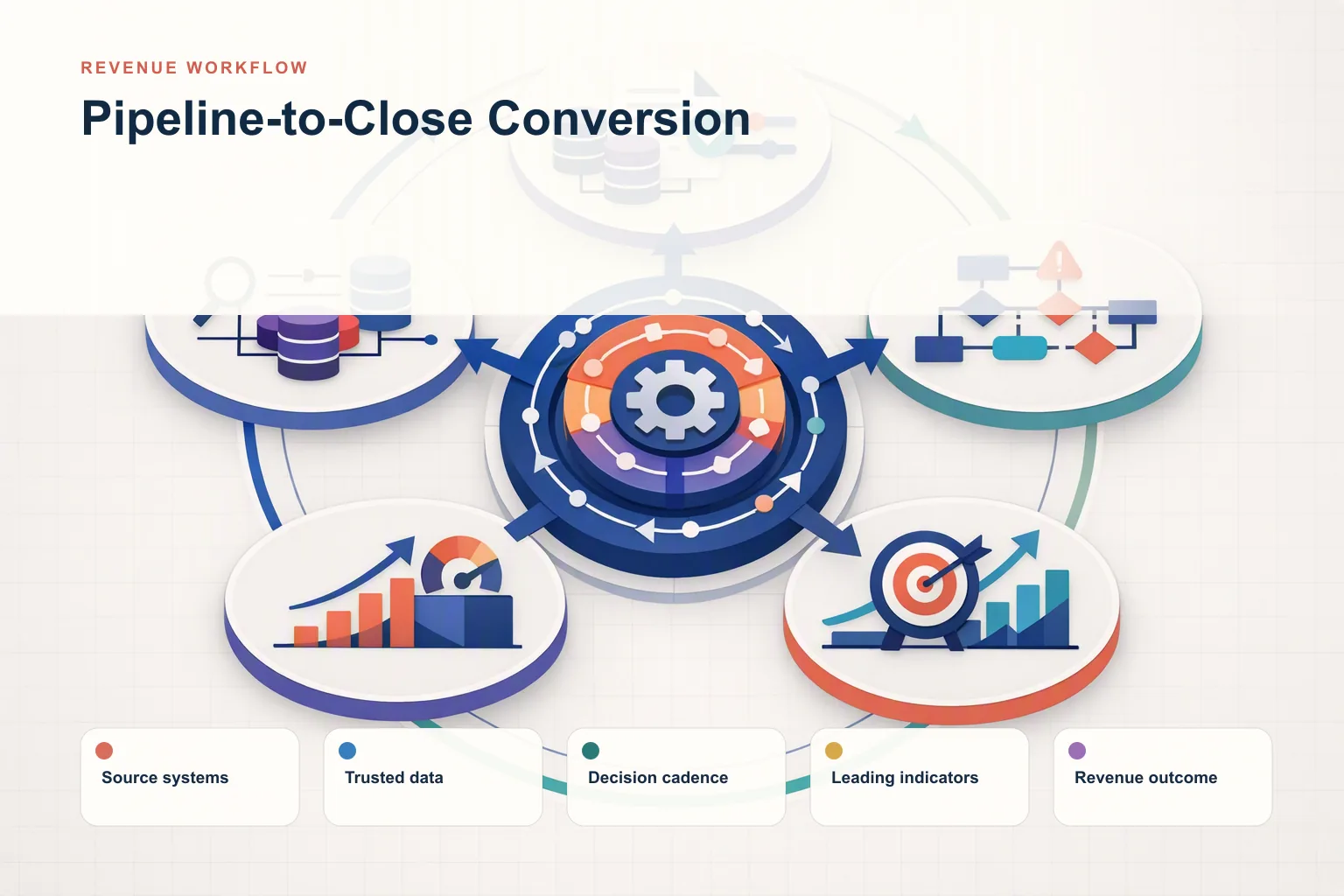
Pipeline-to-close conversion should be managed as an ongoing, data-driven discipline rather than a one-time initiative. The practical foundation is a documented approach, clear ownership, connected data, and a feedback loop that improves the way the revenue team works.
Use one operating sequence: establish a baseline, define what good execution looks like, review leading and lagging evidence together, coach from live opportunities, and return lessons from outcomes to the playbook.
Give Pipeline-to-Close Conversion a Permanent Owner
Assign a leader who is accountable for conversion outcomes, not only for the volume of activity. That owner should set the goals, define the measures, maintain the review cadence, and make sure the approach changes when market conditions or deal evidence change. Treating conversion as a project with an end date allows the operating discipline to drift; a permanent owner keeps it connected to revenue decisions.
Audit the Current Pipeline Before Changing It
Start with an honest baseline. Review the last six months of opportunity data, map deals against the stages in the current process, and identify where they fall out. Break the evidence down by representative, segment, and deal size so that one portfolio average does not hide a concentrated problem. Compare what the data shows with the narrative used in pipeline and forecast conversations.
Use that review to choose two or three focused improvements rather than launching an unfocused redesign. Give each improvement a clear owner, a measurable goal, and a 90-day review point. This keeps the first round of work tied to an observed conversion problem.
Define What Good Execution Looks Like at Each Stage
Document clear milestones, criteria, and shared language for pipeline-to-close conversion. The operating model should answer three questions: what action should happen, at what stage should it happen, and who is accountable? Keep the model simple enough to follow, then teach it and reinforce it in the workflow instead of leaving it in a presentation.
Use the documented model as a living playbook. Manager reinforcement and an embedded workflow help the team apply the same standards during active deals, while periodic updates allow win-loss learning to change the guidance when the evidence warrants it.
Three-part explainer: Define the system, Operationalize the workflow, and Measure the impact.
Review Leading and Lagging Evidence Together
Lagging measures such as stage conversion, win rate, cycle time, average deal size, and quota attainment show what the system produced. Leading indicators such as stakeholder engagement, content consumption, mutual action plan progress, deal velocity, and time in stage show where a manager may need to investigate before the final outcome is known.
Use both types of evidence in the same review. Activity counts alone can look healthy while opportunities make no progress. When calls, emails, meetings, or tasks rise without corresponding buyer movement, investigate qualification, stakeholder coverage, or the next agreed action instead of asking only for more activity.
Keep the measures connected to revenue outcomes and use them in coaching and territory reviews. The purpose of the dashboard is to show where attention is needed and then help the team test whether the chosen action changed the result.
Make the Weekly Review a Decision and Coaching Cadence
Put pipeline-to-close conversion on the weekly pipeline agenda as a structured conversation about what needs to change in the next seven days, not as a status update. Use live opportunities for deal-level coaching, identify where execution is breaking down, agree on the next action, and return to the same evidence at the following review.
This cadence also keeps judgment tied to a broader body of data. A recent win, loss, or confident representative can influence a manager’s view; comparing that view with the portfolio evidence makes the disagreement something to investigate rather than an automatic conclusion.
Address Stakeholder and Progress Risks
A process can appear active while remaining dependent on one relationship. Map the stakeholders in the buying committee, assign coverage, and track engagement with each one. Opportunities with only one active contact should be surfaced for review. Pair that relationship evidence with stage progression, buyer engagement quality, and deal velocity so the team can distinguish seller effort from buyer progress.
Turn Wins and Losses into Process Changes
Capture what happened in won and lost deals through structured reviews, post-deal interviews, and CRM analysis. For a significant loss, identify the pipeline-to-close breakdown, document the finding, and update the relevant playbook, training, or strategy. Reviewing those lessons against the measures each quarter gives the team a repeatable feedback loop rather than a collection of notes that never changes execution.
Make Technology Support the Operating Model
Technology should serve the conversion process rather than define it. Evaluate each tool by whether it reduces friction, makes the next action easier to see, and allows data to flow without unnecessary manual work across CRM, engagement, content, and deal-room systems. Explore Revspire Deal Room for the product context retained from the canonical article.
Apply one further test from the source material: does the technology help representatives spend more time on high-value work or less? Consolidate where possible and avoid requiring the team to maintain several disconnected versions of the same deal context.
Keep the System Current
Review the conversion measures against goals, update the playbook when win-loss evidence reveals a recurring pattern, and ask what one change would most improve the outcome. Clear ownership, stage standards, weekly inspection, live-deal coaching, connected data, and an explicit learning loop are the recurring practices supported across the source set.
Request a Revspire demo to discuss how to support that operating discipline.