Revspire blog
The Complete 2026 Guide to RevOps and Forecasting for Revenue Leaders
A practical guide to building a RevOps and forecasting system with clear ownership, useful metrics, deal-level coaching, and continuous feedback.
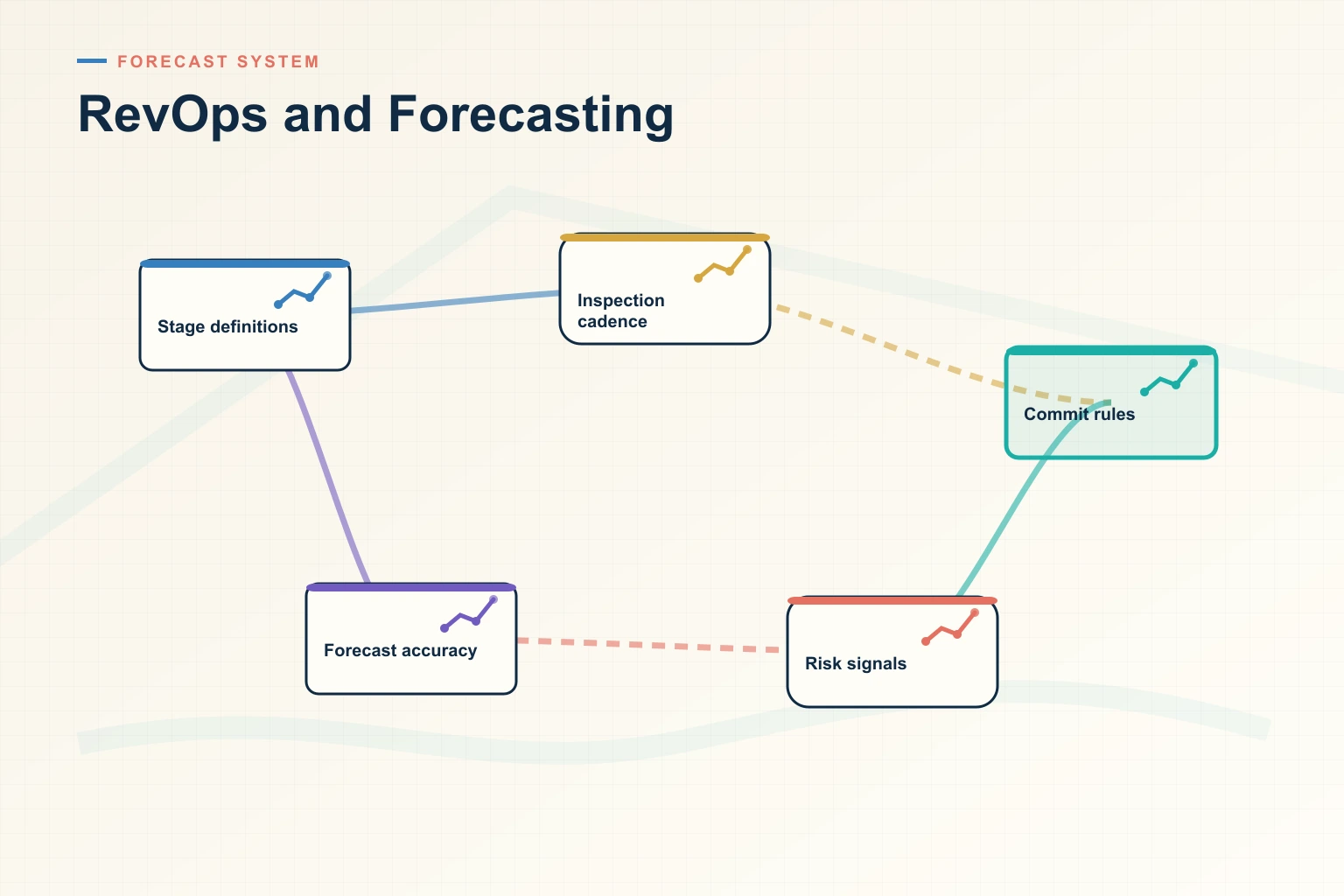
Treat RevOps and forecasting as an ongoing operational discipline, not a one-time project. A practical system combines clear ownership, documented processes, useful data, deal-level coaching, and feedback loops.
Learn more about Revspire Revenue Intelligence.
The Core Components of an Effective System
Three-part explainer: Define the system, Operationalize the workflow, and Measure the impact.
Strategy and ownership
Assign a leader who is accountable for outcomes, goals, metrics, and changes to the operating model. The operating model should specify which actions happen at each stage and who is accountable for them.
Process and playbooks
Document what strong execution looks like at every deal stage. Include clear milestones, advancement criteria, stakeholder coverage, and a shared vocabulary. Reinforce the process through managers and update it with lessons from won and lost deals.
Technology and data
Technology should serve the RevOps sales forecasting accuracy process, not define it. Tools should reduce friction and allow data to flow without unnecessary manual intervention.
Leading indicators might include stakeholder engagement rates, content consumption, mutual action plan progression, or deal velocity at each stage. Lagging indicators such as win rate, cycle time, and average deal size can be used to review outcomes.
A Practical Implementation Framework
Audit the current state
Before you can improve RevOps and Forecasting, you need an honest baseline. Review recent deal data by representative, segment, and deal size to identify recurring problems.
Start with an honest audit. Compare the data with the team’s current narrative, prioritize two or three specific improvements, assign each one a clear owner and measurable goal, and establish a review cadence.
Measure and review
Define three to five leading indicators and track them weekly. Build a dashboard that shows both. Review it weekly. Pair these indicators with outcome measures such as conversion rate by stage, time in stage, win rate, cycle time, and average deal size.
Seven Practices for Scaling the Process
Three-part explainer: Set the standard, Embed the practice, and Scale what works.
- Define what strong execution looks like. Apply documented standards at every deal stage.
- Instrument each stage. Track buyer behaviors and deal developments that may predict outcomes.
- Use a weekly cadence. Review forecast health and identify what needs to change during the next seven days.
- Coach at the deal level. Review live opportunities and work through specific execution gaps.
- Capture win-loss intelligence. Use post-deal interviews, CRM data analysis, and structured reviews.
- Align technology with the process. Reduce friction and unnecessary manual data movement.
- Create feedback loops. Review metrics, update playbooks, and collect buyer feedback.
Common RevOps and Forecasting Mistakes
Treating forecasting as a one-time initiative
Assign a permanent owner, establish standing reviews, define metrics, and connect improvement goals to revenue outcomes.
Relying only on intuition
Use consistent indicators across the opportunity portfolio. When the data and the team’s expectations disagree, investigate the discrepancy.
Single-threading opportunities
Map the buying committee, assign stakeholder coverage, and flag deals in which only one contact remains active.
Confusing activity with progress
Measure outcomes, not activities. Track stage progression velocity, buyer engagement quality, and stakeholder coverage breadth.
Failing to learn from losses
Use structured reviews after significant losses, document the process or forecasting breakdowns involved, and update playbooks accordingly.
Start With Focused Improvements
Three-part explainer: Expose the hidden cost, Build the business case, and Start where it matters.
Begin with a small number of measurable improvements rather than a wholesale redesign. Assign ownership, review the results, retain what works, and revise what does not.