The Complete 2026 Guide to RevOps Playbooks for Revenue Leaders
A practical perspective for connecting this idea to your revenue team’s next move.
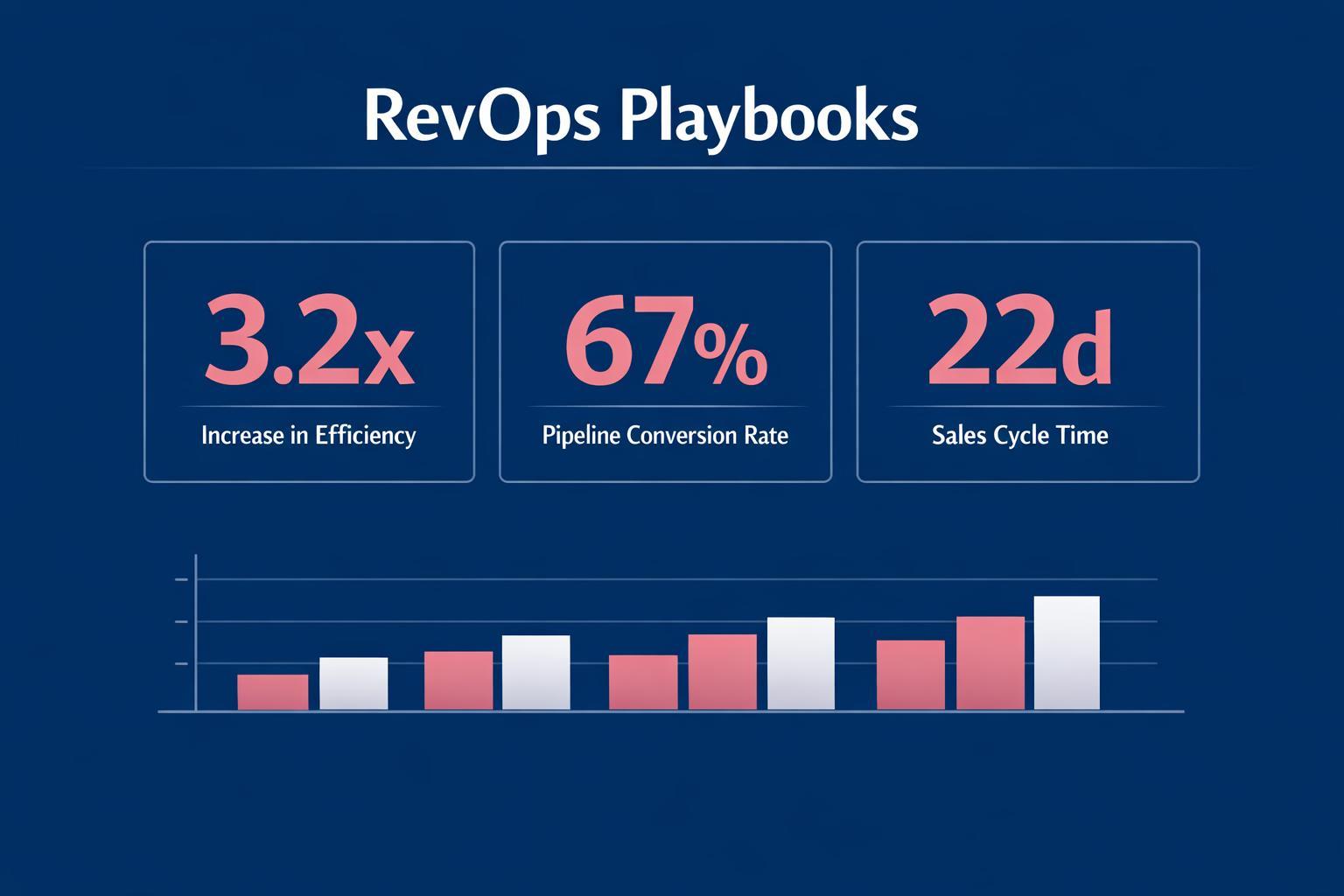
A durable RevOps playbook is an ongoing operating system rather than a one-time project. It combines explicit ownership, documented workflows, measurable deal criteria, regular coaching, aligned technology, and feedback from wins and losses.
Build the Foundation: Strategy, Ownership, and Process
Every high-performing RevOps Playbooks program starts with explicit strategy ownership. Someone on the leadership team is accountable for the outcomes, not just the activities. That owner sets goals, defines metrics, and keeps the approach current as conditions change.
The process must also be documented, taught, and reinforced. Define what excellent execution looks like at each deal stage, including clear milestones, documented criteria, and a shared vocabulary. An operating model should answer three questions: what actions should happen, at what stage, and who is accountable.
Audit the Current State
Before you can improve RevOps Playbooks, you need an honest baseline. Pull the last six months of deal data. Map every opportunity against the stages of the revenue operations playbook framework and identify where deals are falling out and why.
Be specific: which reps, which segments, which deal sizes. Compare what the data shows with the internal narrative, then prioritize two or three improvements. Deploy them with a clear owner, a measurable goal, and a 90-day review cadence.
Define Deal Execution Standards
Write down what excellent execution looks like at each stage and hold every representative accountable to that standard. Embed the resulting workflows into normal deal management so the right action is visible at the right moment.
Do not confuse activity with progress. Measure stage progression velocity, buyer engagement quality, and stakeholder coverage breadth rather than relying only on email, call, or task counts.
Avoid single-threaded relationships. Map the stakeholders in the buying committee, assign coverage, and track engagement with each person. A deal with only one active contact should be treated as a deal-level risk.
Align Technology and Data With the Process
Technology should serve the revenue operations playbook framework process, not define it. Evaluate every tool against a practical question: does it make RevOps Playbooks easier and more consistent, or does it add friction?
Consolidate tools where appropriate and connect systems so data can flow without manual intervention. The technology layer should reduce operational overhead and give leaders a current view of the opportunity portfolio.
Product reference: Revspire Revenue Intelligence.
Measure Leading and Lagging Indicators
The right metrics for RevOps Playbooks sit at the intersection of leading and lagging indicators. Lagging metrics such as win rate and quota attainment describe what happened. Leading indicators help teams see what may happen next.
Possible leading indicators include stakeholder engagement rates, content consumption, mutual action plan progression, and deal velocity at each stage. Outcome measures can include stage progression velocity, buyer engagement quality, stakeholder coverage breadth, conversion rates, time-in-stage benchmarks, win rates, cycle times, and average deal sizes.
Define three to five leading indicators and track them weekly. Build a dashboard that shows both leading and lagging measures, review it weekly, and connect it to coaching conversations and territory reviews.
Use a Weekly Operating and Coaching Cadence
Include RevOps Playbooks health in the weekly pipeline-call agenda. Treat the review as a structured conversation about what should change during the next seven days rather than as a status update.
Use deal-specific coaching to review live opportunities, identify where execution breaks down, and work through the correction with each representative. When activity is high but outcomes are poor, investigate what is happening inside the deal instead of simply requesting more activity.
Build Feedback Loops From Wins, Losses, and Buyers
Every won and lost deal contains insights about what works and what does not in your approach to RevOps Playbooks. Capture those insights through post-deal interviews, CRM data analysis, and structured win-loss reviews, then feed the findings back into playbooks, training, and strategy.
After every significant lost deal, spend thirty minutes with the representative analyzing the specific breakdowns that contributed to the loss. Document the findings and update playbooks accordingly.
Review RevOps Playbooks metrics quarterly against targets, update the playbook when the team learns something new, and solicit feedback from buyers about their experience. Treat the playbook as a living document rather than a finished project.
RevOps Playbook Explainer
Three-part explainer: Expose the hidden cost, Build the business case, and Start where it matters.
Turning this into a playbook reps will use? Our AI sales playbook guide shows how to build one with AI.