Revspire blog
RevOps Org Design: An Operating System Guide
A practical guide to RevOps ownership, process, execution standards, technology, measurement, coaching, and feedback loops.
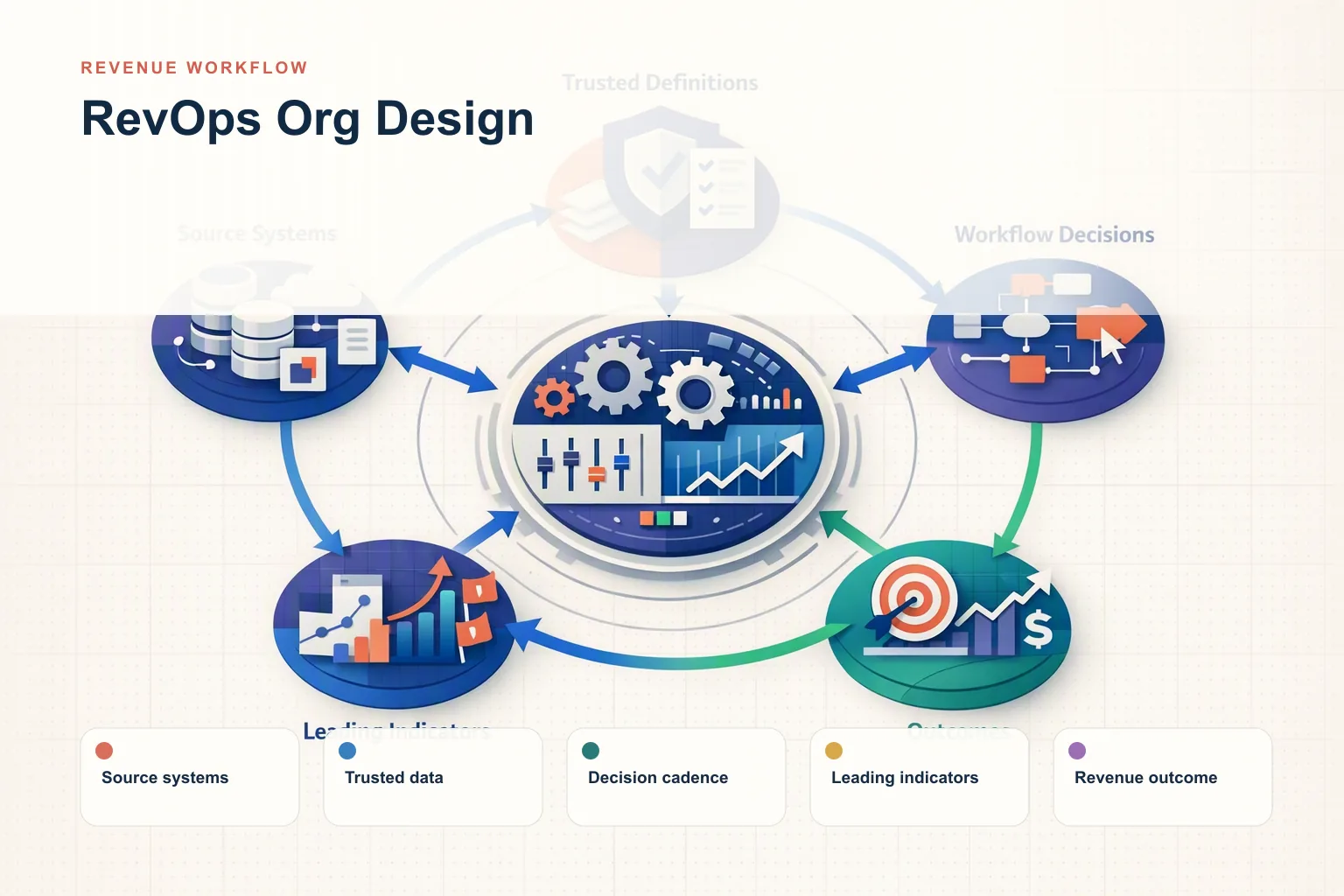
This guide covers the operating-system elements of RevOps org design supported by the supplied sources: ownership, process, execution standards, technology, measurement, coaching, and feedback loops.
Three-part explainer: Define the system, Operationalize the workflow, and Measure the impact.
Assign Ownership
Assign responsibility to a leadership team member who is accountable for outcomes, sets goals, defines metrics, and ensures the approach evolves as market conditions change.
Document what actions should happen, at what stage they should happen, and who is accountable.
Define the Process
Document, teach, and reinforce the process through embedded workflows, manager involvement, and technology that surfaces the appropriate action.
Write down what excellent execution looks like at each deal stage. Define clear milestones, documented criteria, and a shared vocabulary, then hold representatives accountable to that standard.
For opportunities advancing beyond stage two, require multi-threaded engagement. Map the buying committee, assign stakeholder coverage, track engagement, and flag deals where only one contact is active.
Align Technology and Data
Technology should serve the revenue operations organization structure process rather than define it. Evaluate whether each tool makes the process easier and more consistent or adds friction, and enable data to flow without manual intervention.
The supplied sources describe Revspire Revenue Intelligence as technology that surfaces deal signals.
Audit the Current State
Pull the last six months of deal data. Map opportunities against the process stages and identify where deals leave the pipeline and why, including the representatives, segments, and deal sizes involved.
Compare what the data says with the internal narrative. Use that assessment to prioritize two or three specific improvements, each with a clear owner, measurable goal, and 90-day review cadence.
Measure the Process
Leading indicators can include stakeholder engagement, content consumption, mutual action plan progression, deal velocity, and stakeholder coverage.
Lagging indicators can include win rates, cycle times, and average deal sizes. The sources also recommend reviewing conversion rates at each stage and time-in-stage benchmarks.
Define three to five leading indicators and track them weekly.
Build a dashboard that shows leading and lagging indicators. Review it weekly and connect it to coaching conversations and territory reviews.
Review RevOps org design metrics quarterly against targets and update playbooks when new information is learned.
Use Coaching and Feedback Loops
Add a standing review of RevOps org design health to the weekly pipeline cadence. Use it as a structured conversation about what should change during the next seven days rather than as a status update.
Use live opportunities for deal-specific coaching by identifying where execution is breaking down and working through the correction in context.
Capture findings through post-deal interviews, CRM data analysis, and structured win-loss reviews, then feed those findings into playbooks, training, and strategy.
Correct Execution Mistakes
Three-part explainer: Recognize the leak, Correct the behavior, and Prevent repeat failure.
Treating design as a one-time initiative
Assign a permanent owner and maintain standing review meetings, defined metrics, and quarterly improvement goals.
Relying on intuition instead of data
When data and intuition disagree, investigate the discrepancy before making policy from a small number of memorable deals.
Confusing activity with progress
Measure outcomes rather than activity counts. Track stage progression velocity, buyer engagement quality, and stakeholder coverage breadth.
Failing to learn from losses
After every significant lost deal, conduct a structured review, document the process breakdowns, and update the playbook.
Prioritize Improvements
The sources identify three areas of revenue leakage: unsuitable opportunities entering the pipeline, qualified opportunities stalling mid-cycle, and late-stage opportunities failing because process or stakeholder concerns were not surfaced earlier.
Start with the audit, select two or three specific improvements, and give each improvement a clear owner, measurable goal, and 90-day review cadence.
Three-part explainer: Expose the hidden cost, Build the business case, and Start where it matters.