Revspire blog
RevOps vs SalesOps: 7 Strategies the Top Revenue Teams Use in 2026
Apply seven RevOps vs SalesOps strategies for stage standards, leading indicators, weekly reviews, coaching, win-loss analysis, and feedback loops.
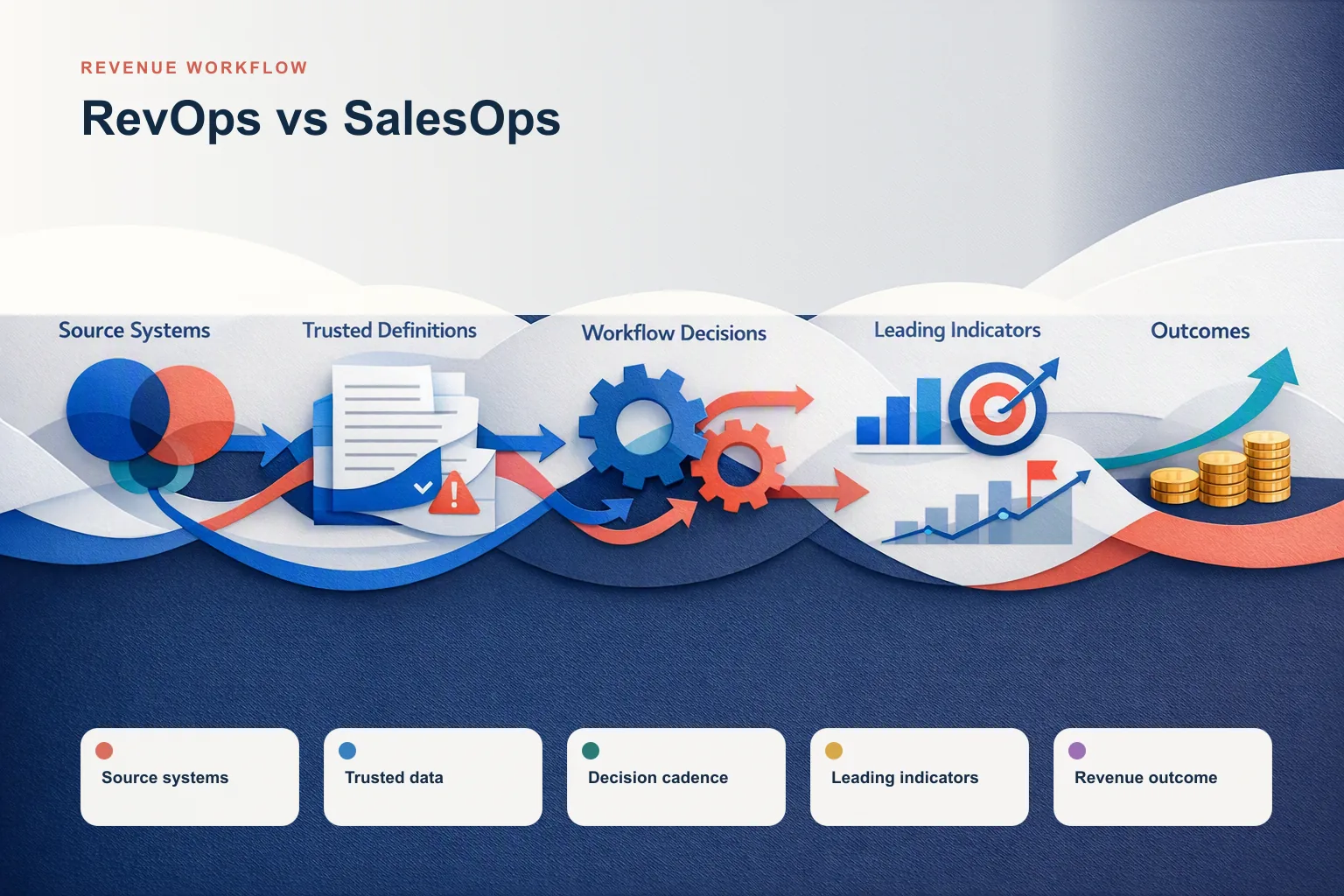
This guide addresses RevOps vs SalesOps through seven operating strategies: define deal-stage standards, track leading indicators, establish a weekly review cadence, coach from live opportunities, capture win-loss findings, align technology with the process, and maintain feedback loops.
How to use this RevOps vs SalesOps guide
Begin with the operating system around the work. Define the required actions, identify the stage at which each action should happen, assign accountability, and use deal data to review execution. The seven strategies below organize those practices into a repeatable framework.
1. Define excellent execution at each deal stage
Start with an honest audit. Pull the last six months of deal data, map every opportunity against the deal stages, and identify where deals are falling out and why. Review the findings by rep, segment, and deal size.
Write down exactly what excellent execution looks like at each stage. Document the required actions, milestones, criteria, and shared vocabulary. The operating model should answer three questions: what actions should happen, at what stage, and who is accountable.
Assign a permanent owner to the outcomes. Someone on the leadership team should be accountable for the outcomes, not just the activities.
Three-part explainer: Audit the scopes, Build the RevOps model, and Measure the difference.
2. Instrument every stage with leading indicators
Lagging metrics like win rate and quota attainment tell you what happened. Leading indicators show what may happen next. Examples include stakeholder engagement rates, content consumption, mutual action plan progression, and deal velocity at each stage.
Build a dashboard that shows both. Review it weekly and connect it directly to coaching conversations and territory reviews.
Map every stakeholder in the buying committee, assign coverage, and track engagement with each one. Flag deals where only one contact is active for closer examination.
3. Embed the operating system into the weekly cadence
Add a standing review of RevOps vs SalesOps health to the weekly pipeline agenda. Use it as a structured conversation about what needs to change during the next seven days rather than as a status update.
Keep the documented standards and indicators visible in pipeline calls, coaching conversations, and territory reviews so each discussion can produce a specific follow-up action.
Three-part explainer: Define the system, Operationalize the workflow, and Measure the impact.
4. Use live opportunities for deal-level coaching
Review live opportunities with each rep, identify exactly where execution breaks down, and work through the fix in real time. Tie the discussion to documented stage criteria, stakeholder coverage, and dashboard indicators.
5. Capture win-loss intelligence systematically
Use post-deal interviews, CRM data analysis, and structured win-loss reviews to collect findings from won and lost deals. Feed the findings back into playbooks, training, and strategy.
After every significant lost deal, review the specific breakdowns with the rep, document the findings, and update the relevant playbook.
Three-part explainer: Set the standard, Embed the practice, and Scale what works.
6. Align technology and data with the process
Technology should serve the RevOps vs SalesOps process, not define it. Evaluate each tool by asking whether it makes the documented workflow easier and more consistent or adds friction.
Ensure your tools talk to each other so data flows without manual intervention between the CRM, engagement platform, and deal room. Platform information: Revspire Revenue Intelligence.
7. Create feedback loops for continuous improvement
Review RevOps vs SalesOps metrics quarterly against targets. Update playbooks when you learn something new, and solicit feedback from buyers on their experience.
Ask what the team could do differently to improve outcomes. Record the answer, assign an owner, and carry the resulting change into the next review cycle.
Implementation checklist
- Audit the last six months of deal data.
- Define excellent execution, required actions, and accountability at each deal stage.
- Select leading and lagging indicators and add them to a dashboard.
- Review the indicators weekly and coach from live opportunities.
- Map stakeholder coverage and investigate single-contact deals.
- Capture win-loss findings and buyer feedback.
- Review metrics against targets each quarter and update playbooks.