How to Build a Sales Playbook: Structure and Templates
A practical perspective for connecting this idea to your revenue team’s next move.
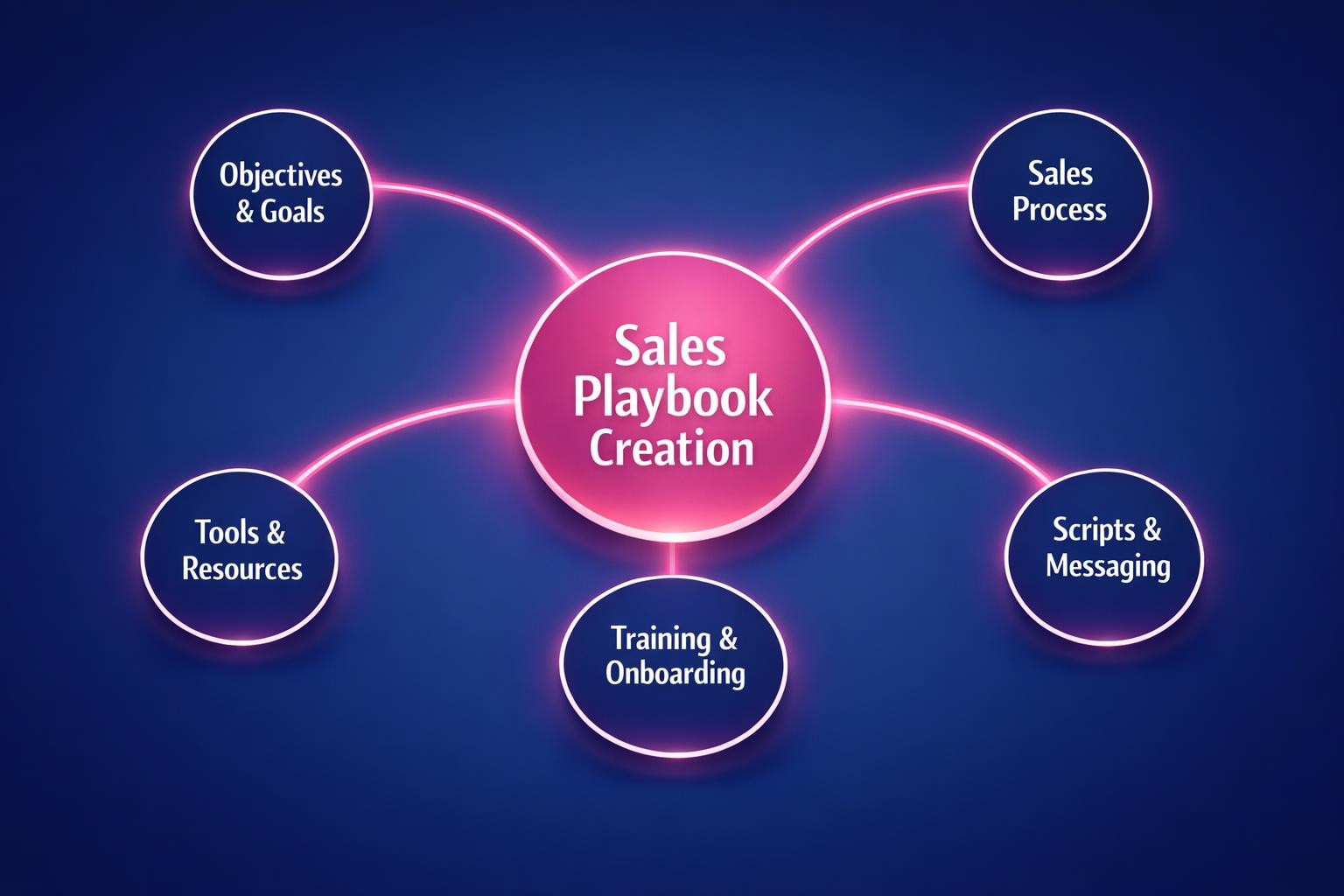
A sales playbook turns go-to-market decisions into guidance a representative can use during real work. It should define who the team serves, how value is communicated, how opportunities move through the sales process, what evidence supports each decision, and who owns each handoff. Salesforce’s sales playbook guide describes a playbook as a comprehensive guide spanning customer personas, selling strategies, roles, process stages, qualification, messaging, and shared resources.
The playbook is not finished when a document is published. Give it an accountable owner, embed it in the workflow, reinforce it through managers, inspect its use in live opportunities, and update it from win-loss evidence.
Use a complete sales playbook anatomy
Ideal customer profile and buying roles
Start with the ideal customer profile: the firmographic, operational, and situational characteristics that make an account a plausible fit. Add buyer roles, their responsibilities, likely priorities, and the evidence a representative should gather before assuming a need. Keep account fit separate from an individual contact’s role so the team does not confuse a receptive person with a qualified opportunity.
Positioning, messaging, and proof
Record the problem the offer addresses, the value proposition, the proof available to support it, and the language approved for each audience. Include short message examples for outreach, discovery follow-up, proposals, and executive communication. Link each message to the relevant stage and buyer context rather than offering one script for every situation.
Process, qualification, and handoffs
Define the sales stages, entry and exit criteria, expected actions, required evidence, and accountable role. Include discovery questions, qualification criteria, common objections, approved responses, and explicit handoff requirements between marketing, sales development, account executives, solution teams, and customer success. A handoff should state what information moves, who accepts it, and what condition marks completion.
Give representatives reusable templates
Ideal-customer and persona card
Create one compact card containing account-fit criteria, disqualifiers, buyer roles, common business problems, required evidence, and the next research step. The card should help a representative decide what to verify; it should not replace discovery with assumptions.
Discovery and qualification worksheet
For each stage, list the questions to ask, the evidence to record, and the criterion for advancing. Include the business problem, current approach, desired change, involved stakeholders, decision process, timing, and unresolved risk. Keep qualification criteria observable so a manager can review why the opportunity moved forward.
Messaging and objection-response sheet
Pair each approved value message with its intended audience, supporting proof, discovery context, common objection, and a response that invites verification. Avoid promises the evidence cannot support. Include a field for what the representative learned so repeated objections can inform the next playbook update.
Stage and handoff checklist
For every transition, record the sending owner, receiving owner, required fields, customer context, open commitments, next action, and acceptance condition. This turns a handoff from an informal notification into a reviewable operating step.
Establish ownership and governance
Name an accountable owner
Assign one leadership owner to playbook outcomes, not just publishing tasks. That owner sets goals, defines measures, resolves conflicting guidance, and keeps the playbook aligned as conditions change. Standing reviews and quarterly improvement goals keep ownership active after launch.
Make the playbook available in the workflow
Document, teach, and reinforce the process through managers. Put the relevant guidance where representatives perform the action so they do not have to search a shared drive during a live deal. For relevant product context, explore Revspire Content Hub.
Control changes without freezing the document
Record the owner, revision date, changed sections, reason for the change, and evidence behind it. Retire obsolete guidance so two conflicting versions are not active. A living playbook changes when the team learns, while change control keeps the current instruction clear.
Audit how the team works today
Review recent deal evidence
Pull the last six months of deal data and map opportunities against the team’s stages. Identify where deals fall out and why, then examine the result by representative, segment, and deal size. Compare the narrative used in meetings with the patterns visible in the data. That baseline shows which playbook components need attention first.
Choose a focused first cycle
Prioritize two or three improvements with the clearest connection to outcomes. Give each improvement an owner and measurable goal, and schedule a 90-day review. A focused cycle gives the team a defined change to test before the next revision.
Translate the audit into operating rules
For each priority stage, answer what action should happen, when it should happen, what evidence is required, and who is accountable. Add clear milestones and shared language. Keep the first version simple enough to follow, then extend it as live use reveals genuine gaps.
Reinforce the playbook in live work
Use a weekly inspection rhythm
Include playbook health in the weekly pipeline cadence. Make it a structured conversation about what needs to change in the next seven days rather than a status report. Review the agreed indicators, identify a gap, assign the next action, and return to it at the next meeting.
Coach with real opportunities
Review live deals with each representative, identify where execution departs from the documented standard, and work through the correction in context. This also reveals instructions that are unclear, difficult to follow, or poorly supported by the workflow.
Separate progress from activity
High email, call, or task volume can coexist with stalled opportunities. Review stage progression, buyer engagement quality, stakeholder coverage, mutual action plan progress, and deal velocity. When activity is high and outcomes are weak, investigate the opportunity instead of simply requesting more activity.
Measure, learn, and revise
Pair leading and lagging measures
Use leading indicators tied to the playbook action and lagging outcomes such as stage conversion, win rate, cycle time, and average deal size. The purpose is to identify where coaching is needed and then test whether the revised behavior changed the result.
Capture evidence from wins and losses
Use post-deal interviews, CRM analysis, and structured win-loss reviews to record what worked and what did not. After a significant loss, document the breakdown and update the relevant play, template, training, or strategy. Include buyer feedback when it is available.
Run the next improvement cycle
At the quarterly review, compare the selected measures with their goals and decide which one change would most improve execution. Publish the revision, explain what changed, reinforce it in weekly reviews, and use live-deal coaching to make the expectation concrete.
Request a Revspire demo to explore how accessible guidance and connected deal evidence can support a living sales playbook.