Why Multi-Vendor Evaluation Is the Highest-Leverage Move in B2B Sales
A practical perspective for connecting this idea to your revenue team’s next move.
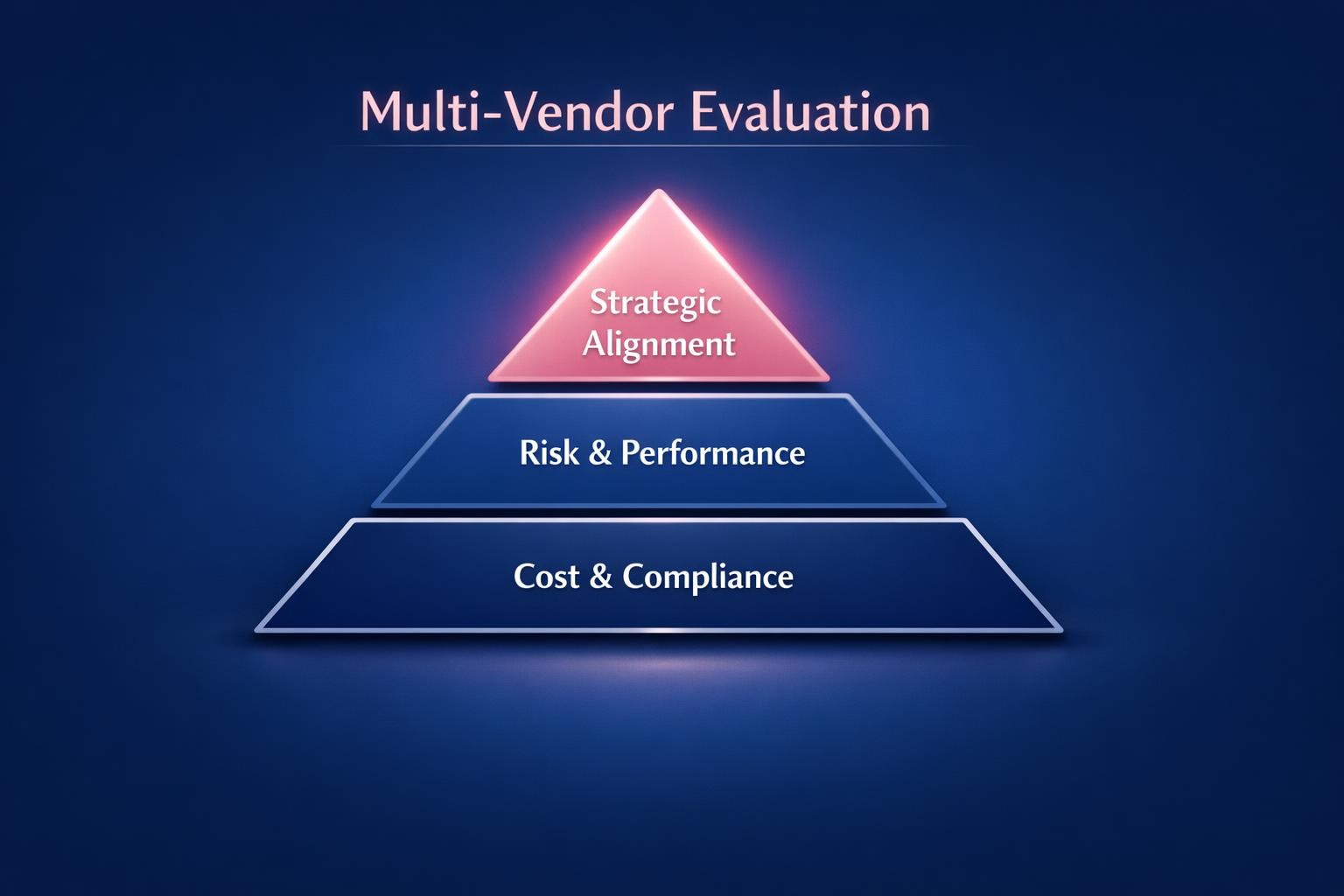
Multi-vendor evaluation deserves strategic attention because it can influence several parts of the revenue system at once: pipeline quality, deal progression, forecast confidence, the buying experience, and sales execution. Its leverage comes from addressing risks across the full deal cycle rather than fixing one isolated stage.
The Hidden Cost of Ignoring Multi-Vendor Evaluation
Most B2B revenue leaders know multi-vendor evaluation matters in principle. But knowing and systematizing are very different things.
The cost of ignoring it is rarely visible in a single deal. It appears gradually in lower win rates, deals that take longer than they should, and forecast calls where leaders are uncertain about what they are seeing. By the time the pattern becomes obvious, competitors with a more deliberate process may already have an advantage.
That broad exposure is why multi-vendor evaluation can be a high-leverage discipline: a stronger process can improve how teams qualify opportunities, identify stalled deals, surface stakeholder concerns, coach representatives, and learn from outcomes.
Where Revenue Leakage Happens
Revenue leakage from poor multi-vendor evaluation practice concentrates in three places:
- Early-stage pipeline quality. Deals that should never enter the pipeline consume representative capacity and distort the forecast.
- Mid-cycle execution. Qualified deals can stall because process gaps are not identified and addressed soon enough.
- Late-stage risk. Procurement surprises, unstated objections, and last-minute stakeholder concerns can emerge after the team has limited time to respond.
A structured process gives leaders a way to inspect these risks before they become completed losses. It also replaces fragmented intuition with documented criteria, buyer signals, and explicit ownership.
Learn more about Revspire Buyer Intelligence.
The Business Case for Investing in Multi-Vendor Evaluation
The business case extends beyond an individual opportunity. The canonical source connects systematic improvement with faster ramp times for new representatives, higher average deal sizes, lower customer acquisition costs, and better forecast accuracy for resource-allocation decisions.
These dimensions reinforce one another. Clear standards support coaching. Better qualification protects capacity. Earlier risk detection improves pipeline inspection. Structured reviews turn deal outcomes into updated playbooks. The result is a discipline that can affect both current opportunities and the operating system used for future ones.
The Competitive Dimension
In markets where a product is differentiated but not unique, multi-vendor evaluation becomes a competitive variable. Buyers consider not only product capability, but also whether the buying experience feels clear and reduces perceived risk.
A team that coordinates stakeholders, criteria, content, and next actions can create a more consistent buying experience. That consistency can build trust and make it harder for a competitor to displace the relationship once it has begun.
The Talent Dimension
The process also shapes the environment in which revenue professionals work. A documented approach gives representatives clearer expectations, more specific coaching, and a shared method for learning from wins and losses.
The canonical source argues that top-performing revenue professionals seek organizations that take multi-vendor evaluation seriously. It connects a strong process with an environment where representatives can develop faster and stay longer, creating a talent effect that compounds over time.
Turn the Business Case Into an Operating System
Capturing that leverage requires more than declaring multi-vendor evaluation a priority. The process needs a baseline, an operating model, clear ownership, useful metrics, and feedback loops.
Audit the Current State
Before you can improve Multi-Vendor Evaluation, you need an honest baseline. Review recent opportunities by representative, segment, deal size, and stage to identify where deals fall out or stall.
Define the Operating Model
An operating model for Multi-Vendor Evaluation answers three questions: what actions should happen, at what stage, and who is accountable. Document this explicitly.
Use clear milestones, documented criteria, and a shared vocabulary across the team. Assign an owner who is accountable for outcomes, define the metrics, and review the process as conditions change.
Measure Whether the Process Is Working
The right metrics for Multi-Vendor Evaluation sit at the intersection of leading and lagging indicators. Leading indicators can identify where intervention may be needed, while lagging indicators show completed outcomes.
Leading indicators may include stakeholder engagement, content consumption, mutual action plan progression, and deal velocity. Outcome measures can include win rates, cycle times, and average deal sizes.
Build a dashboard that shows both. Review it weekly. Tie it directly to coaching conversations and territory reviews.
Embed the Practice in Weekly Work
- Define the standard. Write down what strong execution looks like at each stage so the team can coach and measure performance consistently.
- Review forward-looking signals. Use pipeline calls to discuss what needs to change during the next seven days rather than treating the review as a status update.
- Coach active opportunities. Review live deals with each representative, identify where execution breaks down, and work through the next action.
- Capture win-loss intelligence. Use post-deal interviews, CRM data analysis, and structured reviews to feed lessons back into playbooks and strategy.
- Align technology with the process. Evaluate whether each tool reduces friction and whether data can flow between the CRM, engagement platform, and deal room.
- Maintain feedback loops. Review metrics against targets, update playbooks when new lessons emerge, and seek buyer feedback where available.
Three-part explainer: Set the standard, Embed the practice, and Scale what works.
Avoid the Execution Mistakes That Erode the Business Case
Treating the Process as a Temporary Project
Assign a permanent owner to Multi-Vendor Evaluation outcomes. Build it into your operating cadence with standing review meetings, defined metrics, and quarterly improvement goals.
Relying Only on Intuition
Define three to five leading indicators for Multi-Vendor Evaluation and track them weekly. Investigate when the data and the team narrative do not agree.
Depending on One Stakeholder
Map every stakeholder in the buying committee, assign coverage, and track engagement with each one. Flag deals in which only one contact remains active.
Confusing Activity With Progress
Measure outcomes, not activities. Track stage progression velocity, buyer engagement quality, and stakeholder coverage breadth.
Failing to Learn From Losses
Implement a structured loss review process. Document the findings and update playbooks accordingly.
Where to Start
Start with an honest audit. Where is Multi-Vendor Evaluation working well today? Where is it breaking down? What does the data say versus what the narrative says?
Prioritize two or three improvements, give each one a clear owner and measurable goal, and review the results after 90 days. This keeps the first step focused while establishing the ownership and measurement needed for a durable operating discipline.