Revspire blog
Executive-Level Engagement: 7 Practical Strategies
Learn seven practical executive-level engagement strategies for ownership, measurement, coaching, stakeholder coverage, technology, and win-loss reviews.
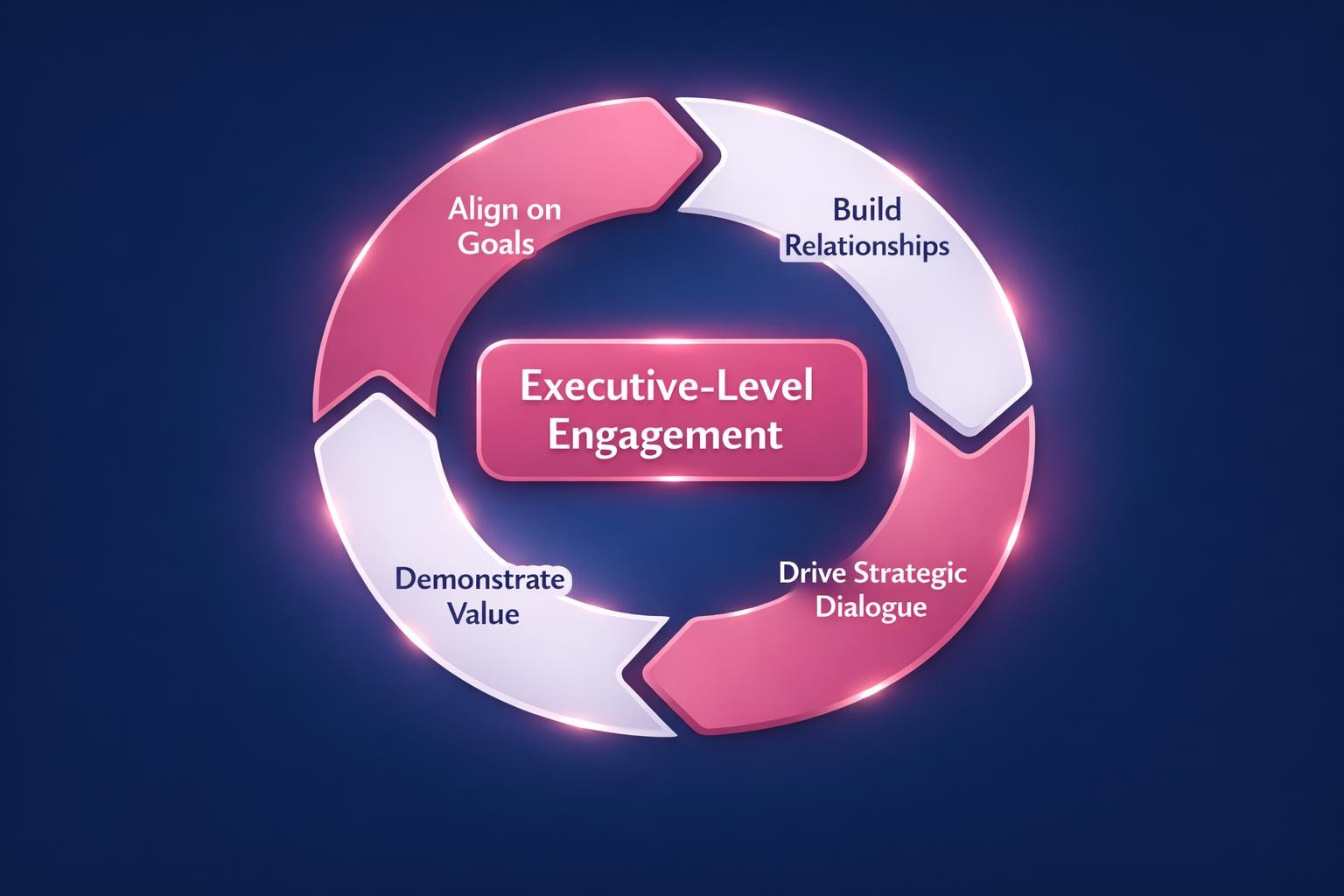
Executive-level engagement works best as an ongoing operating discipline rather than a one-time initiative. The following framework brings together an honest baseline, clear ownership, meaningful measurement, weekly review, deal-level coaching, stakeholder coverage, technology alignment, and structured learning from wins and losses.
1. Define strong execution and ownership
Document the milestones, criteria, stakeholder expectations, and next actions required at each deal stage. Someone on the leadership team is accountable for the outcomes, not just the activities. Clear ownership gives the team a consistent basis for review and improvement.
2. Establish an honest baseline
Before you can improve Executive-Level Engagement, you need an honest baseline. Review recent opportunities by representative, segment, deal size, stage, and outcome. Compare the available data with the team’s explanations to identify recurring breakdowns.
Start with an honest audit. Use that assessment to prioritize two or three specific improvements, each with a clear owner, measurable goal, and review cadence.
Three-part explainer: Audit the current state, Build the operating model, and Measure and improve.
3. Measure progress at every stage
Use leading indicators to identify where intervention may be needed and lagging indicators to review results. Relevant measures can include stakeholder engagement, content consumption, mutual action plan progression, deal velocity, stage progression, and stakeholder coverage.
Measure outcomes, not activities. Use outcome measures as the primary lens for coaching and pipeline reviews, particularly when activity is high but an opportunity is not progressing.
Teams evaluating technology for this work can learn about Revspire Stakeholder Intelligence.
4. Add engagement to the weekly cadence
Include executive-level engagement in weekly pipeline calls, coaching sessions, and territory reviews. Focus the discussion on what needs to change in the next seven days rather than treating it as a status update.
5. Coach live deals and broaden stakeholder coverage
Use deal-specific coaching to review active opportunities, identify execution gaps, and work through the next action with each representative.
Avoid building the entire relationship around one stakeholder. Map the buying committee, assign coverage, and track engagement with each relevant stakeholder. Treat a deal with only one active contact as a risk that requires review.
6. Align technology with the operating model
The technology layer for Executive-Level Engagement should reduce friction, not add it. Evaluate whether each tool supports the documented process, makes the next action visible, and allows useful data to move between systems without unnecessary manual updates.
7. Turn wins and losses into continuous improvement
Capture lessons through post-deal interviews, CRM data analysis, and structured win-loss reviews. Feed the findings into playbooks, training, coaching, and strategy, then review the resulting metrics against defined targets.
Five mistakes to avoid
- Treating engagement as a temporary project. Assign permanent ownership and include it in the operating cadence.
- Relying only on intuition. Compare judgment with deal and portfolio data.
- Single-threading the relationship. Build and monitor coverage across the buying committee.
- Confusing activity with progress. Review stage progression, engagement quality, and stakeholder breadth.
- Failing to learn from losses. Conduct structured reviews and update the playbook.
Three-part explainer: Recognize the leak, Correct the behavior, and Prevent repeat failure.